Where to Go in Lapland: Comparing Every Base
Updated 24 September 2026.
Some links on this page are affiliate links. If you book through them, I earn a small commission at no extra cost to you. I only recommend services I genuinely trust for Lapland travel.
Most people planning a Lapland trip start with the wrong question. They ask “should I go to Lapland?” when the real question is “where in Lapland?” Because Lapland isn’t a single place – it’s an area larger than Austria, stretching from the Arctic Circle up to Norway’s border. Rovaniemi in the south and Inari in the north are 330 km apart. The vibe, the landscape, the crowds, and the price tag are completely different depending on where you base yourself.
Think of it this way: choosing Lapland is like choosing “the Alps.” Helpful as a starting point, useless as a plan. You need a specific base. Here’s how each one actually feels, who it works for, and why it matters.
Every Lapland Base at a Glance
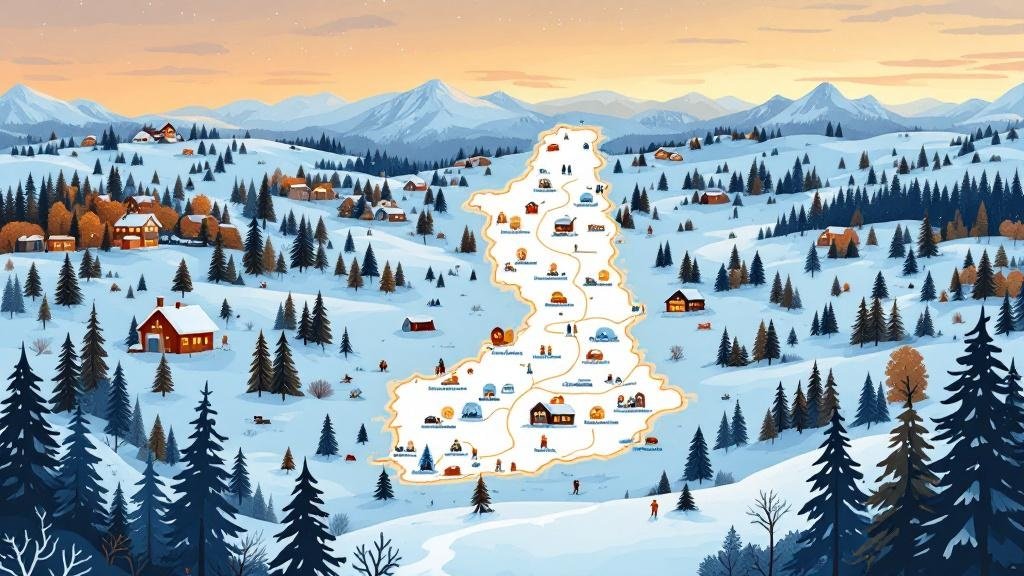
The illustrated map above shows where each base sits relative to the others – and the distances between them matter more than you’d think. Scan the comparison table below for a quick overview, then read the profiles for the details.
| Base | Vibe | Nearest Airport | Activities | Price Level | Best For |
|---|---|---|---|---|---|
| Rovaniemi | Small city, touristy gateway | Rovaniemi (RVN) – 10 km | Santa Claus Village, safaris, museums, dining | €€ | Families with young kids, short trips, first-timers |
| Levi | Polished ski resort, busy | Kittilä (KTT) – 15 km | Skiing (43 slopes), safaris, nightlife, spa | €€–€€€ | Skiers, groups, those wanting resort infrastructure |
| Saariselkä | Compact fell village, quieter | Ivalo (IVL) – 25 km | Hiking (Urho Kekkonen NP), skiing, aurora, glass igloos | €€ | Couples, hikers, aurora chasers, families wanting calm |
| Inari | Sámi village, remote, authentic | Ivalo (IVL) – 40 km | Sámi culture, Lake Inari, aurora, wilderness | €–€€ | Culture seekers, aurora chasers, independent travellers |
| Muonio | Wilderness base, uncommercial | Kittilä (KTT) – 70 km | Husky farms, snowmobiling, cross-country skiing | €–€€ | Adventure seekers, couples, multi-day safari starters |
| Luosto & Pyhä | Tiny, peaceful, national park access | Rovaniemi (RVN) – 120 km | Amethyst mine, skiing (Pyhä), fell hiking | €–€€ | Budget travellers, families wanting quiet, off-the-beaten-path |
| Kilpisjärvi | Remote, Norway border, mountain hiking | Kittilä (KTT) – 240 km | Halti fell (Finland’s highest point), Three Countries Cairn | € | Serious hikers, solitude seekers |
| Enontekiö (Hetta) | Wilderness gateway, Sámi culture | Kittilä (KTT) – 140 km | Multi-day husky expeditions, Pallas-Yllästunturi NP | € | Adventure travellers, husky safari enthusiasts |
Quick Profiles: What Each Base Is Actually Like
Rovaniemi – The Gateway, Not the Destination
Rovaniemi is where most people land, and where many people make the mistake of staying the whole trip. It’s Lapland’s largest city, rebuilt after WWII, sitting right on the Arctic Circle. Santa Claus Village is here, the Arktikum museum is excellent, and the restaurant scene is the best in Lapland. The airport has the most connections, and the overnight train from Helsinki arrives here.
But here’s the thing: Rovaniemi is to Lapland what Anchorage is to Alaska. It’s where you arrive, not necessarily where you experience the real thing. The city itself doesn’t feel Arctic – it feels like a northern Finnish town with good tourist infrastructure. Activities are spread across the outskirts and require transfers. The aurora viewing is hampered by city light pollution.
Spend a night or two here, visit Santa Claus Village if you have kids, see Arktikum – then head north.
Levi – Finland’s Biggest Ski Resort
Levi is where Finns go skiing. It’s the country’s largest resort with 43 slopes, 27 lifts, and 230 km of cross-country trails. The infrastructure is polished: restaurants, shops, a spa, even nightlife. Kittilä airport is just 15 km away, and in winter it’s packed with charter flights from across Europe.
The downside? Levi feels commercial. It’s a purpose-built resort village, not a traditional Lapland community.
During February half-term (viikko 8, Finnish ski holiday week), it’s genuinely crowded. If you want wilderness solitude, this isn’t it. If you want reliable facilities, good skiing, and easy logistics, Levi delivers. The fells here top out around 530 metres – don’t expect Alpine vertical. Great for families, intermediates, and anyone who wants activities without the hassle of planning everything from scratch. Adult day lift passes are 58€, and kids under 7 ski free with an adult.
Saariselkä – Where Lapland Starts Feeling Wild
Saariselkä is a small fell village at the edge of Urho Kekkonen National Park, one of Finland’s largest wilderness areas at 2,550 km². It’s compact – you can walk across the village centre in ten minutes – but it’s a gateway to serious backcountry. Europe’s northernmost ski resort is here (small but fun, 15 slopes), and the cross-country trail network stretches 200 km.
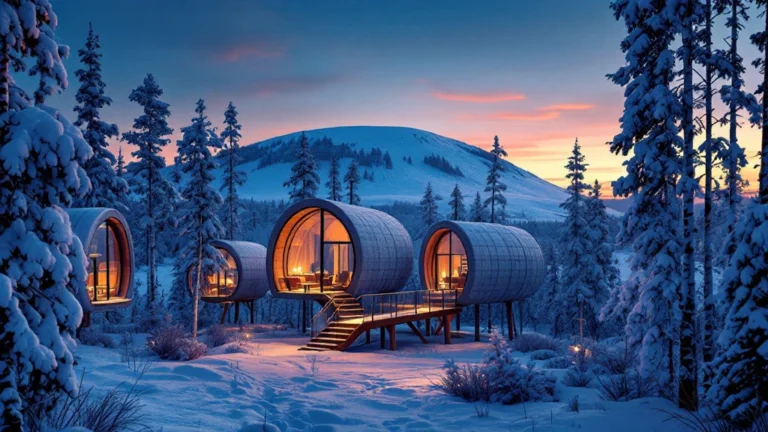
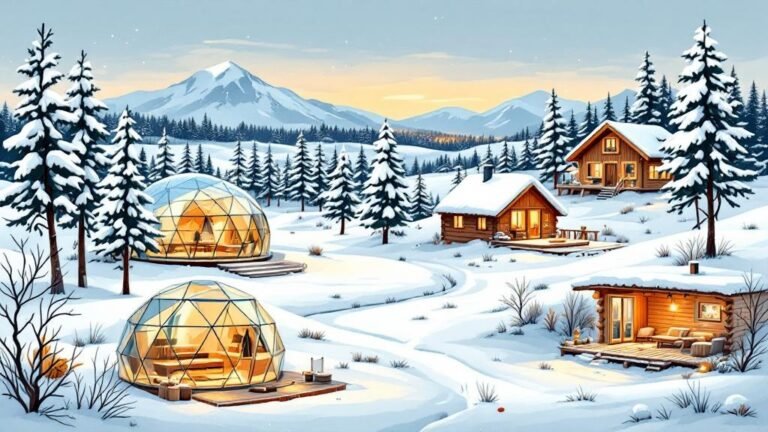
The glass igloo hotels that made Lapland famous on Instagram are concentrated here and nearby. Saariselkä has a good mix: enough services that you’re comfortable, but remote enough that you feel the Arctic. Light pollution is low, which makes it strong for aurora viewing.
Ivalo airport is 25 km away. Fewer flight connections than Rovaniemi or Kittilä, but Finnair runs daily from Helsinki.
Inari – Sámi Heartland
Inari is the cultural capital of Finland’s Sámi people. The Siida museum is one of the best museums in the country, and the Sámi Parliament is based here. The village sits on the shore of Lake Inari – Finland’s third-largest lake, an enormous body of water that feels like an inland sea.
Inari is about 70 km from Saariselkä (an hour’s drive), so the two work well as a combined trip. But the atmosphere is completely different. Inari is quieter, more authentic, and less touristy. It’s a real village where people live, not a resort built for visitors. Accommodation options are more limited but include some genuinely special places.
For aurora viewing, Inari is arguably the best base in Finnish Lapland – low light pollution, high latitude, and operators who have built their reputation on consistently finding the lights.
Muonio – The Wilderness Base
Muonio doesn’t have a resort. It doesn’t have nightlife or a pedestrian shopping street. What it has are some of the best husky farms in Lapland, genuine wilderness, and dark skies that aurora chasers dream about.
Harriniva, one of Lapland’s largest activity centres with over 400 huskies, is based here. The nearby village of Hetta (Enontekiö) is where Hetta Huskies runs multi-day wilderness expeditions – serious trips covering up to 200 km over several days. Aurora eMotion operates the world’s first electric snowmobile safaris from the Muonio area.
Getting here requires a bit more effort. Kittilä airport is 70 km away, and you’ll want a car or a pre-arranged transfer. But if your idea of Lapland is silence, dogs, and frozen rivers under the northern lights – Muonio is where you should be.
Luosto & Pyhä – Quiet and Affordable
Twin fell villages about 120 km from Rovaniemi, connected to the Pyhä-Luosto National Park. These are small, peaceful, and significantly cheaper than the big resort towns. Pyhä has decent downhill skiing (14 slopes, known for steeper runs than most Lapland resorts) and Luosto has a unique amethyst mine you can visit.
The cross-country trail network connects both villages through national park landscape. Accommodation is limited but often better value. This is a solid choice if you want a quiet Lapland experience without the tourist-village atmosphere, or if you’re watching your budget closely.
Beyond the Main Six: Kilpisjärvi and Enontekiö
If the bases above still feel too accessible, two more remote options exist at the far edges of Finnish Lapland. These aren’t for casual visitors, but they deserve a mention.
Kilpisjärvi sits right on the Norwegian border, about 5 hours’ drive from Rovaniemi (420 km). Finland’s highest point, Halti fell, is here, along with the Three Countries Cairn where Finland, Sweden, and Norway meet. It’s a summer hiking destination above all else – stunning mountain landscape, virtually no tourist infrastructure, and a genuine sense of remoteness that’s hard to find elsewhere in Finland.
Enontekiö (Hetta) is the gateway to Pallas-Yllästunturi National Park and home to Hetta Huskies, one of the most respected multi-day husky safari operators in the world. It’s about 3.5 hours from Rovaniemi. The Hetta-Pallas trail (55 km, 4 days) starts here – Finland’s oldest marked hiking route, dating back to 1934. Both places reward those willing to make the extra effort to reach them.
Distances and Getting Between Bases
Lapland is big. See the illustrated map at the top of this page for relative positions, and use the table below for specific driving times – these matter, because public transport connections are limited.
| From → To | Distance | Driving Time |
|---|---|---|
| Rovaniemi → Levi | 170 km | 2 hours |
| Rovaniemi → Saariselkä | 260 km | 3 hours |
| Rovaniemi → Inari | 330 km | 4 hours |
| Rovaniemi → Muonio | 220 km | 2.5 hours |
| Rovaniemi → Luosto | 120 km | 1.5 hours |
| Rovaniemi → Kilpisjärvi | 420 km | 5 hours |
| Rovaniemi → Enontekiö | 310 km | 3.5 hours |
| Levi → Saariselkä | 160 km | 2 hours |
| Levi → Muonio | 80 km | 1 hour |
| Saariselkä → Inari | 70 km | 1 hour |
Three airports serve the region: Rovaniemi (RVN), Kittilä (KTT) near Levi, and Ivalo (IVL) near Saariselkä and Inari. All have daily Finnair flights from Helsinki (1.5–1.75 hours). Pick the airport closest to your base – not necessarily the cheapest flight – or you’ll spend half a day driving across Lapland in winter darkness.
Buses run between all bases but frequency is low – sometimes just one per day on longer routes. If you’re planning to split your trip between two bases, a rental car makes life significantly easier. As of the 2025-26 season, economy car rental runs 60-90€ per day with studded winter tyres included.

Which Base for You? A Decision Framework
Rather than trying to find the “best” place – there isn’t one – think about what matters most to you. Different priorities lead to very different bases.
For Families with Young Kids
First choice: Rovaniemi. Santa Claus Village is the obvious draw, and the logistics are the easiest in Lapland – the airport is close, hotels offer family rooms, and every activity operator runs family-friendly programmes. If your kids are under 7 and the Santa experience matters, this is the answer.
Also works: Levi or Saariselkä. Levi has the best skiing infrastructure for families, and Saariselkä is compact enough that kids can walk everywhere. Both have family-oriented accommodation with saunas and kitchens.
For Couples
First choice: Inari or Saariselkä. Romance in Lapland comes from silence, dark skies, and feeling like you’re at the edge of the world – not from resort restaurants. A glass igloo in the Saariselkä area or a lakeside cabin in Inari delivers this. Aurora viewing is strong in both locations.
Also works: Muonio. Fewer tourists, genuine wilderness, and some lovely small properties. Combine with a multi-day husky safari for a trip you’ll talk about for years.
For Adventure Seekers
First choice: Muonio/Enontekiö area. Multi-day husky expeditions (from 600€ per person for a 2-day trip with Hetta Huskies), electric snowmobile safaris, access to Pallas-Yllästunturi National Park. This is where the wilderness operators are.
Also works: Saariselkä. The gateway to Urho Kekkonen National Park – 2,550 km² of wilderness with 200 km of trails and free wilderness huts. For serious summer hikers, Kilpisjärvi offers Finland’s most dramatic mountain landscape.
For Budget Travellers
First choice: Luosto & Pyhä. Lower accommodation prices, fewer tourist-inflated restaurant menus, and national park access that costs nothing. Self-catering in a cabin and hitting the trails is one of the cheapest ways to do Lapland.
Also works: Inari in shoulder season. October and November are quiet, prices drop significantly, and the aurora season is already underway. Accommodation that costs premium rates in December can be remarkably affordable in autumn.
For Aurora Chasers
First choice: Inari. Highest latitude of the main bases, lowest light pollution, and home to some of Lapland’s most experienced aurora operators. If seeing the northern lights is your primary goal, go north.
Also works: Muonio or Saariselkä. Both have dark skies and good viewing conditions. The key with aurora is getting away from any town lights – even a village of 500 people creates enough glow to wash out fainter displays.
Can You Combine Two Bases?
Yes, and for trips of 5+ days, you probably should. Some natural combinations:
| Combination | Transfer | Why It Works |
|---|---|---|
| Rovaniemi + Levi | 2 hours by car or bus | Gateway + resort. Start with Santa and museums, move to skiing and safaris. |
| Rovaniemi + Saariselkä/Inari | 3-4 hours by car | Gateway + wilderness. Cover southern and northern Lapland. |
| Levi + Muonio | 1 hour by car | Resort + wilderness. Easy day trips in either direction. |
| Saariselkä + Inari | 1 hour by car | Activities + culture. Close enough for day trips between them. |
If you’re flying into one airport and could fly out from another (say, arrive at Rovaniemi, leave from Ivalo), check if the one-way car rental drop-off fee makes this practical. It often does – and you avoid backtracking.
A Few Things That Don’t Change by Location
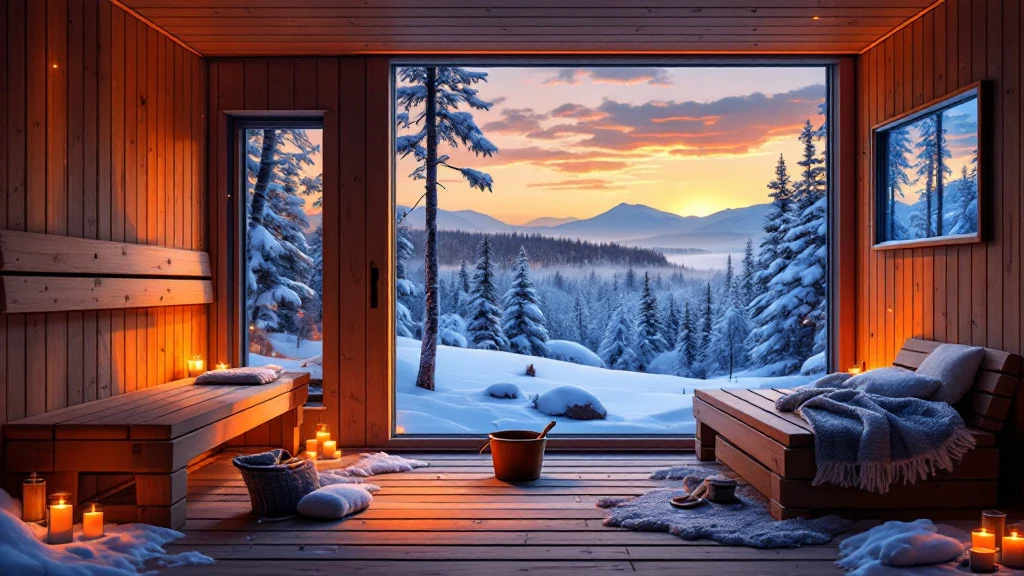
Every cabin in Lapland has a sauna. If yours doesn’t, something has gone wrong. Every resort town has at least one K-Market or S-Market supermarket, so self-catering is always an option. Casual restaurant mains run 18-25€ for pizza and pasta, 28-40€ for Lappish specialities like reindeer or freshwater fish. Every area has husky, reindeer, and snowmobile safaris in winter – the quality of the experience matters more than the location.
What does change: the sense of remoteness, the crowd levels, the darkness of the sky, and how much of your trip you spend in transit. Those are the real reasons to choose one base over another.
Frequently Asked Questions
Is Rovaniemi enough for a Lapland trip?
For 2-3 days, yes – especially for families visiting Santa Claus Village. For longer trips, you’ll get more out of Lapland by heading further north. Rovaniemi is the most accessible base but not the most atmospheric. Think of it as a starting point, not the whole experience.
Which Lapland base is best for seeing the northern lights?
Inari, followed by Saariselkä and Muonio. All three have low light pollution and high latitude. The further north you go, the better your chances – but clear skies matter more than location. Check the FMI aurora forecast and be prepared to drive away from any town lights.
Do I need a car in Lapland?
Not if you stay in one resort town – activity operators typically offer hotel pickup. But if you want to split between two bases or go aurora hunting on your own schedule, a rental car transforms the trip. Most roads are well maintained even in winter, and all rental cars come with mandatory studded tyres.
Can I visit Lapland on a budget?
Absolutely. Choose Luosto, Pyhä, or Inari in shoulder season (October-November or March-April). Stay in a self-catering cabin, cook most meals from the supermarket, and prioritise free activities: cross-country skiing, hiking, and self-guided aurora watching. The most expensive part of any Lapland trip is guided safaris – do one or two rather than filling every day.
What’s the difference between Saariselkä and Inari?
They’re about 70 km apart and feel very different. Saariselkä is a small resort village with ski slopes, glass igloos, and organised activities. Inari is a Sámi community with a museum, Lake Inari, and a quieter, more cultural atmosphere. Many visitors combine both – stay in one, day-trip to the other.
The honest answer to “where should I go in Lapland?” is: further north than you think. Every 100 km north of Rovaniemi makes the sky darker, the crowds thinner, and the landscape more wild. Pick the base that matches how you travel, not just the one with the cheapest flight.
Best Booking Resources for Lapland
These are the booking tools I keep coming back to. They consistently offer the best prices, the most relevant options for northern Finland, and actually work well for Lapland-specific searches, which not all platforms do.
- Kiwi.com: The best source for finding flights and airport connections. I have noticed they find flight connections that other search engines miss.
- Booking.com: I almost always use them for booking hotels and apartments (and occasionally flights). They have the best filters and I like the user-friendly interface.
- Hotels.com: The most popular hotel booking platform in many countries, US included.
- Get Your Guide: A massive selection of tours and excursions, including aurora tours, husky rides, reindeer experiences and more!
- EconomyBookings: Want to explore Lapland or chase auroras yourself? They pool together the best offers from car rental operators for your convenience.
- yesim: Need a local SIM for Lapland? A stress-free holiday nowadays (unfortunately) might start from a good connection, so get an eSIM with unlimited or prepaid data.
- Ekta Traveling: Not interested in checking out the Finnish public health care system on your holiday? Didn’t think so 🙂 Good insurance gets that stress out of the way.
As an Amazon Associate I earn from qualifying purchases. Booking through these links costs you nothing extra and helps keep these guides free and up to date. Thank you!

Planning a Lapland trip?
Ask a Finn. The Lapland Trip Planning: Finland group is where readers compare dates, resorts and real prices for the coming winter.
Join the planning groupFollow on FacebookFollow on Pinterest