Best Time to Visit Lapland: Month-by-Month Guide
Updated 25 September 2026.
Some links on this page are affiliate links. If you book through them, I earn a small commission at no extra cost to you. I only recommend services I genuinely trust for Lapland travel.
Here is the short answer most tour operators won’t give you: March. Full days of light, a metre of snow on the ground, and prices that fall off a cliff the moment the Finnish ski holiday ends. Everyone books December because of Santa. The locals go in March.
But “best” depends on what you actually want. Northern lights and midnight sun happen in opposite halves of the year, and you cannot have both. So before you book anything, you need to decide what your trip is about. This guide breaks Lapland down month by month, with real numbers for weather, daylight, aurora odds, crowds, and cost, so you can match the month to your plans instead of the other way round.
The month-by-month table
All figures below are for Rovaniemi, on the Arctic Circle. Go further north (Saariselkä, Inari) and winters are darker and colder; go south and they soften slightly. Aurora chance is the rough odds of a clear, dark night when the lights could appear, not a guarantee they will.
| Month | Typical temp | Daylight | Aurora chance | Crowds | Price |
|---|---|---|---|---|---|
| January | −8 to −17°C (18 to 1°F) | 0 to ~4.7h | Excellent | Moderate | High |
| February | −8 to −17°C | ~5 to 8.8h | Excellent | High (week 8) | High |
| March | −2 to −13°C | ~9 to 12.75h | Good | Low after week 8 | Baseline (best value) |
| April | 4 to −6°C | ~13 to 16.7h | Ending | Low | Low |
| May | 11 to 1°C | ~17 to 21h | None | Very low | Lowest |
| June | 17 to 8°C | 24h (midnight sun) | None | Low | Low |
| July | 20 to 10°C | ~19 to 23h | None | Moderate | Baseline |
| August | 17 to 8°C | ~14.5 to 18.5h | Late month only | Low | Low |
| September | 11 to 3°C | ~10.6 to 14.4h | Excellent | Very low | Low |
| October | 3 to −3°C | ~6 to 10.5h | Prime | Very low | Lowest |
| November | −3 to −7°C | ~0 to 6h | Good | Low | Low |
| December | −6 to −11°C | 0 (polar night) | Fair (cloudy) | Extreme | Highest |
Prices are from the 2025-26 season; 2026-27 rates are being published through the autumn, so check operator websites for current rates. December runs roughly two and a half times the March baseline for accommodation; January still runs well above it. The two most expensive weeks of the whole year are Christmas week and viikko 8, the Finnish ski holiday in mid-February. More on both below.
Best months for the northern lights
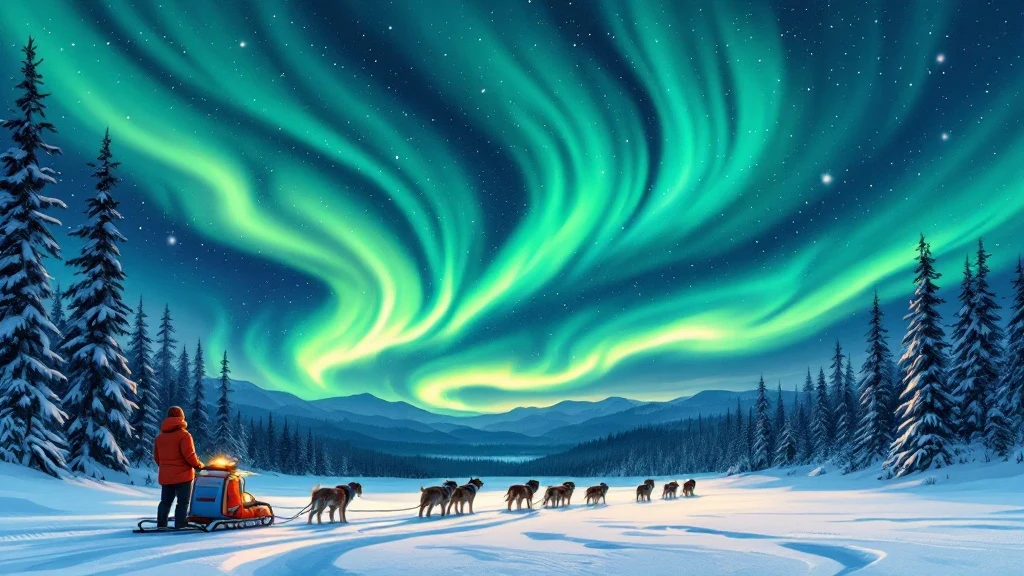
The aurora season runs from late August to mid-April. It has nothing to do with cold and everything to do with darkness: you need a properly dark night, and between May and July there isn’t one. Activity tends to peak around the equinoxes, so September-October and February-March are statistically your strongest windows.
Here’s the part people get wrong. The northern lights are often overhead. The problem is almost never a weak KP index, which usually only needs to reach 2 at this latitude, but cloud cover sitting between you and them. That’s why the choice of month is really a choice about weather odds.
| Month | Clear-night odds | Dark hours/night | Notes |
|---|---|---|---|
| September | ~45% | ~10 | Aurora over autumn colours, no snow, no mosquitoes |
| October | ~45% | ~14 | Prime: long dark nights, quietest month |
| November | ~40% | ~18 | Lots of darkness, cloud increasing |
| December | ~35% | ~22 | Maximum dark, maximum cloud, maximum crowds |
| January | ~50% | ~20 | Excellent, main enemy is cloud |
| February | ~50% | ~14 | Clearer skies than January on average |
| March | ~40% | ~9 | Good, but shorter viewing window as light returns |
If aurora is your single priority, I’d point you at February or October. February gives you clear cold nights plus enough daytime to do other things; October gives you empty towns, low prices, and long nights, though snow isn’t guaranteed yet. December is the worst-value aurora month despite the endless darkness: the sky is cloudiest then, and the tours are packed.
Best months for snow activities
Husky sledding, snowmobiling, reindeer sleigh rides, ice fishing, and skiing all need snow on the ground, which reliably means December through April. But the quality of that window changes a lot from one end to the other.
Snow depth in Rovaniemi peaks in March, around 75 cm, not in the deep-freeze of January. So the deepest, most dependable snow comes with far more daylight and far less brutal cold. December has snow but also polar night, so you’re doing everything in the dark or in a couple of hours of blue twilight. January is spectacular but genuinely cold, with cold snaps down toward −35°C.
For skiing specifically, Levi and the other fells run from roughly December to April, with April offering warm sun on deep snow, so-called spring skiing. Bear in mind these are gentle fells, not the Alps, with a maximum vertical of about 464 m at Ylläs. Great for families and intermediates, too easy for experts.

Best months for the midnight sun
From late May to mid-July the sun never sets in Rovaniemi. On the summer solstice you get about 23 hours of daylight, and even the brief “night” is only twilight. It rewires your sense of time completely: you’ll find yourself hiking at midnight and forgetting to sleep.
June and July are the core midnight sun months, and they’re a different Lapland entirely, green forests, open hiking trails, rivers, and temperatures that can climb past 25°C. July is the warmest month and the best for fishing. The catch, quite literally, is mosquitoes. They arrive mid-June and July is peak season. Bring proper repellent and a head net; I’m not joking about the head net.
August is the quiet winner of the summer. It actually gets the most sunshine hours of any month, around 8.5 per day, because it’s less cloudy than June, the mosquitoes are fading, and berry season peaks. If you want summer Lapland without the bugs, come in August.
March: the local favourite
I’ll make the case plainly. March gives you the deepest snow of the winter, roughly nine to nearly thirteen hours of daylight as the month goes on, and it’s the driest winter month with the most sunshine. Every winter activity is fully open. Aurora is still on the menu in the darker evening hours.
And then there’s the money. The Finnish ski holiday, viikko 8, falls in mid-February and inflates everything. The week it ends, prices drop by roughly 30 to 40%. Glass igloo availability, which is impossible to find for December months ahead, opens right up. You get better weather, more light, deeper snow, and pay less than you would in February. That’s why Finns book March.
The underrated shoulder seasons
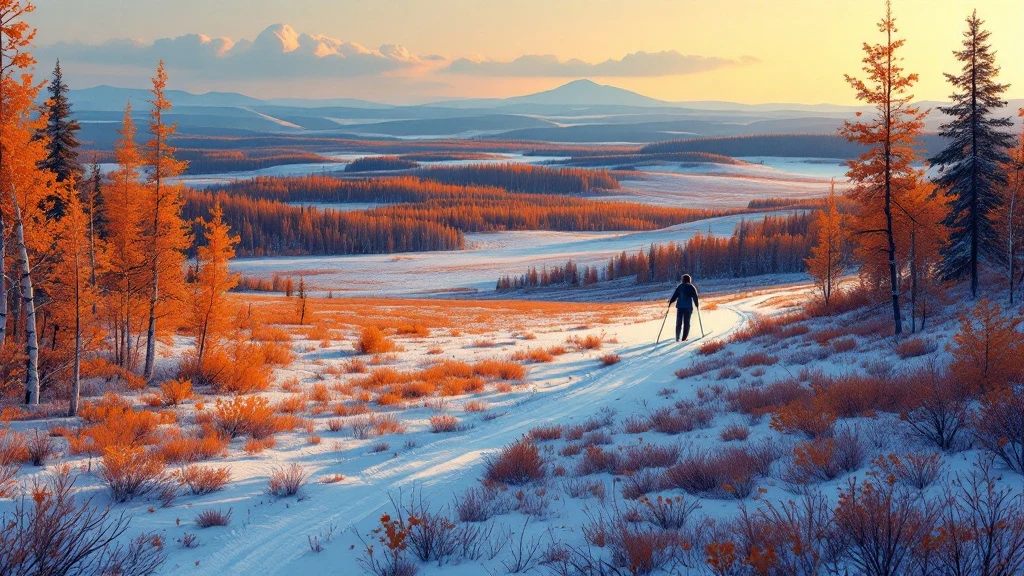
September is the month almost no foreign visitor knows about. It’s ruska, the two or three weeks when the fells turn orange and red before the leaves drop. The aurora season has just reopened, there are no mosquitoes, prices are low, and the towns are empty. Aurora glowing over autumn-coloured fells, with the whole trail to yourself, is my personal favourite Lapland experience and it costs a fraction of December.
October is the other quiet gem, especially for aurora chasers: long dark nights, often clear, the first snow arriving, and the lowest prices of the year. The trade-off is that you’re between seasons, autumn ending, full winter not quite arrived, so snow activities may not be running yet.
September is also the best month for hiking, when the wilderness huts are quiet and the bugs are gone. Finland’s national parks keep their trail maps online, and the free first-come wilderness huts (autiotupa) make multi-day treks genuinely cheap.
When NOT to go, and why
May is the one month I’d steer almost everyone away from. It’s mud season, what Finns call kelirikko, the season when the roads give up. The snow melts fast, rivers flood, some smaller roads become impassable, and most winter activities have closed while summer hasn’t started. There’s very little to do. Prices are rock bottom for a reason.
The two weeks to avoid for cost, not for experience, are Christmas week (roughly Dec 20 to Jan 2) and viikko 8 in mid-February. Both are Finnish school holidays, and both inflate accommodation to two and a half or three times normal. If you specifically want Christmas magic, that’s a fair trade. If you don’t, shift a week or two either side and keep the snow at a fraction of the price.

How much the month changes your budget
The season you pick moves your costs more than almost any other decision. Accommodation swings hardest: December runs about two and a half times the March baseline, January sits well above it, and the shoulder months come in noticeably below. Getting there follows the same rhythm, easyJet’s Gatwick-Rovaniemi fares are cheapest in January and peak in December, and Finnair’s Helsinki-Rovaniemi flights typically run 150-250€ return with advance deals from 100€.
The overnight train from Helsinki is the atmospheric way north. VR’s seat fares start from 23€ one way, but that’s an early-booking figure, book closer to your travel date and the same seat is more like 70-90€. VR uses dynamic pricing that climbs faster than flights as the date approaches, so book as far ahead as you can. A two-person sleeping cabin starts from 69€ per cabin (not per person) and can reach 150-220€ per cabin in peak winter. For comparing trains, buses, and flights in one English-language search, Omio is the easiest tool.
Activities cost roughly the same whatever month you visit, a husky ride from about 60€, a small-group aurora tour at about 100 to 190€, a downhill day pass around 53-58€, so the lever is beds and flights rather than the things you came to do.
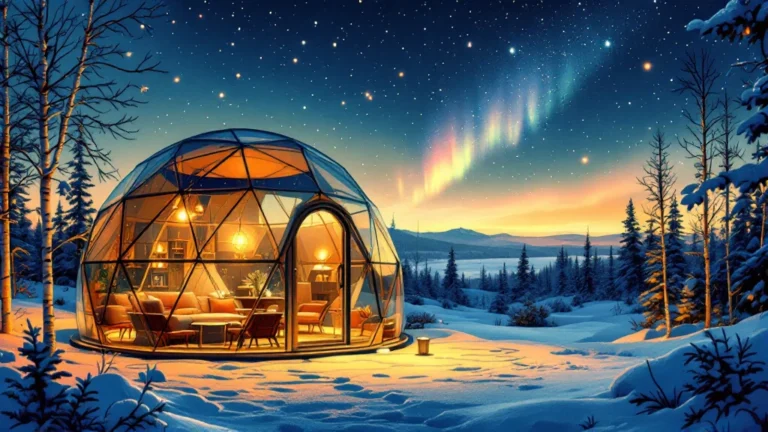
There is a second lever most guides miss, and on a glass-roof trip it is bigger than the month. Properties price December completely differently from each other. Apukka charges 129 per cent more for a December night than a March one; Arctic TreeHouse 85 per cent; Levin Iglut 34; Kakslauttanen 13; and both Northern Lights Village sites charge exactly the same in both months. So the ranking of “cheapest place to sleep under glass” is not fixed — it inverts depending on when you go.
What that means in practice: if your dates are flexible, move the month and take the March baseline. If they are not — school holidays, a Santa trip, annual leave you cannot shift — stop trying to save on the month and switch properties instead. The saving is comparable and you keep your dates.
Picked your month? Add an aurora night
Northern lights hunt from Rovaniemi: small groups chasing clear skies, free cancellation
Check rates for your month
- Kakslauttanen Arctic Resort: the original glass igloos
- Levin Iglut: premium glass igloos above Levi
- Arctic TreeHouse Hotel: glass-walled design suites beside SantaPark, breakfast included
- Apukka Resort: aurora cabins with the safaris leaving from the property
Common questions
What is the best month to visit Lapland?
For most people, March. You get the deepest snow of the winter, long daylight, all winter activities open, still-decent aurora chances, and prices that fall 30-40% once the mid-February Finnish ski holiday ends. December is better only if Christmas itself is the point.
When is the best time to see the northern lights in Lapland?
The season runs late August to mid-April, with the strongest odds around the equinoxes: September-October and February-March. Cloud cover, not weak solar activity, is the main obstacle, so February and October, which tend to have clearer skies, are often the best bets.
When can you see the midnight sun in Lapland?
From late May to mid-July in Rovaniemi the sun never fully sets, peaking at around 23 hours of daylight near the summer solstice. June and July are the core months. August still has very long, bright days with far fewer mosquitoes.
What is the cheapest month to visit Lapland?
May and October are the lowest for accommodation, but May is mud season with little to do. October is the better cheap option: quiet towns, long dark nights for aurora, and rock-bottom prices. March offers the best value if you specifically want a full winter experience.
Which month should I avoid in Lapland?
May. The snow has melted, roads can flood or break up (kelirikko), winter activities have closed, and summer hasn’t begun. For cost reasons, also avoid Christmas week and mid-February’s viikko 8 unless those specific experiences are your goal.
Best Booking Resources for Lapland
These are the booking tools I keep coming back to. They consistently offer the best prices, the most relevant options for northern Finland, and actually work well for Lapland-specific searches, which not all platforms do.
- Kiwi.com: The best source for finding flights and airport connections. I have noticed they find flight connections that other search engines miss.
- Booking.com: I almost always use them for booking hotels and apartments (and occasionally flights). They have the best filters and I like the user-friendly interface.
- Hotels.com: The most popular hotel booking platform in many countries, US included.
- Get Your Guide: A massive selection of tours and excursions, including aurora tours, husky rides, reindeer experiences and more!
- EconomyBookings: Want to explore Lapland or chase auroras yourself? They pool together the best offers from car rental operators for your convenience.
- yesim: Need a local SIM for Lapland? A stress-free holiday nowadays (unfortunately) might start from a good connection, so get an eSIM with unlimited or prepaid data.
- Ekta Traveling: Not interested in checking out the Finnish public health care system on your holiday? Didn’t think so 🙂 Good insurance gets that stress out of the way.
As an Amazon Associate I earn from qualifying purchases. Booking through these links costs you nothing extra and helps keep these guides free and up to date. Thank you!

Planning a Lapland trip?
Ask a Finn. The Lapland Trip Planning: Finland group is where readers compare dates, resorts and real prices for the coming winter.
Join the planning groupFollow on FacebookFollow on Pinterest