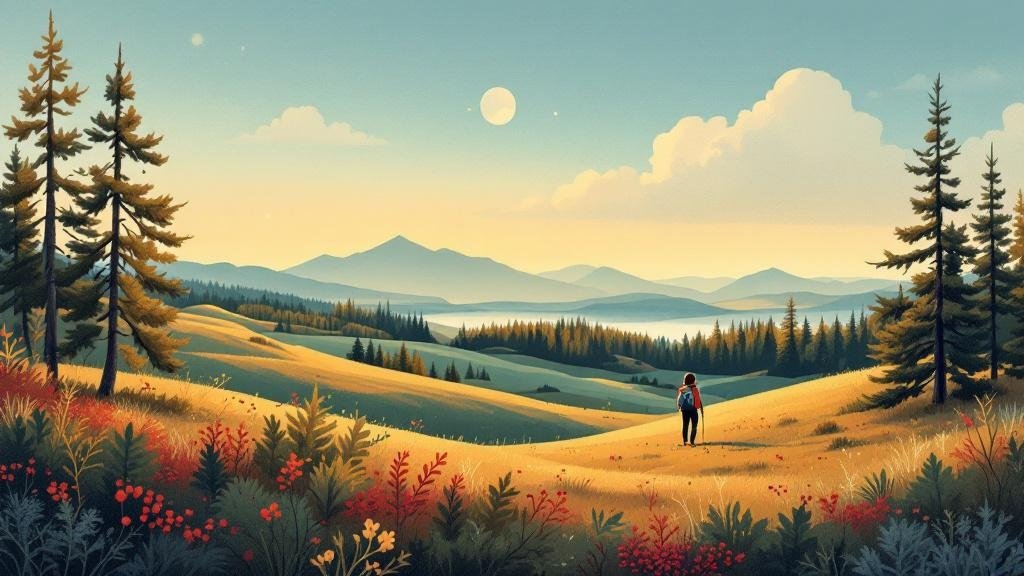
Lapland in August: Summer’s End and Ruska Begins
August in Lapland is the month when summer exhales. The frantic energy of July’s midnight sun gives way to something quieter – days that are still long (over 14 hours of light even at month’s end), temperatures that stay pleasant for hiking, and mosquitoes that are finally, mercifully, retreating. On the highest fells, the first brushstrokes of ruska – Finland’s autumn colour season – start appearing in the last week. It’s one of the least-visited months, which is exactly why many Finns consider it the best.
If you’ve been put off Lapland summer by horror stories about mosquitoes, August is your answer. The worst is over by early August, and by the 20th they’re mostly a memory. You get warm-enough days for comfortable hiking, cool-enough nights for proper sleep, peak berry season, and – if you’re very lucky – the first faint aurora of the season in the final days. Average highs sit around 17°C (63°F), lows around 8°C. That’s T-shirt weather on the trail and fleece weather in the evening.
August Weather: The Sweet Spot
August is a transitional month, and you can feel it. Early August still has a summer feel – long evenings, warm afternoons, green everywhere. By late August, the air has a crispness that says autumn is coming. Nights get properly dark again after weeks of perpetual twilight.
| Metric | August Value |
|---|---|
| Average high | 17°C |
| Average low | 8°C |
| Record low | −3°C |
| Precipitation | ~55mm |
| Sunny days | ~12 |
| Daylight (1 Aug) | ~18.5 hours |
| Daylight (31 Aug) | ~14.5 hours |
| Snow | None |
| Mosquitoes | Fading fast |
Here’s a detail most guides miss: August actually has the most actual sunshine hours of any month – roughly 8.5 hours per day on average. June and July have more daylight, but they also have more cloud cover. August skies tend to be clearer. That makes it excellent for photography, hiking, and generally enjoying the landscape without squinting through rain.
The record low of −3°C means frost is possible at the very end of the month, especially at higher elevations. Pack a warm layer for evenings. But most days, you’ll be comfortable in a base layer and a light jacket.
Ruska Begins: The First Autumn Colours
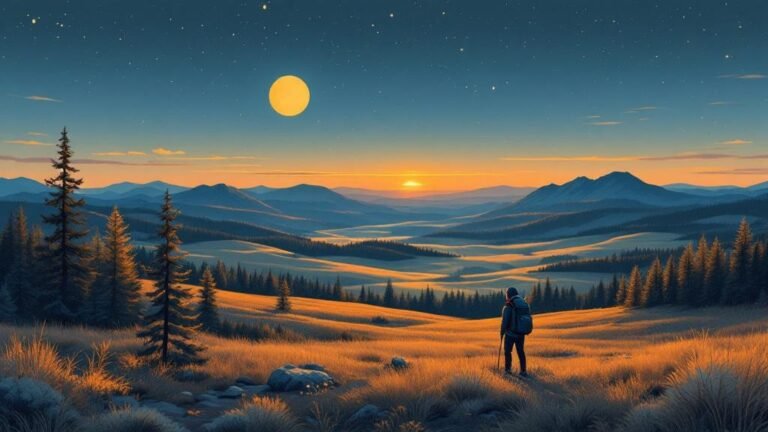
Ruska – the Finnish term for autumn colour season – is one of the most spectacular natural events in Lapland. It starts on the highest fells and works its way down. In August, you’ll see the very beginning: ground-level plants like dwarf birch and blueberry bushes on exposed fell tops turning gold and deep red. The birch trees in the valleys are still green.
This is early ruska, not the full display. Peak ruska hits in September and sometimes early October. But there’s something special about watching the first colours appear while the weather is still warm enough for comfortable hiking. By September, you’ll want a proper jacket. In August, you can sit on a fell top in a T-shirt and watch the tundra turn.
The best places to see early ruska are the treeless fell tops above 500-600 metres: think Saana fell near Kilpisjärvi, the fells around Enontekiö, or the higher trails in Urho Kekkonen National Park near Saariselkä. The lower, forested areas won’t start turning until September.
Berry Season at Its Peak
August is the heart of berry season, and this matters more than you might think. Under Finland’s jokamiehenoikeus (every person’s right), anyone – including tourists – can pick wild berries anywhere in the countryside, regardless of who owns the land. This is free, legal, and one of the most Finnish things you can do in Lapland.
Blueberries (mustikka) and lingonberries (puolukka) are everywhere in August. You’ll find them along every hiking trail, in every forest clearing, growing right underfoot. Lingonberries ripen later in the month and into September, while blueberries are at their peak throughout August.
Then there are cloudberries – lakka. These amber-coloured berries grow in boggy areas and are considered a delicacy in Finland. They ripen in August, and Finns treat their cloudberry spots the way trout fishermen treat their favourite pools: you don’t ask, and they don’t tell. Cloudberry jam, cloudberry liqueur, cloudberry with leipäjuusto (squeaky cheese) – it’s a seasonal obsession.
Guided foraging tours typically run 50-80€ and are worth it if you’ve never foraged before. You’ll learn to identify berries, find the best spots, and probably hear more about Finnish food culture than any restaurant could teach you. Or just grab a bucket from a supermarket and head into the forest on any trail. The berries find you.

Hiking Conditions: As Good as It Gets
August is arguably the best hiking month in Lapland. July is warmer but wetter and buggier. September has the colours but is cooler and rainier. August threads the needle: warm enough for long days on the trail, dry enough to keep your spirits up, and the mosquito population has crashed since July’s peak.
All of Lapland’s national parks are fully accessible. The trail networks maintained by Metsähallitus (National Parks Finland) are well-marked with boardwalks over boggy sections and free wilderness huts (autiotupa) and campfire sites along the routes. The trails are free, the huts are free, and the scenery is free. This is genuinely one of the most affordable outdoor experiences in Europe.
Guided day hikes run 80-150€ if you want local knowledge and company. But for experienced hikers, Lapland’s trail infrastructure is so good that you don’t need a guide. Maps are available at visitor centres in every national park, and mobile signal covers more terrain than you’d expect.
Popular options include multi-day treks in Urho Kekkonen National Park (starting from Saariselkä or Kiilopää), day hikes on the Pyhä-Luosto trail, and the classic day hike up Saana fell near Kilpisjärvi. August means the trails are quiet – most Finnish holiday-makers are back at work by mid-month, and international tourists haven’t arrived for ruska yet.
Dark Nights Return: First Aurora Possible
After months of midnight sun and white nights, darkness starts creeping back in August. By mid-month there are a few hours of genuine darkness around midnight. By the end of August, you get roughly 3 hours of dark sky – and that’s enough for the first aurora of the season.
Let’s be realistic: aurora probability in late August is low. You need clear skies, darkness, and reasonable geomagnetic activity (Kp 3 or above). With only a small dark window and no guarantee of clear weather, this is a bonus if it happens, not something to plan a trip around. If northern lights are your main goal, come back in September or later.
That said, the FMI aurora forecast is worth checking after about the 20th of August. If conditions align, the first faint green glow of the season is a quiet thrill – made better by the fact that you weren’t expecting it.
Getting There and Costs
August is off-peak for Lapland tourism, and prices reflect it. The seasonal pricing multiplier runs roughly 0.8x the March baseline, so you’ll pay less for accommodation than you would in any winter month. Flights from Helsinki to Rovaniemi, Kittilä, or Ivalo run 80-200€ return, with frequency varying by airport: multiple daily flights to Rovaniemi, one to two daily to Kittilä, and one daily to Ivalo, all on Finnair. From the UK, expect 150-400€ return via Helsinki – there are no direct charter flights in summer.
The overnight train from Helsinki to Rovaniemi is a classic option: depart around 18:00-19:00, arrive 06:00-08:00. Prices range from from €23 for a seat (typically €50–90) to from €94 per cabin for a sleeping cabin with shower/WC. For Kittilä/Levi area, the overnight train runs to Kolari (about 13 hours). You can book trains through Omio, which has all Finnish trains and buses in one English-language platform with mobile tickets – convenient when you’re booking from abroad.
Prices are for the 2025-26 season and change annually – check operator websites or booking platforms for current rates.
| Accommodation type | Price range (per night) |
|---|---|
| Hostel (dorm) | From 29€ |
| Hostel (private room) | 80-95€ |
| Budget hotel | 80-130€ |
| Mid-range hotel | 130-250€ |
| Budget cabin | 55-120€ |
| Mid-range cabin | 150-310€ |
| Car rental | 50-80€/day |
A car rental (50-80€ per day) gives you the most flexibility in August. Many of the best berry picking spots and trailheads are off the main roads, and public transport in Lapland is sparse. K-Market and S-Market are in all resort towns for affordable self-catering – budget 30-40€ per day for food if you cook and eat out once, or 50-70€ if you eat at restaurants.
Frequently Asked Questions
Are there still mosquitoes in August in Lapland?
They’re fading fast. Early August may still have some, especially near water and in boggy areas, but by mid-to-late August they’re largely gone. Bring a light repellent just in case, but you won’t need the full head-net setup that July demands.
Can you see the northern lights in August?
Only in the very last week of August, and only if conditions cooperate – you need clear skies and a Kp index of 3 or above during the few hours of darkness after midnight. It’s possible but rare. If aurora is your priority, September onwards is a much safer bet.
Is August a good time for ruska in Lapland?
You’ll catch the very beginning of ruska on the highest fell tops in late August – ground-level plants turning gold and red. The full, dramatic colour display happens in September. August gives you a preview with better weather and fewer people.
What should I pack for Lapland in August?
Layer up. Daytime is T-shirt and light trousers weather, but evenings can drop to 8°C or below. Bring a fleece or light down jacket, waterproof outer layer, good hiking boots, and a hat for cooler evenings. Sunscreen is still relevant – the UV can surprise you at these latitudes.
Is August expensive in Lapland?
It’s one of the cheapest months. Accommodation runs roughly 20% below the March baseline, flights are at their lowest summer prices (80-200€ return from Helsinki), and the best activities – hiking and berry picking – are completely free.
August is the month that rewards people who don’t follow the crowd. No snow, no Santa, no package tours. Just long golden light, berries underfoot, and the slow turn of the Arctic seasons. It’s Lapland at its most Finnish – quiet, unhurried, and deeply satisfying.
Best Booking Resources for Lapland
After years of travelling to and around Lapland, these are the booking tools I keep coming back to. They consistently offer the best prices, the most relevant options for northern Finland, and actually work well for Lapland-specific searches — which not all platforms do.
- Skyscanner – The best flight search engine for Lapland routes. It catches the budget airlines and seasonal charters that other search tools miss, and the price alerts are genuinely useful for spotting deals on Helsinki-Rovaniemi or direct UK routes.
- VR Finnish Railways – The only way to book Finland’s overnight trains. The Santa Claus Express from Helsinki to Rovaniemi is an experience in itself — book early for the cabin berths, they sell out weeks ahead in peak season.
- DiscoverCars – Compares all the major rental companies at Lapland airports in one search. Crucially, they show which rentals include studded winter tyres — mandatory in Lapland and a detail other comparison sites bury in the fine print.
- Booking.com – Has the widest selection of Lapland accommodation by far, including cabins, glass igloos, and small family-run guesthouses that don’t list elsewhere. Free cancellation on most properties makes it low-risk for planning ahead.
- GetYourGuide – The largest marketplace for Lapland activities: husky safaris, snowmobile tours, aurora trips, reindeer visits. You can compare operators and prices side by side, and most bookings are cancellable up to 24 hours before.
- SafetyWing – Travel insurance designed for adventurous trips. Covers winter sports, extreme cold activities, and medical evacuation — all relevant when you’re snowmobiling at -25°C. Affordable and the claims process is straightforward.
- Holafly – eSIM that works in Finland from the moment you land. No hunting for local SIM cards at the airport, no roaming surprises. Set it up on your phone before departure and you’re connected in Lapland immediately.
Some of the links above are affiliate links — if you book through them, I earn a small commission at no extra cost to you. I only recommend services I genuinely use and trust for Lapland travel.