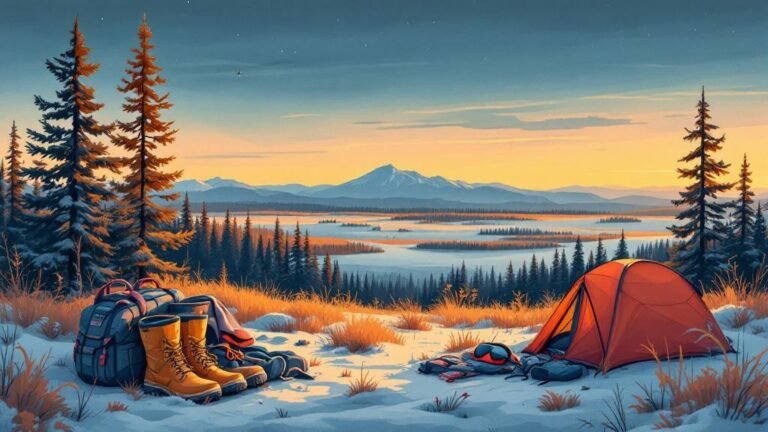

Summer Hiking in Lapland: Trails, Huts & Midnight Sun
Finland has some of the best hiking infrastructure in Europe, and almost nobody outside the Nordics knows about it. Marked trails through vast wilderness. Free huts with firewood and gas stoves, open to anyone. The legal right to camp virtually anywhere. And in June and July, the sun doesn’t set – you can hike at 2am in full daylight if you feel like it. Summer hiking in Lapland isn’t an extreme sport or a luxury experience. It’s walking through some of the emptiest, quietest landscape on the continent, with a safety net of huts and trail markers that makes it accessible to anyone with reasonable fitness and decent shoes.
The hiking season runs from June through September, with each month offering something different. June brings the midnight sun and wildflowers but also mosquitoes. July is the warmest. August sees the bugs fade. September – called ruska season – brings autumn colours that turn the fells red and gold, with cool air and empty trails. If you’re choosing one month, most Finns would tell you September. But any of them work.
Best Hiking Trails by Difficulty
Lapland’s trails range from flat boardwalk loops near visitor centres to unmarked wilderness routes where you won’t see another person for days. Here’s a practical breakdown by experience level.
| Trail / Area | Difficulty | Length | Duration | Best For |
|---|---|---|---|---|
| Pyhä-Luosto day loops | Easy | 5-15 km | Half day | Beginners, families |
| Kiilopää day trails (UKK NP) | Easy–Moderate | 5-20 km | Half to full day | First-time fell hikers |
| Ylläs fell trails | Moderate | 10-20 km | Full day | Day hikers wanting fell views |
| Hetta–Pallas trail | Moderate | 55 km | 4 days | The classic multi-day hike |
| UKK long routes | Moderate–Hard | 40-80+ km | 4-7+ days | Experienced hikers, solitude |
| Halti (Finland’s highest point) | Hard | ~110 km return | 5-7 days | Peak-baggers, wilderness lovers |
For your first Lapland hike, the day trails around Kiilopää or Ylläs give you fell landscapes – those treeless rounded summits – without committing to an overnight trip. If you want the full experience of hut-to-hut hiking, the Hetta–Pallas trail is where to start.
The Big Three National Parks
Urho Kekkonen National Park
Finland’s second-largest national park at 2,550 km² – roughly the size of Luxembourg. The main entrance is at Saariselkä, with Kiilopää as another popular starting point. The park has around 200 km of marked trails ranging from easy day loops to multi-week treks deep into the wilderness. Near Saariselkä, the trails are well-maintained and busy by Lapland standards (which still means quiet). Push further in and you’re alone with reindeer and the occasional other hiker.
Pallas-Yllästunturi National Park
Finland’s most visited national park, and for good reason. The fell chain here – open treeless summits rising above the birch forests – gives you views that feel disproportionate to the modest elevation. The park has 350 km of marked trails and encompasses the entire Hetta–Pallas classic route. Access points include Hetta (Enontekiö), Pallastunturi, and Ylläs.
Lemmenjoki National Park
The largest national park in Finland and one of the largest wilderness areas in Europe. Lemmenjoki is wilder and quieter than UKK or Pallas – fewer marked trails, more river-based routes, and the remains of gold-panning history. This is for hikers who want genuine remoteness. Access is from the village of Njurgulahti, south of Inari.
Wilderness Huts: Free Accommodation on the Trail
This is the part that surprises most visitors. Along Lapland’s hiking trails, you’ll find wilderness huts – autiotupa in Finnish – that are free, open to anyone, and unmanned. No booking. No fee. Just walk in.
A typical autiotupa has bunks (bring your own sleeping bag), a wood stove, a supply of dry firewood, a gas stove for cooking, basic cookware, and an outdoor dry toilet. Some larger ones have a separate drying room for wet clothes. The standard is surprisingly good – these are maintained by Metsähallitus, Finland’s national parks authority.
The system runs on trust and common sense. Use what you need, leave it clean, chop replacement firewood if you use the axe. If the hut is full when you arrive, the convention is that the latest arrival gets the bunk – earlier arrivals can be asked to make room or pitch a tent nearby. In practice, this rarely causes conflict because the trails aren’t overcrowded.
In addition to autiotupas, you’ll find lean-to shelters (laavu) along many trails – open-fronted wooden shelters with fire pits. These are good for lunch breaks or overnight stays in warmer weather.
Jokamiehenoikeus: Your Right to Roam
Finland has jokamiehenoikeus – literally “every man’s right” – a legal right that allows anyone to walk, ski, cycle, or camp on any land, including private land. This isn’t a grey area or a polite tradition. It’s law. You can pitch a tent in the forest, pick berries and mushrooms, fish with a simple rod and line, and swim in any lake or river.
The restrictions are common sense: don’t camp in someone’s garden or cultivated field, don’t light fires without permission (except in designated fire pits on trails), don’t disturb nesting birds or damage trees, and don’t litter. In national parks, there are additional rules – fires are only allowed at marked fire pits, and during forest fire warnings (metsäpalovaroitus), open fires are prohibited entirely. Check nationalparks.fi for current warnings before heading out.
For UK and US hikers accustomed to “keep to the path” and “no trespassing” signs, this takes some getting used to. You can genuinely walk in any direction. Set up camp by a lake. Pick cloudberries on a hillside. It’s one of the things that makes hiking in Finland feel fundamentally different.
Trail Marking System
Finnish trail markers are once you know the system. Marked trails use painted blazes on trees and rocks – typically orange, red, or blue paint. In treeless fell areas, stone cairns and wooden posts mark the route. Major trails have signposts at junctions with distances in kilometres.
Three categories to know:
- Nature trails (luontopolku) – short, well-maintained loops near visitor centres. Often boardwalked over wet sections. Information boards along the way. Suitable for anyone.
- Marked trails (retkeilyreitti) – the backbone of the hiking network. Blazed trees, signposted junctions, duckboards over bogs. This is what most multi-day trails are.
- Unmarked wilderness routes – for experienced hikers with map and compass (or GPS). Few or no markers. You need to be comfortable with navigation.
Trail maps are available free from nationalparks.fi – downloadable PDFs and interactive online maps. National park visitor centres sell printed waterproof maps, which are worth having as backup. Your phone battery will drain faster than you expect in cold evenings or hot sun.
When to Hike: Month by Month
| Month | Conditions | Mosquitoes | Daylight | Verdict |
|---|---|---|---|---|
| June | Trails mostly clear, some muddy sections. Snow on fell tops early June. 10-20°C (50-68°F). | Bad to terrible | 24h (midnight sun) | Great if you tolerate bugs |
| July | Warmest month, driest trails. Occasional thunderstorms. | Bad | 22-24h | Peak season, busiest trails |
| August | Warm, stable weather. Berry season begins. Occasional cool nights. | Fading | 16-20h | Excellent all-round |
| September | Ruska (autumn colours). Cool, crisp. First frosts possible. | Gone ✓ | 12-15h | ★ Best month for hiking |
September deserves special mention. Ruska – the autumn colour season – turns the birch forests and ground-cover vegetation into a carpet of red, orange, and gold. The fells look like they’re on fire. The mosquitoes are gone, the air is cool and clear, the trails are quiet, and you might catch the first northern lights of the season. Finns consider September the best hiking month, and they’re right.
Mosquitoes: The Honest Truth
Nobody warns you enough about this. From mid-June through July, Lapland’s mosquitoes are relentless. Not dangerous – Finland has no malaria or other mosquito-borne diseases – but absolutely maddening. They swarm in clouds, especially near water, in still air, and during the warm evening hours (which, with midnight sun, means all night).
What you need:
- DEET-based repellent – 30-50% concentration. The natural stuff doesn’t cut it here. Finnish pharmacies sell a brand called Off! that works well.
- Head net – a simple mesh net that drapes over a hat. Looks ridiculous. You will not care. Costs a few euros from any outdoor shop in Lapland.
- Long sleeves and trousers – even in warm weather, you’ll want coverage. Light, loose-fitting layers are best.
- Tent with good mesh – check your tent’s mosquito netting before you leave home. Any gap, any damaged mesh, and you’ll have company all night.
August is noticeably better. By September, the mosquitoes are essentially gone. If you have flexibility on timing, factor this in heavily.
What to Bring
Lapland’s trails and hut system mean you can pack lighter than you’d expect for multi-day wilderness hiking. The huts provide shelter, firewood, and cooking facilities. You just need to carry food, sleeping gear, and clothing.
Essential kit:
- Sleeping bag (comfort rating 0-5°C for summer, colder for September)
- Sleeping pad – hut bunks are wooden boards
- Tent or tarp as hut backup
- Rain gear – a proper waterproof jacket and trousers, not a poncho
- Hiking boots with ankle support, well broken in
- Layers: merino base layer, fleece, wind shell
- Mosquito net and DEET repellent (June–July)
- Water bottle – stream and lake water is generally drinkable in the wilderness (away from villages), but a filter gives peace of mind
- Map and compass – don’t rely solely on your phone
- Lightweight stove and fuel if you want independence from hut gas stoves
- First aid kit, blister plasters, sunscreen
Prices for the 2025-26 season: trails and wilderness huts are completely free. If you want a guided day hike, expect to pay 80-150€ per person. But honestly, Lapland’s trail marking and hut system are so well designed that most hikers don’t need a guide.
Multi-Day vs Day Hikes
Both work well in Lapland, and the choice depends on your experience and how much time you have.
Day hikes are the easy entry point. Drive or take a bus to a national park visitor centre, pick a loop trail, walk for a few hours, come back. No heavy pack, no tent, no wilderness navigation. Kiilopää, Ylläs, and Pyhä-Luosto all have excellent day-hike networks. You sleep in a hotel or cabin and hike with a light daypack.
Multi-day hut-to-hut hikes are where Lapland really shines. The rhythm of walking all day through open fell landscape, arriving at a hut, lighting the stove, cooking dinner, drying your boots – it’s deeply satisfying. The Hetta–Pallas trail (55 km, 4 days) is the classic choice for a first multi-day hike. It’s well-marked, the huts are spaced at sensible intervals, and the fell crossings give you wide-open views that make you feel very small and very happy.
For experienced hikers, UKK National Park offers routes of a week or more through terrain that feels genuinely remote. You’ll cross rivers, navigate by map, and go full days without seeing another person. The park covers 2,550 km² – there’s space to get properly lost in (figuratively, hopefully).
Practical Things to Know
Getting there: Fly to Rovaniemi, Ivalo, or Kittilä, then drive or take a bus to your trailhead. For UKK, Ivalo is closest (Saariselkä is 30 minutes south). For Pallas-Yllästunturi, Kittilä is the nearest airport. You can book buses through Omio, which has Finnish buses and trains in one English-language platform – useful for comparing routes and booking with mobile tickets.
Water: Lapland’s water is among the cleanest in Europe. In remote wilderness areas, stream and lake water is generally safe to drink. Near villages, trails, or reindeer herding areas, use a filter or boil. When in doubt, filter.
Wildlife: Brown bears exist in eastern Lapland but encounters are extremely rare – they avoid humans. Reindeer are everywhere and harmless. The main wildlife concern is mosquitoes (see above).
Mobile coverage: Surprisingly decent along major trails and near fell tops. In valleys and deep wilderness, you’ll lose signal. Don’t rely on your phone for navigation – carry a map.
Fires: Only at designated fire pits in national parks. During forest fire warnings, no open fires at all – the gas stoves in huts still work. Check current fire warnings on nationalparks.fi before your hike.
Frequently Asked Questions
Do I need to book wilderness huts in advance?
No – autiotupa (wilderness huts) are free and first-come, first-served with no booking system. That said, Metsähallitus also operates reservable huts (varaustupa) on some popular routes, which cost a small nightly fee and guarantee you a spot. Check nationalparks.fi for which huts are which on your chosen trail.
Is Lapland hiking safe for beginners?
Yes, on marked trails. Finland’s trail marking is clear, the hut network provides reliable shelter, and day hikes near visitor centres require no wilderness skills. Start with a day hike at Kiilopää or Pyhä-Luosto before attempting multi-day routes. The main risks for beginners are blisters from new boots and underestimating distances.
When do the mosquitoes end?
The worst is mid-June through late July. August is noticeably better, and by mid-September they’re effectively gone. If mosquitoes are a dealbreaker, plan your trip for late August or September.
Can I drink water from streams in Lapland?
In remote wilderness areas above the treeline, yes – Lapland’s water quality is excellent. Near reindeer herding areas, villages, or popular campsites, it’s safer to filter or boil. A lightweight water filter weighs almost nothing and removes any doubt.
Do I need a guide for hiking in Lapland?
For marked trails and hut-to-hut routes, no. The infrastructure is designed for independent hikers. A guided day hike (80-150€) can be worthwhile if you want to learn about flora, fauna, and Sámi culture along the way – but it’s a choice, not a necessity.
The thing about hiking in Lapland is that it’s not complicated. The trails are marked, the huts are free, the water is clean, and you’re legally allowed to walk anywhere. The hard part is choosing when to go – and then convincing yourself to come home.
Best Booking Resources for Lapland
After years of travelling to and around Lapland, these are the booking tools I keep coming back to. They consistently offer the best prices, the most relevant options for northern Finland, and actually work well for Lapland-specific searches — which not all platforms do.
- Skyscanner – The best flight search engine for Lapland routes. It catches the budget airlines and seasonal charters that other search tools miss, and the price alerts are genuinely useful for spotting deals on Helsinki-Rovaniemi or direct UK routes.
- VR Finnish Railways – The only way to book Finland’s overnight trains. The Santa Claus Express from Helsinki to Rovaniemi is an experience in itself — book early for the cabin berths, they sell out weeks ahead in peak season.
- DiscoverCars – Compares all the major rental companies at Lapland airports in one search. Crucially, they show which rentals include studded winter tyres — mandatory in Lapland and a detail other comparison sites bury in the fine print.
- Booking.com – Has the widest selection of Lapland accommodation by far, including cabins, glass igloos, and small family-run guesthouses that don’t list elsewhere. Free cancellation on most properties makes it low-risk for planning ahead.
- GetYourGuide – The largest marketplace for Lapland activities: husky safaris, snowmobile tours, aurora trips, reindeer visits. You can compare operators and prices side by side, and most bookings are cancellable up to 24 hours before.
- SafetyWing – Travel insurance designed for adventurous trips. Covers winter sports, extreme cold activities, and medical evacuation — all relevant when you’re snowmobiling at -25°C. Affordable and the claims process is straightforward.
- Holafly – eSIM that works in Finland from the moment you land. No hunting for local SIM cards at the airport, no roaming surprises. Set it up on your phone before departure and you’re connected in Lapland immediately.
Some of the links above are affiliate links — if you book through them, I earn a small commission at no extra cost to you. I only recommend services I genuinely use and trust for Lapland travel.