
Santa Claus Village: What to Actually Expect (Honest Review)
Updated 5 October 2026.
Some links on this page are affiliate links. If you book through them, I earn a small commission at no extra cost to you. I only recommend services I genuinely trust for Lapland travel.
Santa Claus Village is free to enter. The photo with Santa is 55€ for the digital package covering up to five people, or 40€ for an A4 print, and you cannot take your own. The Arctic Circle crossing certificate is extra. The snowmobile ride is extra. The reindeer sleigh is extra. Everything that feels like it should be part of the experience is, in fact, a separate transaction. This is the honest truth about Lapland’s most visited attraction – and it’s still worth going, if you know what you’re actually walking into.
Located right on the Arctic Circle line, 8 km north of Rovaniemi centre, Santa Claus Village receives hundreds of thousands of visitors each year. It’s part theme park, part shopping village, part genuine Finnish curiosity. The trick is understanding what’s free, what costs money, and what’s actually worth paying for.
Book the village extras
Santa Claus Village experiences: reindeer and husky rides, Santa meetings and Arctic Circle tours at the village, with free cancellation
What It Is (and What It Isn’t)
Santa Claus Village isn’t a theme park with rides and gates. It’s an open-air complex of wooden buildings straddling the Arctic Circle – a line literally painted on the ground that you can walk back and forth across. Think of it more like a pedestrianised shopping village built around a single concept: this is where Santa lives.
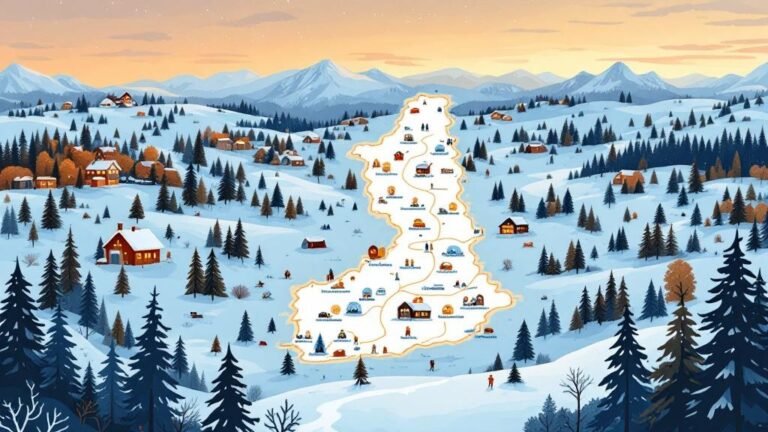
The layout is . There’s a central courtyard with the Arctic Circle line, Santa’s main office (where you queue for the meeting), the Santa Claus Main Post Office, a cluster of souvenir shops and cafés, and then various activity operators spread around the edges offering husky rides, reindeer sleigh rides, snowmobile safaris, and more. You can walk the whole thing in ten minutes if you’re not stopping.
It’s open year-round, though winter is when most people visit. In summer it’s quiet and a bit odd – a Christmas village under the midnight sun. In December, it’s packed to the point where queues define the experience.
Free vs Paid: What Actually Costs Money
This is the single most important thing to understand before you go. Entry to the village grounds is free. Walking around, crossing the Arctic Circle, poking into the shops, soaking in the atmosphere – all free. But almost everything else has a price tag.
| Activity | Cost | Worth it? |
|---|---|---|
| Entering the village | Free | ✓ |
| Crossing the Arctic Circle | Free | ✓ |
| Meeting Santa (no photo) | Free | ✓ |
| Official photo/video with Santa | 55€ digital (up to 5 people), 40€ A4 print | ★ For kids, yes |
| Arctic Circle crossing certificate | Paid | ✗ Nice paper, forgettable |
| Sending a postcard from Santa’s Post Office | Cost of postcard + stamp | ✓ Genuinely charming |
| Short husky ride (musher-driven) | From 63€ adult, 52€ child | ★ Quick taste only |
| Reindeer sleigh ride | 30€ adult / 20€ child for 400 m, 40€ / 30€ from 1 Dec to 10 Jan; from 50€ for 800 m; from 120€ for a 1-hour safari | ✓ Kids love it |
| Snowmobile safari | From 156€ (2 hr, shared sled) | ★ Better booked elsewhere |
| Snowman World (adjacent) | Paid entry | ✓ Great for small kids |
Prices are from the 2025-26 season; 2026-27 rates are being published through the autumn, so check operator websites or booking platforms for current rates. The village itself doesn’t charge admission, but a family of four can easily spend over 300€ if you do the photo, a couple of activities, lunch, and a souvenir or two. Or you can spend nothing and still have a perfectly nice visit.
Meeting Santa: The Process
Here’s how it works. You queue. You enter a room. Santa is there – a real person, in costume, multilingual, genuinely good at making kids (and adults) feel welcome. You have a brief conversation. It’s surprisingly personal, not a conveyor belt. Then comes the moment: the photo.
The meeting itself is free. You can walk in, say hello to Santa, have a chat, and leave without paying a cent. But you cannot take your own photos inside Santa’s office. The official photo package starts at 55€ for the digital download (covering up to 5 people) or 40€ for an A4 print, and it’s the main revenue driver of the whole operation. Every. Single. Time.
Wait times vary enormously. In December – especially the week before Christmas – you’re looking at waits that can stretch well beyond an hour. In January or March, you might walk straight in. The village posts approximate wait times, but they’re optimistic.
Is the photo worth it? With young kids who believe in Santa, yes. The production quality is high, they handle it well, and the look on a child’s face is hard to put a price on. For adults without kids, you’re paying for a novelty photo. Your call.
The Post Office
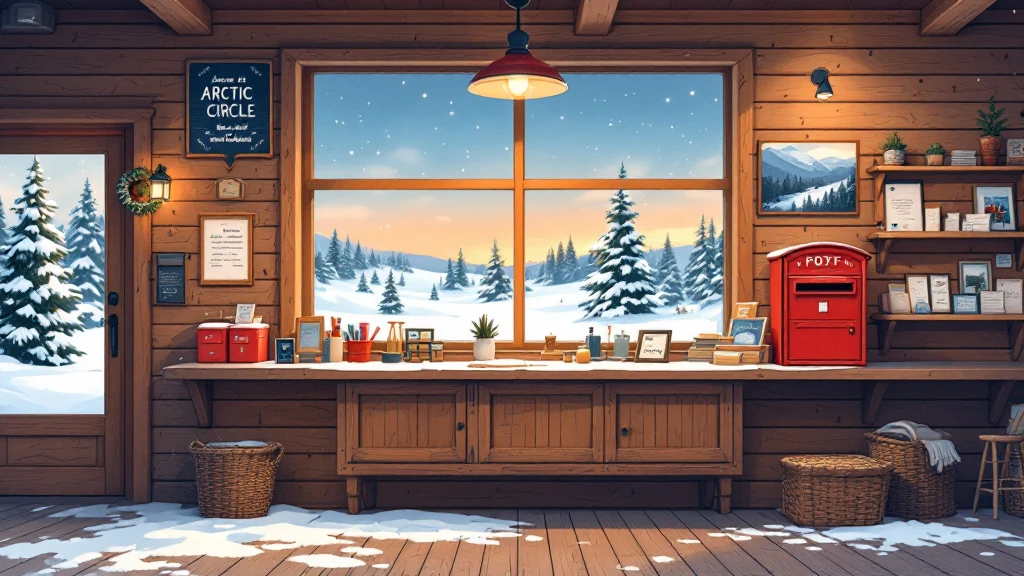
This is the part that surprises people. Santa Claus Main Post Office is genuinely lovely. It’s a real, functioning post office operated by Posti (Finland’s postal service), and you can send letters and postcards from here with a special Arctic Circle postmark.
There are two mailboxes: a red one for normal delivery (arrives in a few days) and a yellow one that holds your letter until the following December, delivering it just before Christmas. Sending a postcard to a child from “the Arctic Circle” is the kind of small, inexpensive thing that punches well above its weight. Buy a postcard, write something nice, drop it in the yellow box. Done.
You can also arrange for Santa to send a letter to your child at home. This is a paid service and there are several versions at different price points. The post office is free to browse and has some interesting historical displays about Arctic mail.
The Arctic Circle Crossing
There’s a thick white line painted across the ground marking the Arctic Circle (66°33’N). You can walk across it, stand on it, take a photo straddling it – all free. It’s a satisfying geographical marker, the kind of thing that looks good on social media and gives you a genuine “I was here” moment.
The paid certificate is a laminated piece of paper confirming you crossed the Arctic Circle. It’s a nice keepsake for about five minutes, then it goes in a drawer. Skip it unless you’re collecting these things.
Best Time to Visit (and When to Avoid)
Timing makes or breaks the Santa Claus Village experience. The difference between visiting at the wrong time and the right time is the difference between a stressful queue-fest and a pleasant couple of hours.
| When | Crowds | Experience |
|---|---|---|
| Dec 20 – Jan 2 | Extreme | Long queues, packed shops, full car parks. Atmospheric but exhausting. |
| December (not Christmas week) | Heavy | Kaamos darkness, Christmas lights – beautiful but busy. Tour buses constant. |
| January | Moderate | Quieter after New Year. Very dark – −8°C (18°F) average. Short Santa queues. |
| February | Moderate–heavy | Finnish ski holiday week (viikko 8) brings a spike. Otherwise manageable. |
| March | Low–moderate | Best balance: snow, daylight, short queues, lower prices. |
| Summer | Low | Open but quiet. Feels strange without snow. Midnight sun is interesting. |
Within any given day, the tour buses arrive mid-morning and keep coming until mid-afternoon. This is the crunch zone. If you’re visiting independently, you have two windows.
Before 10am: The village opens early and the first hour or two are calm. You can meet Santa with minimal wait, browse the post office in peace, and take photos without strangers in every shot.
After 3pm in winter: Tour buses head back to hotels and the village empties out. In December and January it’s dark by then, which actually adds to the atmosphere – the Christmas lights come alive against the snow.
With Kids vs Without Kids
Santa Claus Village was built for families with young children, and it shows. If you have kids under about eight who believe in Santa, this is the centrepiece of your Lapland trip. The meeting with Santa is well-produced, the elves are committed to the performance, and the whole village plays the part. For a five-year-old, this is real.
For older kids and teenagers, the magic fades fast. There’s not much to actually do beyond the photo and the post office. The activities around the village – huskies, reindeer, snowmobiles – are the same ones available all over Lapland, often at better prices and in quieter settings.
Snowman World, located right next to the village, is an ice construction with slides, an ice bar, and snow sculptures. It’s better suited to young children than the main village and gives them something active to do rather than just standing in queues.
Without kids: Santa Claus Village is a half-hour visit, not a half-day one. Walk through, cross the Arctic Circle, send a postcard, have a coffee, move on. Don’t feel obligated to queue for the Santa photo unless the novelty genuinely appeals. The village is charming in small doses – it wears thin if you’re there for three hours with nothing to do.
Couples visiting Lapland for romance should treat this as a quick stop, not a destination. The real Lapland experience – the silence, the wilderness, the northern lights – is elsewhere.

Getting There
Santa Claus Village sits on the Arctic Circle, a short drive north of Rovaniemi city centre along Highway E75. If you’ve flown into Rovaniemi Airport, the village is actually closer to the airport than the city centre is.
Most hotels in Rovaniemi offer shuttle services or can arrange transport. Local bus number 8 runs from the city centre to the village. If you’ve rented a car, there’s parking on site – free in quiet months, sometimes paid during peak December.
If you’re coming from further afield, Rovaniemi is connected to Helsinki by overnight train (12 hours) and daily flights (1.5 hours). For booking trains and buses, Omio is a convenient option – it shows all Finnish rail and bus routes in English with mobile tickets.
Practical Tips
- Dress warm. You’ll be outdoors walking between buildings. In December and January, that means −10°C or colder. Layering matters – thermal base, fleece mid-layer, windproof outer.
- Bring cash and cards. Most places accept cards, but a few smaller stalls may prefer cash.
- Budget before you go. Decide in advance what you’re willing to pay for. The village is designed to make you spend incrementally – one more photo, one more certificate, one more ride. Having a plan helps.
- Eat before or after. The cafés inside the village are overpriced and mediocre. Rovaniemi city centre has much better restaurants.
- Check Visit Rovaniemi for current opening hours – they change seasonally and can shift around holidays.
Reindeer beyond the village
Reindeer farm visit near Rovaniemi: meet the herders, free cancellation, instant confirmation
Frequently Asked Questions
Is Santa Claus Village free?
Entry is free and you can walk around, cross the Arctic Circle, and even meet Santa without paying. The costs come from the official Santa photo (55€ digital, 40€ printed), certificates, activities like husky or reindeer rides, and food. You can genuinely have a nice visit spending nothing – or spend 200€+ easily if you do everything.
How long should I spend at Santa Claus Village?
Families with young children: plan 2-3 hours, more if you’re doing activities like Snowman World. Adults without kids: 30-60 minutes is plenty for the Arctic Circle crossing, post office, and a quick look around. Don’t build your whole day around it unless you’re booking on-site activities.
Is Santa Claus Village worth visiting in summer?
It’s open year-round, but without snow it loses most of its charm. The post office and Santa meeting still operate, and there are no queues at all. If you’re in Rovaniemi anyway, stop by for twenty minutes. Don’t make a special trip for it in summer.
Can I take my own photos with Santa?
No – personal cameras and phones aren’t allowed inside Santa’s office. The official photographers handle it, and the resulting photo package is how the free meeting is funded. You can take photos everywhere else in the village, just not in the Santa meeting room itself.
What’s the best month to visit Santa Claus Village?
January through March gives you snow and atmosphere without the December crowds. March is particularly good – plenty of daylight, deep snow, and short queues. If Christmas magic matters more than comfort, early December (before the 20th) has the festive atmosphere without peak-week chaos.
Best Booking Resources for Lapland
These are the booking tools I keep coming back to. They consistently offer the best prices, the most relevant options for northern Finland, and actually work well for Lapland-specific searches, which not all platforms do.
- Kiwi.com: The best source for finding flights and airport connections. I have noticed they find flight connections that other search engines miss.
- Booking.com: I almost always use them for booking hotels and apartments (and occasionally flights). They have the best filters and I like the user-friendly interface.
- Hotels.com: The most popular hotel booking platform in many countries, US included.
- Get Your Guide: A massive selection of tours and excursions, including aurora tours, husky rides, reindeer experiences and more!
- EconomyBookings: Want to explore Lapland or chase auroras yourself? They pool together the best offers from car rental operators for your convenience.
- yesim: Need a local SIM for Lapland? A stress-free holiday nowadays (unfortunately) might start from a good connection, so get an eSIM with unlimited or prepaid data.
- Ekta Traveling: Not interested in checking out the Finnish public health care system on your holiday? Didn’t think so 🙂 Good insurance gets that stress out of the way.
As an Amazon Associate I earn from qualifying purchases. Booking through these links costs you nothing extra and helps keep these guides free and up to date. Thank you!

Planning a Lapland trip?
Ask a Finn. The Lapland Trip Planning: Finland group is where readers compare dates, resorts and real prices for the coming winter.
Join the planning groupFollow on FacebookFollow on Pinterest