Christmas in Lapland: Is It Worth the Hype? (Honest Take)
Christmas in Lapland is the most oversold and overpriced travel experience in Finland. It’s also, for the right audience, genuinely worth every cent. The trick is knowing which category you fall into before you book.
Here’s the honest version: if you have children under eight, a Lapland Christmas trip creates memories that will last their entire childhood. The snow, the reindeer, the darkness broken by fairy lights, the meeting with Santa – it works. For adults without kids, you’re paying a 2.5x seasonal premium for an experience that November or January delivers at a fraction of the cost. This page breaks down exactly what you get, what it costs, and whether the Christmas hype matches reality.
What a Christmas trip to Lapland actually involves
Let’s clear up what “Christmas in Lapland” means in practice, because the marketing images don’t tell the whole story.
December in Rovaniemi means kaamos – polar night. The sun doesn’t rise at all between roughly 20 December and 2 January. You get a few hours of blue twilight around midday, then darkness returns. Temperatures average −6°C to −11°C (21°F to 12°F), with cold snaps dropping lower. The air is dry and still, which makes it feel less brutal than you’d expect. Snow depth averages around 38 cm – enough to cover the ground properly, though not the deep powder of March.
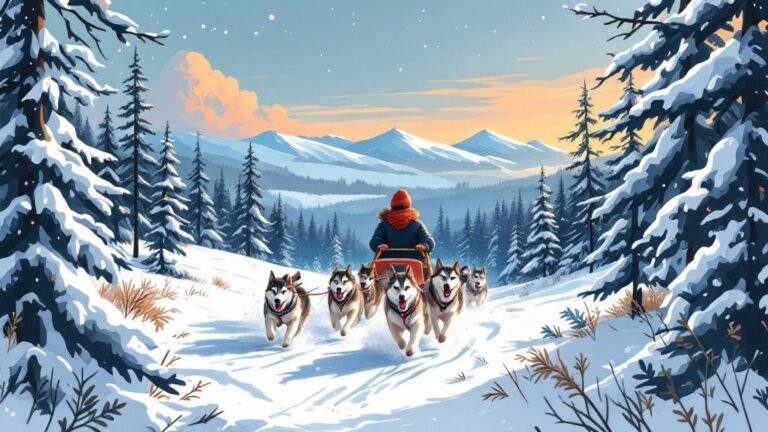
Your days will revolve around activities booked in advance: husky safaris, reindeer sleigh rides, snowmobile trips, and the centrepiece – a visit to Santa Claus Village. Between activities, you’ll be in your hotel or cabin, warming up, eating, and watching the dark sky for aurora. There’s only about one sunny day in the entire month of December on average, so don’t expect picture-perfect blue skies. The atmosphere is more moody and lamp-lit than sparkling winter postcard.
The “real” Finnish Christmas, for what it’s worth, looks nothing like this. Finns spend Christmas Eve quietly at home with family, eating ham and casseroles, visiting the sauna, and going to the cemetery to light candles on family graves. The tourist version is manufactured – purpose-built attractions, elves in costumes, gift shops. But manufactured doesn’t mean bad. Disneyland is manufactured too, and kids don’t care about authenticity.
Santa Claus Village: the honest review
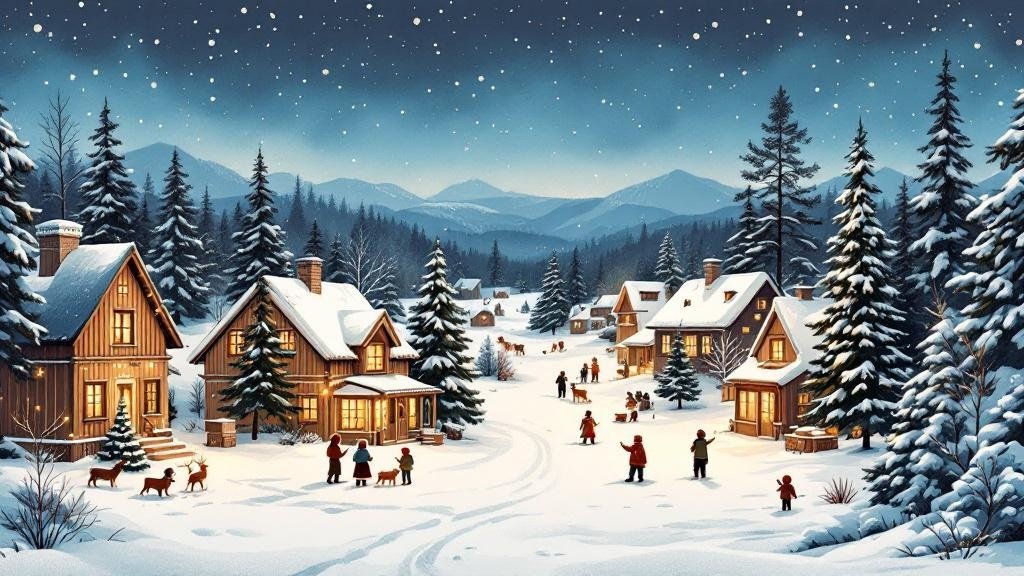
Santa Claus Village sits on the Arctic Circle, about 10 km north of Rovaniemi centre. It’s free to enter. Walking around the village, crossing the Arctic Circle line, browsing the shops – all free. The photo with Santa is where they get you.
The village itself is a small cluster of wooden buildings containing souvenir shops, cafés, a post office (where you can send letters with an Arctic Circle postmark), and the main attraction: Santa’s office. You queue to meet Santa. He speaks multiple languages, asks the children where they’re from, listens to their wishes. The experience is well done – the Finns know what they’re doing here. But the professional photo costs extra. And Santa’s elves are very strict that you can’t take your own photos there.
For kids aged three to seven, this is the peak of the trip. The queue builds anticipation, the room is beautifully decorated, and Santa is convincing. Younger toddlers often get overwhelmed. Older kids – nine, ten – are starting to have doubts, and the slightly commercial feel doesn’t help. Teenagers will spend the visit on their phones.
The village also has short husky rides (50-65€ for a 30-minute musher-driven ride), reindeer sleigh rides, snowmobile experiences, and a Snowman World ice attraction. You can easily spend half a day here, though most of it will be queuing during Christmas week.
What it actually costs (and how December compares)
This is where the honest conversation gets uncomfortable. December has the highest seasonal multiplier of any month – roughly 2.5x the March baseline for accommodation. Prices are for the 2025-26 season and change annually – check operator websites or booking platforms for current rates.
| Category | December (Christmas peak) | March (baseline) | November (pre-season) |
|---|---|---|---|
| Budget hotel (per night) | 200-325€ | 80-130€ | 64-104€ |
| Mid-range hotel (per night) | 325-625€ | 130-250€ | 104-200€ |
| Cabin, mid-range (per night) | 375-775€ | 150-310€ | 120-248€ |
| Glass igloo (per night) | 400-990€ | 250-450€ | 250-450€ |
| Seasonal multiplier | 2.5x | 1x | 0.8x |
Activity prices stay roughly constant year-round – a husky safari costs the same in December as in March. It’s the accommodation and flights that spike. London to Rovaniemi return flights run 110-250 GBP via easyJet from Gatwick, with December at the top of that range. From the US, you’ll connect through Helsinki, where Finnair flights to Rovaniemi cost 150-250€ return in normal months but climb higher over Christmas.
Food costs don’t change seasonally. Budget on 30-45€ per person per day if you self-cater with one meal out (casual mains run 18-25€), or 60-90€ per person for restaurant dining. Lappish specialities like reindeer and fresh fish cost 28-40€ per main course.
The bottom line: a family of four doing a 4-night Christmas trip to Lapland with activities will spend significantly more than the same trip in March or November. The accommodation alone accounts for the bulk of that difference.
What to book in advance
Christmas week in Lapland (roughly 20 December to 2 January) books out earlier than any other period. If you’re reading this and your trip is less than six months away, start now. If it’s less than three months, some options will already be gone.
Accommodation: Book a year ahead for Christmas week. This isn’t exaggeration – the best cabins and hotels sell out that far in advance. Glass igloos need six or more months’ lead time for December through February. If you’re late, you may need to look at destinations beyond Rovaniemi where availability lasts longer.
Flights: Book as early as possible. easyJet’s Gatwick-Rovaniemi route fills up for pre-Christmas departures. Finnair via Helsinki is the main alternative. From the US, routes connect through Helsinki or sometimes through London or Reykjavik.
Activities: Husky safaris, reindeer visits, and snowmobile trips all have limited daily capacity. The popular operators get fully booked weeks ahead for Christmas week. Book activities before you arrive – showing up and hoping to find availability on the day doesn’t work in December.
Santa Claus Village visit: Walking around the village is free and doesn’t need booking, but specific activities within it (husky rides, snowmobiles) should be booked ahead. The Santa meeting itself runs on a queue system during regular hours.
Packages: If the logistics feel overwhelming, organised Christmas packages handle flights, accommodation, transfers, and activities in one booking. These sell out early but they simplify everything – especially useful for families with young kids.
Best for kids vs adults: who should actually go at Christmas?
This is the most important section of this page. The answer determines whether the premium is worth it for you.
Families with kids under 8: go
For young children who believe in Santa, a Christmas trip to Lapland is as close to real magic as travel gets. They’re the right age to be awestruck by everything: the snow, the darkness, the huskies, the reindeer, and above all, meeting Santa in his “home.” The manufactured nature of the experience is invisible to a five-year-old. To them, it’s all real.
Husky safari short rides from Santa Claus Village run 50-65€. Reindeer farm visits with sleigh rides cost 85-139€ per person depending on the operator and booking for adults or children. These are manageable activities for small kids – nothing too long or physically demanding.
The premium hurts, but you’re buying a memory that your kids will talk about for decades. Most parents who’ve done it say it was worth it. Most parents who skipped it to save money slightly regret it.
Families with kids 8-12: maybe
This is the tricky zone. If your eight-year-old still believes, go. If they’re wavering, the commercial elements of Santa Claus Village might tip them the wrong way. The activities themselves – huskies, snowmobiles, aurora hunting – are still brilliant at this age, but they don’t need Christmas timing. January or February gives the same experiences with more daylight and lower prices.
Adults without kids: skip Christmas, go another time
This is the honest answer that travel agencies won’t give you. Everything that makes Lapland special for adults – northern lights, winter activities, snow landscapes, sauna culture, wilderness silence – is available from November through March. Christmas adds crowds, inflated prices, and a family-oriented atmosphere that doesn’t enhance a couples’ trip or a solo adventure.
November gives you the darkness, the snow, the aurora, and the pre-season quiet at roughly 0.8x the March baseline for accommodation. January offers even deeper cold and longer darkness with a 1.8x multiplier – steep but nowhere near December’s 2.5x. March is the local favourite: long daylight, deepest snow, and the lowest prices of the winter season.
| Traveller type | Christmas worth it? | Better alternative |
|---|---|---|
| Family, kids under 8 | ✓ Yes | — |
| Family, kids 8-12 | Maybe | February half-term |
| Family, teenagers | ✗ No | March (skiing + activities) |
| Couples | ✗ No | Nov, Jan, or Feb |
| Solo / adventure | ✗ No | March (best conditions) |
| Aurora chasers | ✗ No | Sep-Oct or Feb-Mar |
Alternatives to the Christmas peak
If you’ve read this far and decided the premium isn’t for you, here’s what else works.
November (pre-season): Snow usually arrives by mid-to-late October, and by November there’s typically 25 cm on the ground. Winter activities are running. Kaamos (polar night) begins late November. Santa Claus Village is open year-round. The atmosphere is quietly wintry without the Christmas frenzy, and prices are perhaps 20% cheaper. The downside: less reliable snow early in the month, and the village feels emptier – which for some people is the whole point.
Early December (1st-15th): A smart compromise. The Christmas decorations are up, snow is solid, the dark atmosphere is identical to Christmas week, and Santa Claus Village is in full swing. But the extreme peak-week pricing hasn’t hit yet. You miss the actual calendar holiday, but your kids get the same snow-and-Santa experience.
January: The deepest part of kaamos, with only about half an hour of sunshine per day in Rovaniemi. Colder – average highs around −8°C – but the silence and darkness are extraordinary. Prices drop significantly. Northern lights viewing is excellent with maximum darkness. Ideal for adults who want the Arctic winter experience without the tourist peak.
March: Where Finns themselves go. Daylight builds rapidly, snow depth peaks at around 75 cm, and prices drop to the baseline. You lose the Christmas theme entirely, but you gain the best skiing, the best light for photography, and the deepest snowpack. Northern lights are still visible on clear nights.
Frequently Asked Questions
Is a Lapland Christmas trip worth the money?
For families with children under eight who believe in Santa, yes – it creates memories that justify the premium. For adults without young kids, November or January delivers 90% of the experience at significantly lower prices. The honest answer depends entirely on who’s going.
How far ahead should I book Christmas in Lapland?
A year ahead for accommodation during Christmas week (20 Dec – 2 Jan) isn’t unusual – the best cabins, glass igloos, and hotels sell out that early. Flights and activities should be locked in at least three to four months before. If you’re late, look at the week of 10-18 December instead, when availability lingers longer.
Is there guaranteed snow in Lapland at Christmas?
In recent years, Rovaniemi has had snow cover by November, and December averages around 38 cm depth. Climate is shifting and nothing is 100% guaranteed, but a white Christmas in Lapland is about as close to certain as it gets in Europe. Head further north to Saariselkä or Inari for even more reliable cover.
Can you visit Santa Claus Village outside Christmas?
Santa Claus Village is open every day of the year. Santa holds audiences daily. The village has snow from November through April, and summer visits are possible too – though the atmosphere is different without the white landscape. Many locals would argue the village is more pleasant in January or February when the crowds thin out.
Is December too dark in Lapland?
The sun doesn’t rise at all in Rovaniemi from roughly 20 December to 2 January. You get a few hours of blue-grey twilight around midday, but it’s dark. Some people find this atmospheric and beautiful; others find it draining. If darkness concerns you, early December still has brief sunrise/sunset, and February brings the sun back properly with spectacular blue-and-pink skies reflected on snow.
Christmas in Lapland is a product – an extremely well-executed one, aimed squarely at families with young children. If that’s you, trust the hype for once. If it’s not, trust the Finns: the best month to visit Lapland is March, and nobody queues for anything.
Best Booking Resources for Lapland
After years of travelling to and around Lapland, these are the booking tools I keep coming back to. They consistently offer the best prices, the most relevant options for northern Finland, and actually work well for Lapland-specific searches — which not all platforms do.
- Skyscanner – The best flight search engine for Lapland routes. It catches the budget airlines and seasonal charters that other search tools miss, and the price alerts are genuinely useful for spotting deals on Helsinki-Rovaniemi or direct UK routes.
- VR Finnish Railways – The only way to book Finland’s overnight trains. The Santa Claus Express from Helsinki to Rovaniemi is an experience in itself — book early for the cabin berths, they sell out weeks ahead in peak season.
- DiscoverCars – Compares all the major rental companies at Lapland airports in one search. Crucially, they show which rentals include studded winter tyres — mandatory in Lapland and a detail other comparison sites bury in the fine print.
- Booking.com – Has the widest selection of Lapland accommodation by far, including cabins, glass igloos, and small family-run guesthouses that don’t list elsewhere. Free cancellation on most properties makes it low-risk for planning ahead.
- GetYourGuide – The largest marketplace for Lapland activities: husky safaris, snowmobile tours, aurora trips, reindeer visits. You can compare operators and prices side by side, and most bookings are cancellable up to 24 hours before.
- SafetyWing – Travel insurance designed for adventurous trips. Covers winter sports, extreme cold activities, and medical evacuation — all relevant when you’re snowmobiling at -25°C. Affordable and the claims process is straightforward.
- Holafly – eSIM that works in Finland from the moment you land. No hunting for local SIM cards at the airport, no roaming surprises. Set it up on your phone before departure and you’re connected in Lapland immediately.
Some of the links above are affiliate links — if you book through them, I earn a small commission at no extra cost to you. I only recommend services I genuinely use and trust for Lapland travel.