
Lapland Accessibility Guide: Traveling with Disabilities
Updated 10 September 2026.
Some links on this page are affiliate links. If you book through them, I earn a small commission at no extra cost to you. I only recommend services I genuinely trust for Lapland travel.
Lapland accessibility is better than most people expect – and worse in some specific ways that no one talks about. Finland takes accessibility seriously in public buildings, and the major hotels in Rovaniemi and Levi meet high standards. But deep snow, remote cabins, and the realities of outdoor winter activities create genuine challenges that require honest planning, not vague reassurance.
The good news: if you base yourself in Rovaniemi or Levi and stay in modern hotels, you’ll find wheelchair-accessible rooms, adapted transport, and activity operators who’ve invested in equipment like sit-skis and sled attachments. The honest news: outdoor wheelchair use in winter is extremely difficult, many traditional log cabins have steps and narrow doors, and some of the most iconic Lapland experiences require significant physical mobility. This guide covers what works, what doesn’t, and how to plan around the limitations.
Accommodation Accessibility
Finland’s building code requires accessibility in new public buildings, and this shows in the larger hotels. Chain hotels in Rovaniemi and Levi – including the Lapland Hotels group and other major chains – generally offer wheelchair-accessible rooms with roll-in showers, lowered fixtures, and wide doorways. These aren’t afterthoughts; Finnish accessibility standards are genuinely good by European comparison.
The challenge comes with traditional accommodation. Those cosy log cabins everyone pictures when they think of Lapland? Most have steps at the entrance, narrow doorways, split-level interiors, and compact bathrooms. A cabin built in the 1990s was almost certainly not designed with wheelchair access in mind. Even newer cabins often prioritise the rustic aesthetic – which means raised thresholds and loft bedrooms.
| Accommodation Type | Typical Accessibility | Notes |
|---|---|---|
| Chain hotel (Rovaniemi, Levi) | ★★★★ | Accessible rooms available, lifts, adapted bathrooms |
| Modern apartment hotel | ★★★ | Usually lift access, but check individual room layout |
| Traditional log cabin | ★ | Steps, narrow doors, loft beds – rarely accessible |
| Glass igloo | ★★ | Some operators have accessible units – ask directly |
| Remote wilderness cabin | ✗ | Not accessible. Often no road access in winter either |
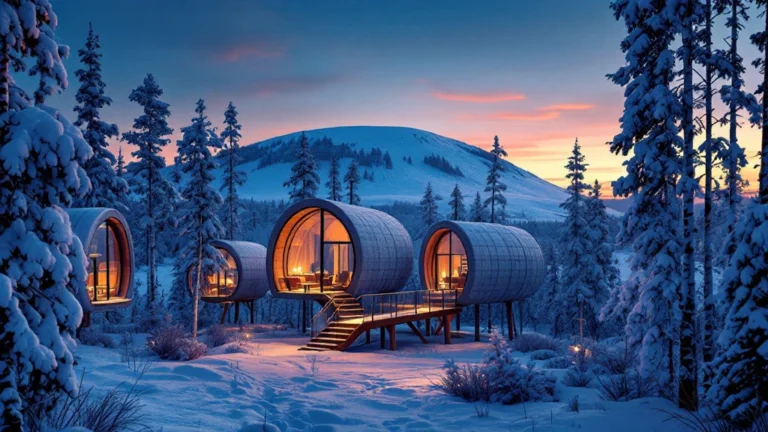
Glass igloos deserve a specific mention. These are the iconic Lapland accommodation, but they’re small by design – typically a single room with a glass ceiling. Some operators have built accessible versions with wider doors and adapted bathrooms, but this varies significantly between providers. Always confirm directly before booking.
Getting Around: Transport Accessibility
Finnish public transport is reasonably well adapted for wheelchair users, though Lapland’s distances and limited service frequency add complexity.
Flights: All three Lapland airports – Rovaniemi, Kittilä (for Levi), and Ivalo (for Saariselkä and Inari) – have wheelchair assistance available. Finnair provides assistance with advance notice, and the airports themselves are small enough that distances from check-in to gate are short. Request assistance through your airline at least 48 hours before travel.
Trains: VR’s overnight trains from Helsinki to Rovaniemi have wheelchair-accessible cabins, though availability is limited – book well ahead. The Santa Claus Express takes about 12 hours overnight. Staff can assist with boarding. For Levi, the alternative overnight train to Kolari connects via bus, which adds a transfer challenge.
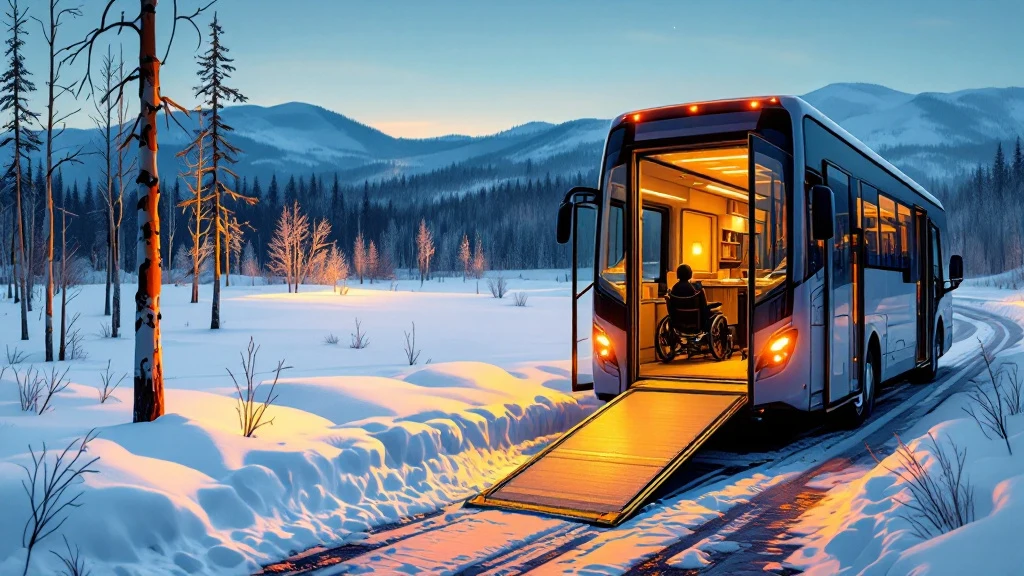
Buses: Inter-city buses between Lapland towns have varying accessibility. Newer coaches often have low floors or ramps, but this isn’t guaranteed on all routes. Contact the operator in advance – don’t assume. For routes like Rovaniemi to Levi or Rovaniemi to Saariselkä, check with the bus company about specific vehicle accessibility for your departure.
Taxis: Accessible taxis with ramps or lifts exist in Rovaniemi and, to a lesser extent, in Levi. They need to be pre-booked – you won’t find them waiting at a rank. Your hotel reception can arrange this, and it’s worth asking them to confirm the vehicle type.
Snow and Wheelchair Use – The Honest Reality
This is where the guide gets uncomfortable, because no amount of positive framing changes the physics. Deep snow is difficult for wheelchair users. Packed snow is uneven and slippery. Fresh snow is like sand – wheels sink. Slush during spring is worse than either.
Rovaniemi and Levi maintain cleared pavements in the town centres during winter, but “cleared” in Lapland means packed snow or ice with gravel on top, not bare tarmac. Power wheelchair users fare better than manual chair users, but even power chairs struggle on uneven packed snow. After a fresh snowfall, even cleared paths may be impassable for several hours until maintenance crews come through.
Some practical realities:
- Indoor-to-vehicle-to-indoor is the most reliable approach in deep winter
- Hotel-to-restaurant walks that look short on a map can be genuinely difficult on snow
- Spring (March-April) has more daylight and sometimes harder-packed snow, which can be slightly easier
- Summer visits avoid the snow problem entirely, though trails are unpaved and uneven
None of this means wheelchair users can’t visit Lapland. It means planning the trip around vehicle transfers rather than outdoor walking, choosing accommodation in the centre of town rather than a scenic but isolated location, and being realistic about what outdoor exploration looks like.

Activity Accessibility
This is where Lapland can genuinely surprise. Several activity operators have invested in adapted equipment, and the range of accessible experiences is growing. The key is asking in advance – adapted options exist but aren’t always listed on standard booking pages.
| Activity | Adaptation Available | Notes |
|---|---|---|
| Reindeer sleigh ride | ★★★★ | You sit in a sled – naturally suited to most mobility levels |
| Husky sled ride (passenger) | ★★★ | Riding in the sled is possible; driving requires upper body strength |
| Northern lights tour (vehicle-based) | ★★★ | Many tours are van/bus-based with brief outdoor stops |
| Snowmobile (passenger) | ★★ | Riding as passenger possible for some; discuss with operator |
| Sit-ski / adapted skiing | ★★★ | Available at Levi and some other resorts with advance arrangement |
| Sauna | ★★★ | Hotel saunas vary; some public saunas have accessible facilities |
| Ice fishing | ★★ | Requires transfer onto ice; some operators can assist |
| Cross-country skiing | ★★ | Sit-ski options exist but need pre-arrangement |
Reindeer sleigh rides are the most naturally accessible winter activity. You’re sitting in a sled being pulled – no standing, no walking required. The transfer from wheelchair to sled is the main challenge, and most reindeer farm operators can assist with this. Husky sled rides work similarly for passengers, though the sleds are lower and transfers can be trickier.
Northern lights tours are often vehicle-based, making them accessible by default. Small-group tours in vans involve driving to viewing locations and stepping outside briefly. Discuss your needs when booking – operators can choose locations with easier vehicle-to-viewing-point access.
Sit-skiing (both downhill and cross-country) is available at Levi Ski Resort and selected other locations, but this requires advance booking and often a guide. Don’t turn up expecting to find adapted equipment in the rental shop – arrange it weeks ahead.
Best Bases for Accessible Travel
Location choice matters more for accessible travel than for any other type of Lapland trip. The difference between a good base and a poor one is enormous.
Rovaniemi is the most accessible base in Lapland, full stop. It’s an actual city with cleared pavements, accessible public buildings, the widest choice of wheelchair-friendly hotels, accessible taxis, and the largest concentration of activity operators. The airport is nearby with good connections. If this is your first accessible trip to Lapland, start here.
Levi is the second-best option. It’s a purpose-built resort, so the main village area is compact and reasonably well maintained. The ski resort has adapted skiing programmes. Hotel options include modern chains with accessible rooms. It’s smaller than Rovaniemi, which means fewer choices but also shorter distances.
Saariselkä is compact and manageable but more limited in accessible accommodation and operator experience. Inari, Muonio, and the smaller villages are beautiful but present significant accessibility challenges – limited accommodation options, fewer cleared paths, and activity operators with less experience in adapted services.

Resources and Useful Contacts
Visit Finland has an accessibility section covering general travel in Finland, including accommodation search filters. It’s a reasonable starting point, though Lapland-specific detail is limited.
For national parks and outdoor trails, nationalparks.fi lists accessibility information for each park, including which trails have boardwalks or hard surfaces suitable for wheelchair use. In practice, most Lapland trails are not wheelchair-accessible, but some short nature paths near visitor centres have been adapted.
A few practical steps that make a real difference:
- Contact accommodation directly – email the hotel, describe your exact needs, ask for photos of the accessible room and bathroom
- Contact activity operators 4-6 weeks ahead – adapted equipment needs to be reserved or sourced
- Ask your hotel for help – Finnish hotel staff are practical problem-solvers and can arrange accessible taxis, contact operators on your behalf, and suggest which local restaurants have step-free access
- Consider a travel agent specialising in accessible travel – for complex itineraries, a specialist can do the legwork of confirming accessibility at every point in the chain
Frequently Asked Questions
Can wheelchair users visit Lapland in winter?
Yes, but it requires more planning than a standard trip. Base yourself in Rovaniemi or Levi where hotels have accessible rooms and paths are maintained. Plan around vehicle transfers rather than outdoor walking – deep snow makes outdoor wheelchair use very challenging. Many activities like reindeer sleigh rides and vehicle-based northern lights tours work well for wheelchair users.
Are there adapted winter activities in Lapland?
Several operators offer sit-skiing, sled attachments, and assistance with transfers for activities like husky and reindeer rides. These need to be arranged in advance – typically 4-6 weeks before your trip. Contact operators directly and be specific about your mobility level so they can prepare the right equipment.
Which Lapland destination is most accessible?
Rovaniemi, by a clear margin. It’s the only proper city in Finnish Lapland, with the widest selection of accessible hotels, maintained pavements, accessible taxis, and experienced activity operators. Levi is a reasonable second choice. Smaller villages like Inari or Muonio are beautiful but present significant accessibility challenges.
Is summer or winter better for accessible travel in Lapland?
Summer eliminates the snow problem entirely, which is the single biggest accessibility barrier. Paths are dry, distances are easier to cover, and outdoor exploration is more feasible. However, winter is when most iconic Lapland activities happen. The best approach depends on which experiences matter most to you – summer for independent outdoor exploration, winter for guided activities with adapted equipment.
Do Finnish hotels genuinely have good wheelchair access?
Modern chain hotels in Lapland’s main towns meet high standards – Finland’s building regulations are strict on accessibility for new construction. Older buildings and traditional log cabins are a different story. Always confirm directly with the property rather than relying on booking platform accessibility filters, which can be unreliable.
Lapland is more accessible than its reputation suggests, but less accessible than it could be. The gap is closing, especially in Rovaniemi and Levi, and Finnish practicality means that when you explain your needs clearly, people genuinely try to make it work. Plan ahead, ask direct questions, and don’t be shy about your requirements – Finns respect directness.
Best Booking Resources for Lapland
These are the booking tools I keep coming back to. They consistently offer the best prices, the most relevant options for northern Finland, and actually work well for Lapland-specific searches, which not all platforms do.
- Kiwi.com: The best source for finding flights and airport connections. I have noticed they find flight connections that other search engines miss.
- Booking.com: I almost always use them for booking hotels and apartments (and occasionally flights). They have the best filters and I like the user-friendly interface.
- Hotels.com: The most popular hotel booking platform in many countries, US included.
- Get Your Guide: A massive selection of tours and excursions, including aurora tours, husky rides, reindeer experiences and more!
- EconomyBookings: Want to explore Lapland or chase auroras yourself? They pool together the best offers from car rental operators for your convenience.
- yesim: Need a local SIM for Lapland? A stress-free holiday nowadays (unfortunately) might start from a good connection, so get an eSIM with unlimited or prepaid data.
- Ekta Traveling: Not interested in checking out the Finnish public health care system on your holiday? Didn’t think so 🙂 Good insurance gets that stress out of the way.
As an Amazon Associate I earn from qualifying purchases. Booking through these links costs you nothing extra and helps keep these guides free and up to date. Thank you!

Planning a Lapland trip?
Ask a Finn. The Lapland Trip Planning: Finland group is where readers compare dates, resorts and real prices for the coming winter.
Join the planning groupFollow on FacebookFollow on Pinterest