Things to Do in Saariselkä: Winter Activities, Trails and Day Trips
Updated 5 October 2026.
Some links on this page are affiliate links. If you book through them, I earn a small commission at no extra cost to you. I only recommend services I genuinely trust for Lapland travel.
Saariselkä is a village of hotels and holiday apartments about 260 km north of the Arctic Circle, sitting on the E75 between Rovaniemi and Inari, and the national park starts where the streets end. That is the whole appeal. You can walk out of a hotel lobby, cross a car park, and be on a marked trail into Urho Kekkonen National Park within ten minutes.
If you want Santa, museums and a proper town, go to Rovaniemi. If your trip is built around being outside, huskies, snowshoes, a chairlift, a fell top, aurora on a dark ridge, Saariselkä does it with less driving and fewer coaches. Ivalo airport is 25 to 30 km away, the ski resort is the northernmost in Europe, and the toboggan run down Kaunispää is the longest in Finland. It is a small place with an unusually good ratio of terrain to tarmac.
The toboggan run down Kaunispää
Kaunispää (437 m) rises directly above the village, and Finland’s longest toboggan run drops from the top of it. You ride the chairlift up and slide 2,000 m back down on slope 2, which is graded easy. Small children have a separate 360 m toboggan slope and a snowtube area at the bottom, so nobody has to be brave before they are ready.
The branded evening version, Aurora Tobogganing, runs on the illuminated slope with light art installed along it, and it works best in the polar night from December to February. A ticket is 59.50€ for adults and 41.50€ for children aged 7 to 16 or seniors, with a three-hour lift pass, a large toboggan and a helmet included; the guided package at 79.50€ / 61.50€ adds one guided run. Children under 7 are not allowed, and anyone under 130 cm rides with an adult. Buy from the resort webshop or the service centre. Prices are for the 2026-27 season and change annually, so check operator websites for current rates.
Skiing: Europe’s northernmost resort
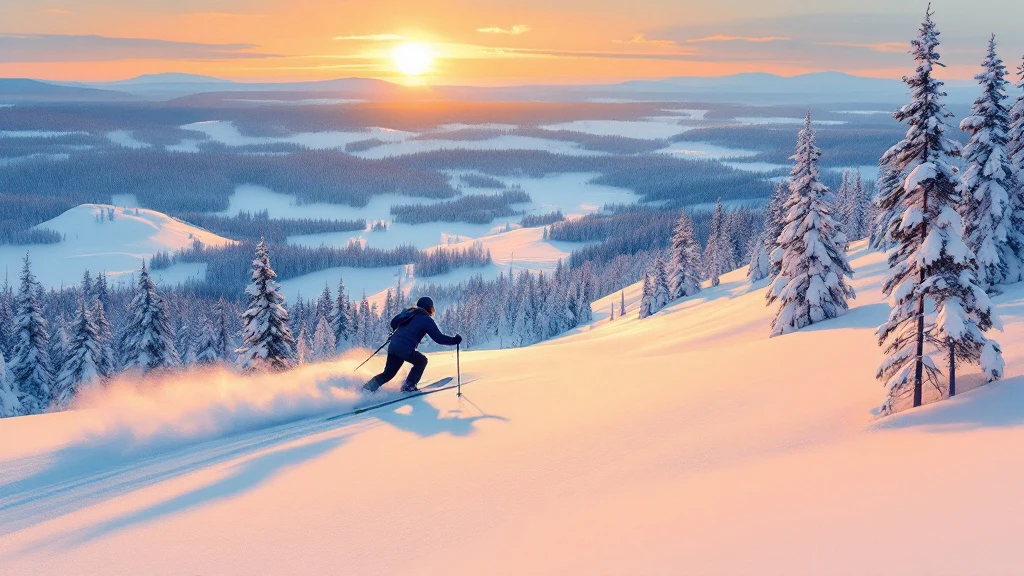
Saariselkä Ski & Sport Resort has 24 slopes, 16 of them floodlit, and 6 lifts moving up to 6,500 people an hour. The longest slope is 2,000 m and the vertical drop is 180 m. That drop tells you what this is: gentle blue and red runs spread across Kaunispää and Iisakkipää, ideal for beginners, families and intermediates who want mileage rather than steepness. Expert skiers chasing gradient will be bored by day two and should look at Levi or Ylläs.
The resort’s stated goal for 2026-27 is a season from 21 November 2026 to 2 May 2027. Treat that as an intention, not a guarantee; last season ran 21 November 2025 to 10 May 2026.
| Lift ticket (2026-27) | Adult | Child 6-17 / senior 64+ |
|---|---|---|
| 3 hours | 52€ | 34€ |
| 1 day | 55€ | 38€ |
| 3 days within 4 | 154.50€ | 99€ |
| 6 days within 8 | 259€ | 149€ |
| Chairlift round trip | 18€ | 18€ |
Normal rates run from 21 November 2026 to 3 April 2027 (prices updated in October 2026), and children under 6 in a helmet ski free with a paying adult.
Cross-country skiing on 200 km of track
The maintained track network runs to roughly 200 km and links Saariselkä, Kiilopää and Kakslauttanen, which means you can ski between places rather than in loops. About 70 km of it lies inside the national park zone, where the tracks are quieter, the forest thins into open fell, and you can go for an hour without meeting anyone.
Track skiing is genuinely the cheapest serious activity in Lapland once you have hired skis, and it is the one Finns actually do. It is also the reason Saariselkä has a steady population of Finnish holidaymakers in March who never set foot on a husky sled.
Urho Kekkonen National Park on snowshoes
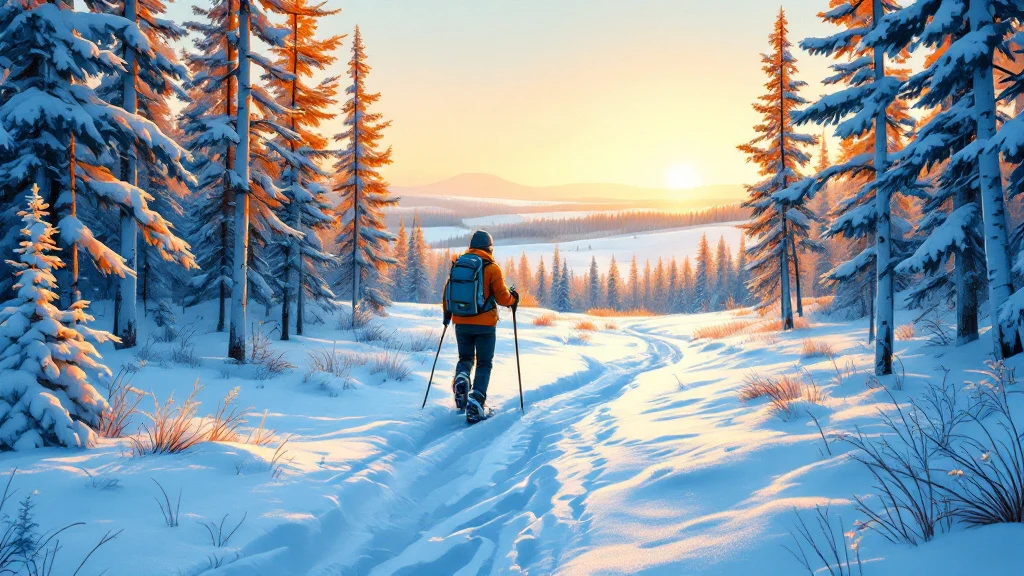
Urho Kekkonen is one of Finland’s largest national parks and it begins at the edge of the village. Entry is free, marked winter routes leave from both the village and the Kiilopää fell centre, and Metsähallitus publishes the trail maps.
The classic day trip is Rumakuru: 12.5 km in winter (14 km in summer) across fell terrain to a steep-walled gorge cut by Ice Age meltwater. On snowshoes it is a full day, not a stroll. If that is too much, trails from 1 km upwards start at the Kiilopää fell centre, and Kiilopää itself (546 m) has a staircase path to the summit. Kaunispää is the lazy option: a short walk or a drive to the top, with the whole park laid out to the east.
Kiilopää smoke sauna and ice swimming
The Kuurakaltio smoke sauna at the Kiilopää fell centre, 16 km south of the village, is the thing to do here if you only do one indoor activity. Public sessions run Monday to Saturday in winter at 15:00, 16:30 and 18:00, each 90 minutes, at 21€ for adults and 11€ for children aged 4 to 12. Guests staying at Kiilopää use the hotel sauna free from 17:00 to 21:00 with ice swimming included in winter.
A smoke sauna is heated for hours and then the smoke is cleared before anyone goes in, which is why the löyly, the steam off the stones, feels softer than an electric sauna. Beside it there is a natural swimming spot in a stream pool about 1.4 m deep. Going in is not compulsory. Finns will keep mentioning it until you do.
Husky, reindeer and snowmobile safaris
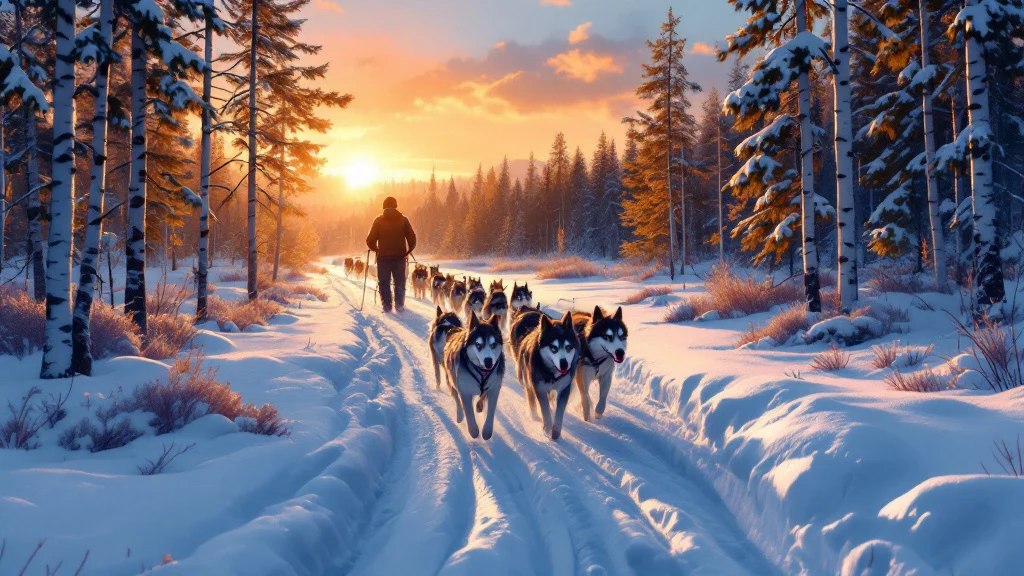
Saariselkä has its own husky farms and the operators pick up in the village, so you are not spending an hour in a minibus before anything happens. That is a real advantage over booking the same activity from a city base. Prices below are the 2025-26 figures; check the operator for 2026-27 rates.
| Activity | Typical price per adult (2025-26) | Notes |
|---|---|---|
| Husky safari, short self-driven run | 110-145€ | Two people per sled, taking turns to drive |
| Husky safari, half day | around 200 to 250€ | Longer trail, usually a break with a fire |
| Reindeer farm visit | from 35€ | Feeding and farm talk, short |
| Reindeer farm visit with sleigh ride | 95-139€ | Reindeer sleighs walk. They do not race. |
| Snowmobile safari, 2 hours | from about 155€ | Two riders sharing one machine |
| Snowmobile safari, longer tour | from about 215€ | Half day or more to reach real wilderness |
Two things to budget for on snowmobiles: a single-rider supplement of 60 to 65€ if you do not want to share, and self-liability insurance at about 20€, which is not optional in practice. You need a driving licence to drive one. Northern Lights Village has a reindeer farm on site, and Kakslauttanen runs reindeer rides for its guests and day visitors.
Aurora: guided hunts and doing it on foot
The aurora season runs from late August to mid April. Saariselkä’s advantage is light pollution, or rather the near absence of it: the village lights are modest, and both the fell top above the village and the edge of the national park are properly dark within walking distance. That makes it one of the few resort bases where you do not need to pay for a bus to get away from streetlights.
Guided evening hunts by minibus or snowmobile are sold by the resort operators, and they earn their fee on cloudy nights, when a guide will drive towards a hole in the cloud while you stay warm. On a clear night, walking up to a dark spot with a thermos costs nothing. Check the Finnish Meteorological Institute’s aurora and space weather page before you decide which you need.
The sun stays below the horizon from roughly 7 December to 8 January, which means aurora can appear in what your body still calls afternoon. Midday in that period is a blue twilight lasting one to two hours.
Day trips from Saariselkä
| Destination | Distance | Why go |
|---|---|---|
| Inari and the Siida museum | 70 km north | Sámi museum and nature centre, European Museum of the Year 2024 |
| Tankavaara Gold Village | 30 km south | The only international gold prospecting museum, indoor panning in winter |
| Kakslauttanen Arctic Resort | 10 km south | Day activities and the smoke sauna are sold to non-guests |
| Ivalo | 30 km north | The municipal centre: shops, the airport, the Ivalo river |
Inari is the one to prioritise if you have a spare day and any interest in the people whose land this is. Siida is a proper museum, not a gift shop with a reindeer outside, and the drive north follows the road towards the Norwegian border through increasingly empty country. Buses run the route, or you drive.
Getting there
Ivalo (IVL) is the airport, 25 to 30 km north and 25 to 30 minutes by road. Finnair flies Helsinki to Ivalo daily, about 1 hour 40 minutes, and Helsinki connects to most UK and European cities. British Airways is continuing its Gatwick to Ivalo winter route for 2026-27, reported as two to three flights a week from early December to late March; the continuation is confirmed via Finavia but the exact dates were not fixed in August 2026. Package operators also fly charters into Ivalo.
From the airport, Eskelisen Lapin Linjat runs a bus to Saariselkä with tickets sold on board, listed at roughly 10€ for a ride of about 25 minutes. A private transfer costs a lot more: Star Arctic Hotel sells one at 85€ for 1 to 4 people, and Lapponia Tours quotes 140€ for 1 to 7 people. For a family of four with luggage and a late arrival, the transfer maths is closer than it looks.
Overland, Rovaniemi is 260 km and about 3 hours by car or bus, with 1 to 2 daily buses at 45 to 51€. Levi is 160 km, about 2 hours. Bus and rail timetables across the country are easiest to read in English through Omio. If you are coming by overnight train from Helsinki, note that VR uses dynamic pricing: the headline seat fare from 23€ is an early-booking deal, and the same seat closer to the date runs 70 to 90€. Book as far ahead as you can, then take the bus north from Rovaniemi.
When to come
Typical winter days run -10 to -20°C (14 to -4°F) from December through March, with January and February the coldest and cold snaps reaching -35 to -40°C. Dry, still cold is more bearable than the number suggests. Wind is what hurts.
December buys you the polar night, the light art, the Christmas atmosphere and the highest prices of the year. March buys you the deepest snow of the season, aurora that is still very much on, and around ten hours of daylight, which changes what you can fit into a day. Once the Finnish ski holiday week (viikko 8, in February) is over, accommodation prices across Lapland fall by 30 to 40%.
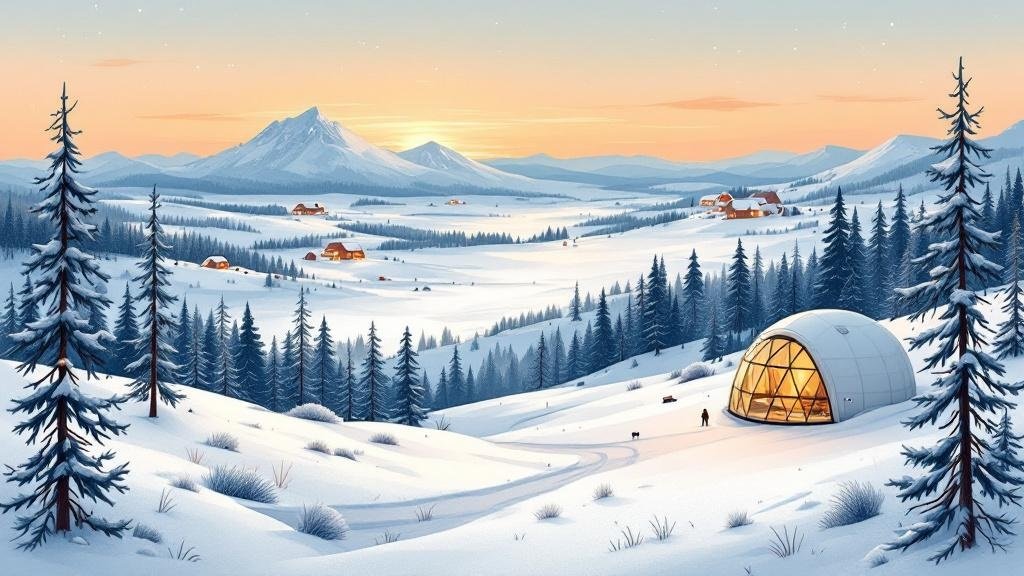
Kakslauttanen is famous. It is not the best-rated place here
Saariselkä holds the most photographed glass igloos in the world and a quieter competitor ten minutes away, and the numbers do not favour the famous one. Same midweek night in mid-March 2027, two adults:
| Property | Price | Meals | Guest score |
|---|---|---|---|
| Northern Lights Village Saariselkä | 609€ | Breakfast and dinner | 9.1 from 409 reviews |
| Kakslauttanen Arctic Resort | 850€ | Breakfast and dinner | 7.9 from 752 reviews |
Both include dinner, so this is a clean comparison: 241€ a night more for the resort that rates a full point and a bit lower across three times as many stays. Kakslauttanen earns its fame on the setting and the scale — the smoke sauna, the two villages, the sheer number of domes in the snow — and loses points on small rooms, poor signage and light spill between igloo rows.
Two practical notes if you do book Kakslauttanen. A log chalet on the same night is 536€ against 850€ for a glass igloo, so the roof is costing about 314€. And at the identical 850€, the West Village igloo lists a private bathroom and sauna while the East Village one is tagged as sharing — book West unless you have the answer in writing.
Where to stay
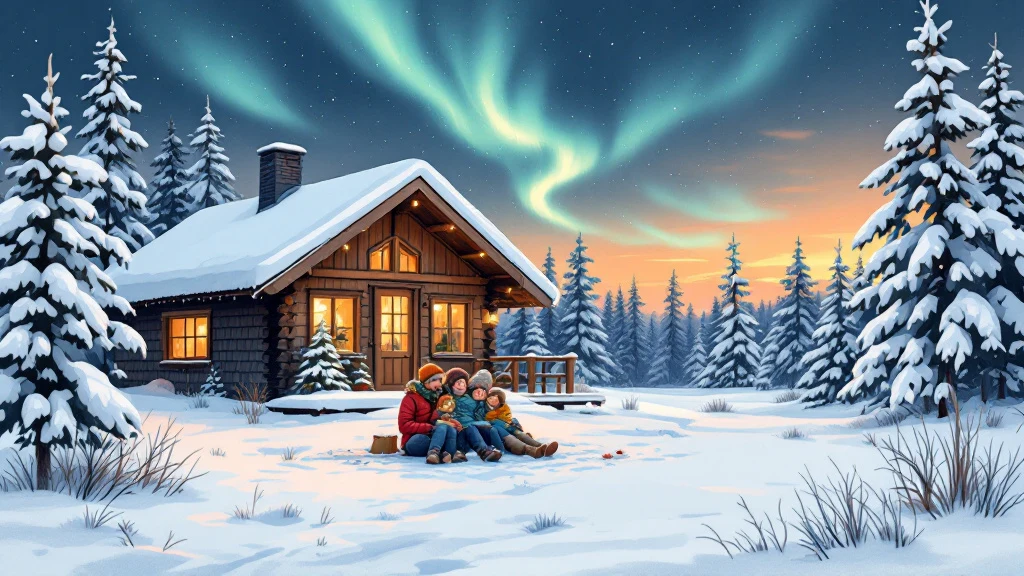
Village hotels, Santa’s Hotel Tunturi, Holiday Club, Lapland Hotels Riekonlinna and Wilderness Hotel Kieppi, run roughly 90 to 200€ a night and put you within walking distance of the slope, the shops and the trailheads. Above and outside the village are the glass and fell-top stays: Star Arctic Hotel on Kaunispää at 499€ for two, Northern Lights Village at 609€ with breakfast and dinner included, and Kakslauttanen at 850€ with meals. Those are Booking.com rates for the same March night; December runs a good deal higher at all three. Cheapest of all is the Kiilopää fell centre 16 km south, which has hostel beds and cabins and puts you closest to the park.
Book a Saariselka bed
- Kakslauttanen Arctic Resort: the original glass igloos
- Northern Lights Village Saariselka: glass-roofed aurora cabins in Saariselka
- Star Arctic Hotel: glass cabins on the Kaunispaa fell top above Saariselka
Who Saariselkä suits, and who should go elsewhere
It suits families with children old enough to toboggan and snowshoe, cross-country skiers, people who want husky and snowmobile trips without long transfers, and anyone whose main goal is aurora with minimal effort. It suits couples who want a quiet base rather than a resort with nightlife.
Pick Rovaniemi instead if Santa Claus Village is non-negotiable, if you want museums, restaurants and a real town, or if you are flying in on a tight budget with more route options. Pick Levi if you actually ski hard, want long steep runs and après-ski, or are travelling with teenagers who will notice that Saariselkä’s evening entertainment is the sauna. And if Sámi culture and the northern lakes are your real interest, Inari is about 70 km up the road and a very different sort of place.

Summer, briefly
The winter season is what most people come for, but Saariselkä does not shut. In 2026 the summer lifts and mountain-bike trails run daily from 1 June to 20 September, the midnight sun lasts from late May to mid July, and Urho Kekkonen National Park becomes one of the best hiking areas in Finland, with wilderness huts and multi-day routes east of the village. Late August and September bring ruska, the autumn colours, which on open fell is the single most photogenic fortnight of the year. Bring a mosquito head net for June and July. That is not a joke. More information on the region’s seasons is at Visit Inari-Saariselkä.
How I researched this
Facts on this page were checked in August 2026 against the ski resort’s own site, the Kiilopää fell centre, Metsähallitus for the national park, and the airport and transfer operators. Lift ticket and toboggan prices are the resort’s published 2026-27 rates, checked at the start of October 2026; activity prices are this site’s 2025-26 research and are labelled as such. Nobody from Lapland Trip Planner has taken these specific safaris, so treat this as a researched planning guide rather than a review.
Landing at Ivalo?
Airport taxi: Saariselkä: search Ivalo Airport to Saariselkä (25 to 30 km, about 25 minutes); private cars priced per ride, driver meets you in arrivals
Best Booking Resources for Lapland
These are the booking tools I keep coming back to. They consistently offer the best prices, the most relevant options for northern Finland, and actually work well for Lapland-specific searches, which not all platforms do.
- Kiwi.com: The best source for finding flights and airport connections. I have noticed they find flight connections that other search engines miss.
- Booking.com: I almost always use them for booking hotels and apartments (and occasionally flights). They have the best filters and I like the user-friendly interface.
- Hotels.com: The most popular hotel booking platform in many countries, US included.
- Get Your Guide: A massive selection of tours and excursions, including aurora tours, husky rides, reindeer experiences and more!
- EconomyBookings: Want to explore Lapland or chase auroras yourself? They pool together the best offers from car rental operators for your convenience.
- yesim: Need a local SIM for Lapland? A stress-free holiday nowadays (unfortunately) might start from a good connection, so get an eSIM with unlimited or prepaid data.
- Ekta Traveling: Not interested in checking out the Finnish public health care system on your holiday? Didn’t think so 🙂 Good insurance gets that stress out of the way.
As an Amazon Associate I earn from qualifying purchases. Booking through these links costs you nothing extra and helps keep these guides free and up to date. Thank you!
Planning a Lapland trip?
Ask a Finn. The Lapland Trip Planning: Finland group is where readers compare dates, resorts and real prices for the coming winter.
Join the planning groupFollow on FacebookFollow on Pinterest