Inari Guide: The Sámi Heartland
Updated 1 October 2026.
Some links on this page are affiliate links. If you book through them, I earn a small commission at no extra cost to you. I only recommend services I genuinely trust for Lapland travel.
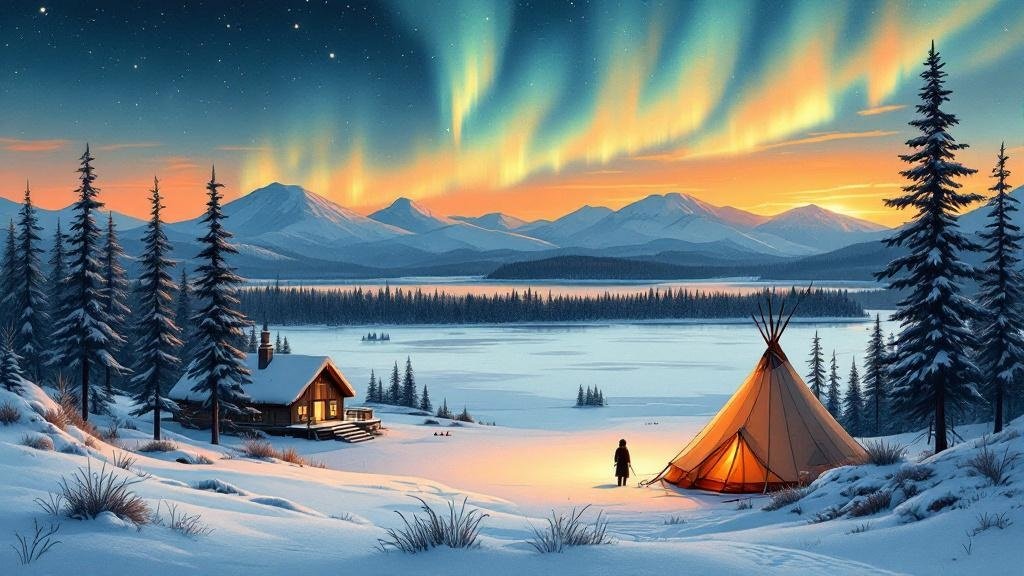
Inari is not a resort. It’s not a tourist town that happens to be in Lapland. It’s the administrative and cultural centre of the Sámi people – the indigenous population of northern Scandinavia. The Sámi Parliament sits here. Siida, the national museum of Sámi culture, is here. Lake Inari, Finland’s third largest, stretches out to the north like a frozen inland sea. At 69°N, this is about as far north as you can get in Finland and still find a bed for the night.
If you want polished resort infrastructure and a full menu of organised activities, Inari will disappoint you. If you want dark skies, genuine Sámi culture, and the kind of silence that makes your ears ring – this is the place. The village has maybe 500 residents and roughly 10 accommodation properties. That’s not an exaggeration. It’s why you’re reading this guide.
Sámi Culture: The Real Thing
Inari is one of three Sámi language areas in Finland (the others are Utsjoki and Enontekiö). Three distinct Sámi languages are spoken in the municipality: North Sámi, Inari Sámi, and Skolt Sámi. The Sámi Parliament – the elected representative body for Finland’s Sámi people – has its seat here. This isn’t cultural tourism in the theme-park sense. People live here, work here, herd reindeer here. You’re a guest in someone’s homeland.
Siida is the must-visit. It’s the national museum of Finnish Sámi culture, and it’s been completely renovated in recent years. The permanent exhibition covers Sámi history, language, handicrafts, and the relationship with reindeer herding in a way that’s respectful and genuinely educational. The outdoor section reconstructs traditional buildings and tracks the changing Arctic seasons. You’ll learn more in two hours at Siida than from a week of tourist-marketed “Sámi experiences” elsewhere in Lapland.
A word on etiquette: don’t treat Sámi culture as a spectacle. The traditional gákti (clothing) people wear isn’t a costume – it carries family and regional information. Ask before photographing people. Don’t refer to the Sámi as “Lapps” (it’s considered derogatory). And understand that reindeer herding isn’t a tourist attraction – it’s an economic and cultural practice that predates Finland as a country by several thousand years.
Lake Inari
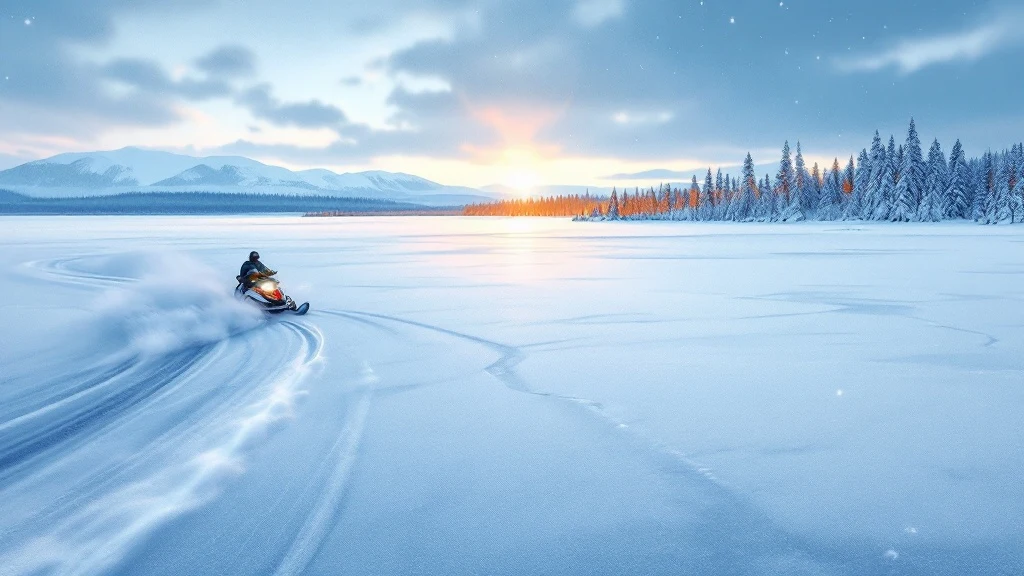
Lake Inari – Inarijärvi – is Finland’s third largest lake. It covers over 1,000 square kilometres and contains more than 3,000 islands. In summer, it’s popular for fishing and boating. In winter, it freezes solid and becomes something else entirely: a vast white plain stretching to every horizon, used for snowmobile routes and ice fishing.
The scale is hard to grasp until you’re on it. Standing in the middle of a frozen lake that’s larger than some countries’ total surface water, with nothing around you but white ice and grey sky – it recalibrates your sense of distance. Snowmobile safaris cross the lake to reach remote areas that are completely inaccessible by road. Ice fishing here is the real deal: you drill a hole, sit on a bucket, and wait. Guided ice fishing trips start from 89€ for a 3-hour session including gear, campfire snacks, and hot drinks. Or, under jokamiehenoikeus (everyman’s rights), you can fish with a simple line and hook for free – you just need your own gear.
Aurora Conditions: The Darkest Skies in Finnish Lapland
Inari has something that no amount of money can buy at more popular resorts: almost zero light pollution. Rovaniemi is a city of 65,000 people. Levi is a resort with floodlit ski slopes. Even Saariselkä, about 70 km south, has more ambient light than Inari. Here, you walk five minutes from the village centre and you’re in genuine darkness.
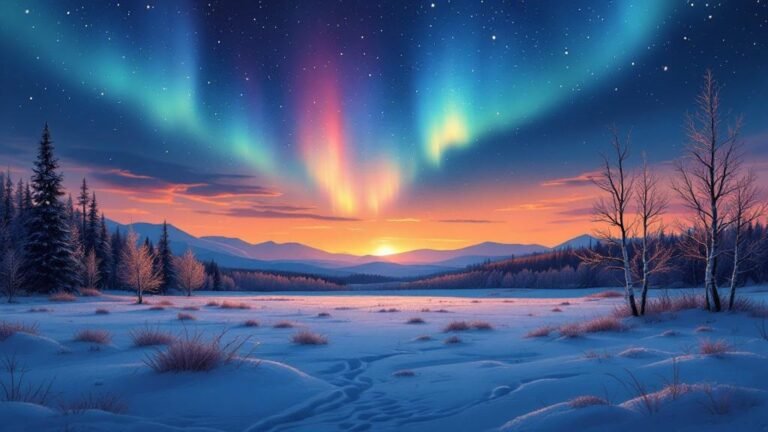
The aurora borealis is visible roughly 200 nights per year at this latitude when skies are clear. The limiting factor is never your location in Inari – it’s cloud cover. September through March is aurora season, with the darkest months (November through January, the kaamos or polar night period) offering the longest windows of darkness. But March remains excellent: still long, dark nights combined with more stable weather patterns.
Inari-based aurora specialists like Aurora Service (consistently top-rated on TripAdvisor for years) and Aurora Experts run small-group tours in the about 100 to 190€ range for 4-6 hour outings. Private tours run 250€ and up. But here’s the honest advice: self-guided aurora hunting from Inari is free and often more rewarding than a tour. Drive or walk away from the village, check the FMI aurora forecast, and wait. You don’t need a guide to look up. The forecast is the tool locals actually use.
Prices listed are from the 2025-26 season; 2026-27 rates are being published through the autumn, so check operator websites or booking platforms for current rates.

Getting to Inari
Inari doesn’t have its own airport. The nearest airport is Ivalo (IVL), about 40 km south. Finnair and Norwegian fly to Ivalo from Helsinki, with connections from London, and major European and US hubs via Helsinki. The flight from Helsinki to Ivalo takes about 90 minutes. From the US, you’re looking at a connection through Helsinki (sometimes via London or Reykjavik on other carriers), with total travel time around 12-14 hours depending on the layover.
From Ivalo airport, you’ll need onward transport. Some hotels arrange transfers. Otherwise, a rental car is the most practical option for the Inari area – public transport exists but is infrequent.
The alternative is the scenic route: overnight train from Helsinki to Rovaniemi (departing 18:00-19:00, arriving 06:00-08:00, from 23€ for a seat or from 69€ for a 2-person sleeping cabin), then a bus from Rovaniemi to Inari. That bus takes about 5 hours and costs 50-60€. There’s typically one service daily, passing through Saariselkä on the way. It’s a long journey, but you wake up in Rovaniemi with the Arctic already outside your window, and the bus ride north through the fells is genuinely beautiful.
One practical note: if you’re renting a car, pick it up in Ivalo rather than Rovaniemi. The 330 km drive from Rovaniemi takes about 4 hours on well-maintained roads, but that’s 4 hours you could spend doing something else. If you’re already flying into Ivalo, the drive to Inari is 40 minutes.
Accommodation: Limited but Worth It
This is where Inari’s remoteness becomes a practical issue. The entire Inari area has maybe 10 properties. That’s not a typo. In peak season, if you haven’t booked months ahead, you’re not staying in Inari – you’re staying in Ivalo (40 km south) or Saariselkä (about 70 km south) and driving up.
| Property | Type | Price/night | Notes |
|---|---|---|---|
| Hotel Inari | Budget hotel | 80-95€ | Simple, in the village centre |
| Wilderness Hotel Inari | Mid-range | 140-250€ | Lake Inari shore, aurora cabins available |
| Wilderness Hotel Nellim | Luxury | 250-310€ | Remote lakeside, 40 km from Inari. Aurora igloos. |
| Grand Hostel Ivalo | Hostel | 29-95€ | Former school, rated 9.3 on Booking. In Ivalo (40 km) |
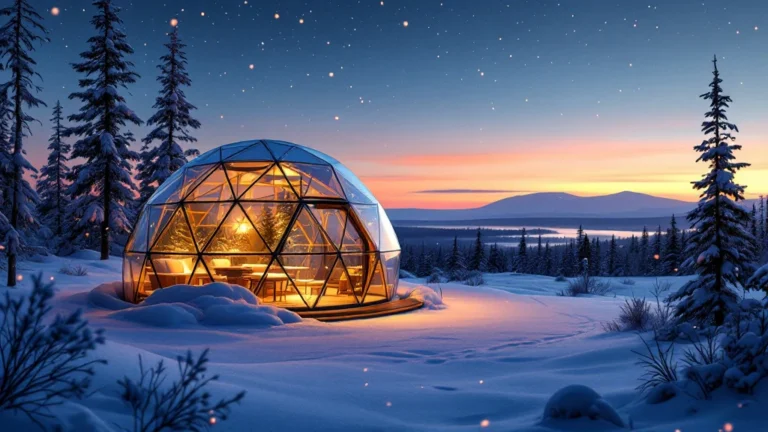
Wilderness Hotel Nellim deserves special mention. It’s 40 km east of Inari on the shore of Lake Inari, near the Norwegian and Russian borders. The location is spectacularly remote. They have aurora igloos – glass-roofed cabins where you can watch the northern lights from bed. Glass igloos across Lapland generally run 250-990€ per night depending on the season (shoulder months like September-October and March-April at 250-450€, peak December-February at 400-990€). Book 6+ months ahead for peak season. March is dramatically easier to book and 30-40% cheaper.
The budget option is Grand Hostel Ivalo, a converted school building 40 km south. It’s rated 9.3 on Booking.com, has both dorms and private rooms, and costs a fraction of anything in Inari proper. The trade-off is the commute – you’ll need a car.

Activities Beyond the Aurora
Inari isn’t an activity resort. There’s no ski slope, no adventure park, no conveyor belt of 2-hour excursions departing every 30 minutes. What it has is wilderness and culture.
Husky safaris operate in the Inari area – Husky Park Inari runs guided safaris on and around Lake Inari. Expect to pay from about 160€ for a self-driven safari (2 to 3 hours including the kennel visit) or around 200 to 250€ for a half-day wilderness trip with lunch. The difference between a short ride and a half-day safari is significant: the longer trips take you into genuine backcountry.
Reindeer experiences here have a different character than the ones near Rovaniemi or Levi. Operators like the Paadar family farm are Sámi-run, and the experience is less “tourist attraction” and more “visit to someone’s livelihood.” A short feeding visit starts from 35€. A fuller farm visit with sleigh ride runs higher.
In summer (late June through August), Lake Inari opens up for fishing and boating. The midnight sun lasts from roughly late May to mid-July, giving you 24 hours of daylight. Ruska – the autumn colour season – hits in September and turns the fells orange and red. September also marks the return of dark skies and aurora season, with no mosquitoes. It’s one of the most underrated months to visit.
What a glass night in the Inari area actually costs
Wilderness Hotel Nellim is the property to price here, and it comes out mid-table against the big southern resorts. On Booking.com an Aurora Cabin is 653€ a night for two with breakfast and dinner included, on a midweek stay in mid-March 2027. That undercuts Apukka, Arctic TreeHouse, Kakslauttanen and Levin Iglut, and only the two Northern Lights Village sites and Star Arctic come in below it. Guests rate it 8.9 from 164 reviews, with staff at 9.4.
Two constraints matter more here than the nightly figure. Nellim will not sell you a single night: the minimum is three in March and two in December, so the real entry price is 1,959€ rather than 653€. And its Aurora Cabins were not bookable at all for mid-December — the only thing the platform offered on those dates was a standard 25 m² Wilderness Room at 442€ a night. The glass product this far north is a March and shoulder-season proposition, not a Christmas one.
Inari also has far fewer beds than Rovaniemi or Levi, and not all of them sit on the big platforms. If you want a specific cabin on specific dates, book earlier than you would further south.
What you get in exchange is the thing the numbers cannot show: this is the darkest sky in Finnish Lapland, three hours north of the light dome that washes out aurora around Rovaniemi. For a trip where the lights are the point rather than one item on a list, that is worth more than a comparison table.
Check what a glass night actually costs
- Kakslauttanen Arctic Resort: the original glass igloos
- Levin Iglut: premium glass igloos above Levi
- Arctic TreeHouse Hotel: glass-walled design suites beside SantaPark, breakfast included
- Apukka Resort: aurora cabins with the safaris leaving from the property
- Star Arctic Hotel: glass cabins on the Kaunispaa fell top above Saariselka
Who Inari Suits (and Who It Doesn’t)
Inari is right for you if you want genuine cultural depth, dark skies for aurora, and don’t mind limited infrastructure. Couples looking for a romantic, quiet Lapland experience will find more atmosphere here than anywhere near a resort. Aurora hunters who are serious about dark skies should make Inari their base. Anyone interested in Sámi culture should spend at least a day here – Siida alone is worth the trip.
Inari is not the best choice for families with young children who want a packed activity schedule. It’s not for people who want restaurants, nightlife, or shopping. And it’s not ideal for anyone without a car or pre-arranged transfers – public transport to and from Inari is minimal.
| Traveller Type | Inari? | Better Alternative |
|---|---|---|
| Aurora hunters | ★★★★★ | — |
| Culture seekers | ★★★★★ | — |
| Couples | ★★★★ | — |
| Families with small kids | ★★ | Rovaniemi, Levi |
| First-timers wanting easy logistics | ★★ | Saariselkä, Levi |
| Budget travellers | ★★★ | Ivalo hostel + day trips |
| Ski/activity resort seekers | ★ | Levi, Saariselkä |
Sorting an Inari trip
- Hotels in Inari: compare stays on Booking.com
- Car hire in Lapland: compare rental offers at Lapland’s airports on EconomyBookings
- Travel insurance for Lapland: cover for winter activities and medical costs from Ekta, priced per trip
Frequently Asked Questions
Is Inari too remote for a first Lapland trip?
It depends on what you want. If you’re after easy logistics and lots of organised activities, start with Levi or Saariselkä. But if your priorities are aurora and Sámi culture, Inari delivers those better than anywhere else in Finland – and Ivalo airport is only 40 km away, so the travel logistics aren’t actually difficult.
How cold does Inari get in winter?
January averages around −17°C (1°F) at night, with cold snaps dropping to −35°C or below. The record is −50°C. But the cold is dry and still – most visitors find it less unpleasant than a windy 0°C day back home. Activity operators provide thermal oversuits for all winter excursions.
Can I visit Inari without a car?
Technically yes – there’s a daily bus from Rovaniemi (about 5 hours, 50-60€), and some hotels arrange airport transfers from Ivalo. Practically though, a rental car makes Inari much easier. Evening aurora chasing almost requires one, since the best spots are a short drive from the village.
When is the best time to visit Inari?
For aurora: September through March, with peak darkness November-January. For the best balance of light, snow, and aurora: February-March. For Sámi cultural events and midnight sun: June. September is the underrated pick – ruska colours, returning dark skies, no mosquitoes, and low prices.
Inari doesn’t try to impress you. It doesn’t need to. The skies, the lake, and the culture have been here for thousands of years. Your job is just to show up – and book early enough to find a bed.
Best Booking Resources for Lapland
These are the booking tools I keep coming back to. They consistently offer the best prices, the most relevant options for northern Finland, and actually work well for Lapland-specific searches, which not all platforms do.
- Kiwi.com: The best source for finding flights and airport connections. I have noticed they find flight connections that other search engines miss.
- Booking.com: I almost always use them for booking hotels and apartments (and occasionally flights). They have the best filters and I like the user-friendly interface.
- Hotels.com: The most popular hotel booking platform in many countries, US included.
- Get Your Guide: A massive selection of tours and excursions, including aurora tours, husky rides, reindeer experiences and more!
- EconomyBookings: Want to explore Lapland or chase auroras yourself? They pool together the best offers from car rental operators for your convenience.
- yesim: Need a local SIM for Lapland? A stress-free holiday nowadays (unfortunately) might start from a good connection, so get an eSIM with unlimited or prepaid data.
- Ekta Traveling: Not interested in checking out the Finnish public health care system on your holiday? Didn’t think so 🙂 Good insurance gets that stress out of the way.
As an Amazon Associate I earn from qualifying purchases. Booking through these links costs you nothing extra and helps keep these guides free and up to date. Thank you!

Planning a Lapland trip?
Ask a Finn. The Lapland Trip Planning: Finland group is where readers compare dates, resorts and real prices for the coming winter.
Join the planning groupFollow on FacebookFollow on Pinterest