Unique Places to Stay in Lapland: Snow Hotels to Wilderness Huts
Updated 10 September 2026.
Some links on this page are affiliate links. If you book through them, I earn a small commission at no extra cost to you. I only recommend services I genuinely trust for Lapland travel.
Every autumn, a crew in Lainio bulldozes the previous winter’s snow hotel into a heap of slush and starts again from nothing. Twenty million kilos of snow, three hundred thousand kilos of ice, a completely new design theme. Whatever you saw in the photos from two years ago no longer exists. That’s the honest starting point for unusual accommodation in Lapland: some of it is temporary by design, some of it is a genuine piece of Nordic architecture, and some of it is a wooden hut in a national park with no electricity and an outhouse.
This page covers the non-glass end of that spectrum. Snow and ice rooms, treehouse suites, and the free wilderness hut network that most visitors never hear about. I have not stayed in any of the places below, so treat this as a researched comparison of what each one is, what it costs and who it actually suits. Rates below are indicative ranges; 2026-27 rates are published through the autumn, so check operator sites for current pricing.
The four types of unusual stay, compared
The word “unique” gets applied to almost every bed in Lapland, which makes it useless. What actually differs between these options is comfort, price and how long you’d want to stay. One night in an ice room is an experience; two is a mistake.
| Stay type | Comfort level | Typical stay | Cost | Season |
|---|---|---|---|---|
| Snow hotel room | Cold by design; you sleep in a provided sleeping bag | One night | Sold as a package, not a room rate | Roughly mid-December to March/April |
| Ice suite (SnowVillage) | Same cold, more sculpture around you | One night | Not published for 2026-27 yet | Reopens 25 December 2026 |
| Treehouse suite | Full hotel comfort, underfloor heating | 2-4 nights | 350-900€+ per night | Year-round |
| Wilderness hut (autiotupa) | Genuinely rough: wood stove, outhouse | 1-2 nights on a trek | Free | Year-round, hiking season easiest |
Note what’s missing from that table. Glass igloos, aurora domes and bubble tents are a separate market with separate economics, and they have their own page.
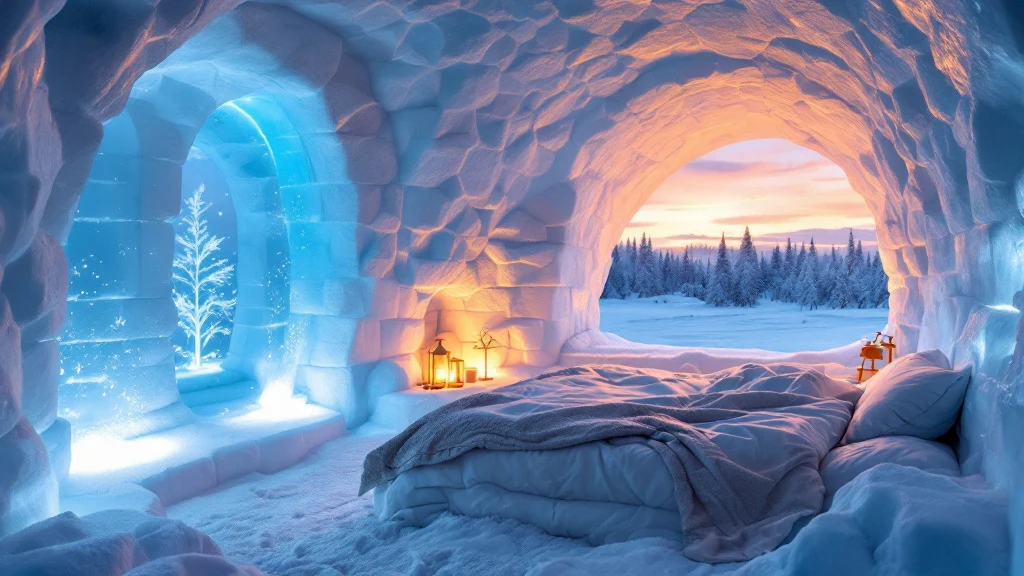
Lapland Hotels SnowVillage, Lainio
SnowVillage sits in Lainio in Kittilä municipality, about 15 km from Ylläsjärvi by ski route and roughly 50 km from Levi. It’s a two-hectare complex of snow and ice containing an ice exhibition, an ice restaurant and snow suites you can sleep in. The whole thing is built from over 20 million kg of snow and around 300,000 kg of clear natural ice.
The part that makes it worth the detour: it is demolished every spring and rebuilt from scratch every autumn with a brand new artistic theme, announced each autumn. Not refreshed. Rebuilt. The corridor you walked through last winter is a puddle in the Lainio forest by May.
One important practical fact: SnowVillage skipped the 2025-26 season entirely and is closed at the time of writing. It reopens on 25 December 2026. Pricing for the 2026-27 season hasn’t been published, and neither has the year’s theme, so both will surface in autumn 2026 on the Lapland Hotels site.
Getting there otherwise means a car (there’s plenty of parking), a taxi, a snowmobile, or cross-country skis from Ylläs. It’s not on a walkable route from anywhere.
Arctic SnowHotel snow rooms, Sinetta
The other Finnish snow hotel worth knowing is Arctic SnowHotel, on Lake Lehtojärvi in Sinetta, about half an hour north-west of Rovaniemi. The snow hotel and ice restaurant open on 15 December and run to 31 March every year, which is a firmer calendar than most winter attractions manage.
Snow rooms and suites here are sold inside packages rather than as bare room nights. The package includes return transfers from Rovaniemi and a three-course dinner, which is sensible given you’re 30 minutes out of town in the dark with no car. Details are on arcticsnowhotel.fi, checked August 2026.
How people actually do it: one night in the snow room, with a warm room either side. The cold night becomes the story, and the warm nights let you sleep. Book the ice night as the middle of a three-night stay, not as your arrival night after a flight.
Arctic TreeHouse Hotel, Rovaniemi
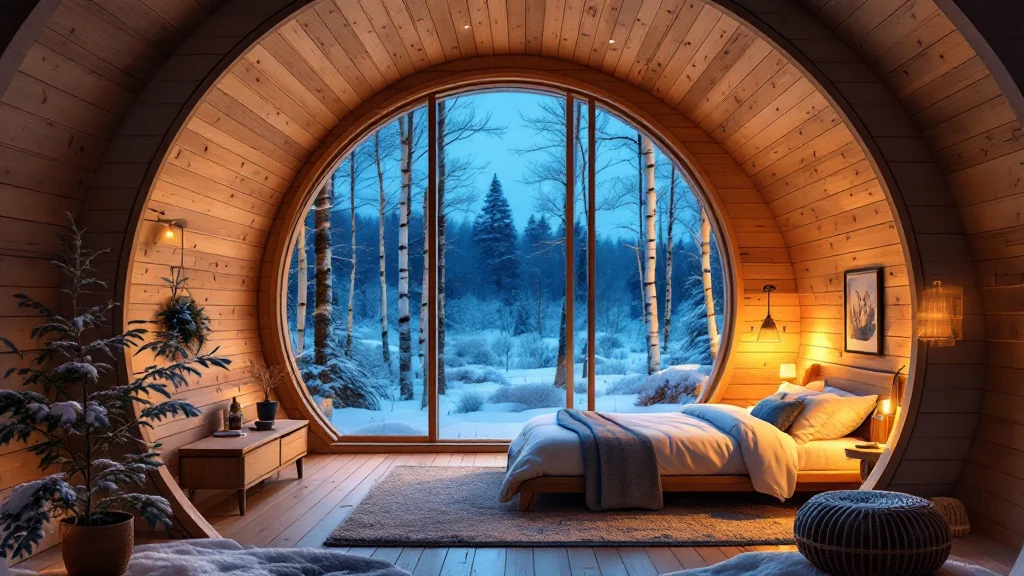
This is the opposite of a snow room: full comfort, year-round, and a serious piece of architecture rather than a gimmick built for photos. The suites sit on a steep wooded hillside on the Arctic Circle in Rovaniemi, part of the SantaPark Arctic World group, built around a “morning in the forest” design concept with nest-like rooms and floor-to-ceiling panoramic windows.
Rates run 350-900€+ per night depending on room type and season, which puts it firmly at the luxury end alongside the 290-500€+ you’d pay for a top-tier hotel room anywhere in Lapland. What you get for it is a room where you see the aurora, or the midnight sun, from bed without going outside.
| Room type | Layout | Notable features |
|---|---|---|
| Arctic TreeHouse Suite | Compact nest-like suite | Panoramic windows; some with kitchenette; connectable into family suites |
| Arctic GlassHouse | Two bedrooms | Private sauna, fireplace, floor-to-ceiling panoramic windows |
| Arctic Scene Executive Suite | Separate living room and bedroom | Wellness spa area, glazed terrace with fireplace |
Breakfast at the on-site Rakas restaurant is included, along with daily housekeeping, underfloor-heated bathrooms, bathrobes and slippers. Rakas (“beloved” in Finnish) is an award-winning restaurant in its own right, cooking with Arctic ingredients. Outdoor gear is complimentary: fat bikes, snowshoes, kick bikes, ice skates, a yoga set. Forest trails start at the suite door, and electric Mercedes-Benz Vito transfers shuttle you between suites and the main building, which matters more than it sounds on a steep hillside in January.
There’s a 24/7 reception and a personal WhatsApp concierge. Optional extras include private chef experiences, an in-house photographer, helicopter transfers and spa treatments. The same group also runs Hidden Arctic Cloud villas, private villas around 20 km from the main hotel near a private lake, and Aino Private Island Hotel, an adults-only boutique retreat on a Kemijoki River island ten minutes’ drive from Rovaniemi.
Wilderness huts: the free ones and the bookable ones
This is the part most visitors don’t know exists. Metsähallitus, the state forest agency, maintains a network of open wilderness huts (autiotupa) across the national parks and wilderness areas. They are unlocked. They are free. There is no reservation system, and there is no reception.
The custom that makes the system work: the latest arrival gets the sleeping platform. If a hut is full and someone walks in at midnight, the people already there make room. Nobody is turned away, because in a winter storm being turned away could kill you. That rule is not a suggestion, and Finns will assume you know it.
Alongside the open huts sit reservable huts (varaustupa), booked through Metsähallitus for a small per-person fee. Fees vary by hut. Both types, with full hut lists and locations, are on nationalparks.fi, which is the only source worth trusting for what’s open and where.
Now the honest part. These are rough. Wood heating that you light yourself, no running water, outhouse toilets. You carry your own sleeping bag, your own food and your own rubbish out again. There is no wifi, no shop and often no phone signal.
That’s not a defect to apologise for, it’s the entire point. Jokamiehenoikeus, everyman’s right, means the wilderness is genuinely open to you, and the hut network is the physical form of that idea: a free roof, maintained by the state, on the assumption that people will look after it.
Best time of winter for each
These stays don’t share a calendar, and that catches people out when they build an itinerary around one of them.
| Stay | Open | Best window | Why |
|---|---|---|---|
| Arctic SnowHotel snow rooms | 15 Dec – 31 Mar | February to mid-March | Aurora odds still good and prices sit below the December peak |
| SnowVillage Lainio | From 25 Dec 2026 | January to March | The build is complete and the theme fully finished; late-season closing dates are operator-dependent, so confirm before booking April |
| Arctic TreeHouse Hotel | Year-round | March, or September | March gives long daylight and peak snow; September gives ruska and dark aurora nights |
| Wilderness huts | Year-round | September | Ruska colours, no mosquitoes, quiet trails; winter hut use needs real skills |
Those two aurora windows, February to March and September to October, are the strongest of the year, and cloud cover matters more than geomagnetic activity at this latitude. The FMI aurora and space weather page is what Finns actually check before deciding whether to go out.
The pricing logic is the same across all of them. December is the most expensive month of the year in Lapland by a wide margin, January is expensive, and March is when prices fall away sharply after the Finnish ski holiday week while the snow is at its deepest, around 75 cm. If your dates are flexible, March is the answer to almost every Lapland question.
Avoid May entirely for any of this. Snow is gone or going, rivers flood, winter activities are shut and summer hasn’t started. Finns call the road-breakup season kelirikko, and it’s exactly as appealing as the name suggests.
Who each stay suits, and who should skip it
Snow and ice rooms suit people who want the story and are physically comfortable being cold for a night. They do not suit young children, anyone with circulation problems or back trouble, or light sleepers who’ve just flown in. If you already know you sleep badly in hotels, you will sleep worse in a snow room.
The treehouse hotel suits couples, design-minded travellers and families who can afford the rate and want a base in Rovaniemi with everything organised. It does not suit anyone chasing value: the outdoor gear and breakfast are included, but this is a 350-900€+ night and there are mid-range hotel rooms in Lapland from 130-250€.
Wilderness huts suit hikers who already know how to navigate, light a stove and stay warm without help. They do not suit anyone who has never carried a pack, and they are not a budget hack for a Rovaniemi holiday. The nearest hut to a Christmas market is a long walk away.
Check dates at these stays
- Arctic TreeHouse Hotel: glass-walled design suites beside SantaPark, breakfast included
- Arctic SnowHotel & Glass Igloos: snow rooms and glass igloos in the dark outside Rovaniemi
Booking notes and getting there
Rovaniemi is the access point for Arctic TreeHouse and, via Sinetta, for Arctic SnowHotel. Rovaniemi Airport is 10 km from the centre with daily Finnair flights from Helsinki, plus easyJet from Gatwick and winter charters from the UK and Europe. Helsinki-Rovaniemi runs 150-250€ return typically, with advance deals from 100€ return. From the UK, Gatwick-Rovaniemi runs 110-250 GBP return, cheapest in January and dearest in December.
The overnight VR train from Helsinki takes about 12 hours and is a genuinely pleasant way to arrive. Fares start from 23€ for a seat, but VR uses dynamic pricing more aggressively than the airlines: closer to the date that same seat runs 70-90€, and a two-person sleeping cabin starts from 69€ per cabin and reaches 150-220€ per cabin in peak winter. All sleeping prices are per cabin, not per person. Book as far ahead as you can.
The practical airport for SnowVillage is Kittilä, 15 minutes from Levi, which is the busiest charter airport in Lapland in winter and has daily Finnair flights from Helsinki at 150-250€ return. Lainio is roughly 50 km on from there.
For the ice stays, book as soon as the season’s rates appear, because the physical inventory is tiny and the window is three and a half months. For the treehouse, December sells out first and March is the sweet spot. For huts, there’s nothing to book unless you want a varaustupa, in which case go through Metsähallitus.
How I researched this
Property details, seasons and opening dates come from the operators’ own sites: Lapland Hotels for SnowVillage, arcticsnowhotel.fi for the snow rooms, and Arctic TreeHouse Hotel for its room types and inclusions, all checked in August 2026. Hut information comes from nationalparks.fi. Nightly rate ranges are booking-platform figures. I haven’t stayed at, booked or slept in any of the places compared here – this is a researched comparison, not a review.
Common questions
Is there an ice hotel in Finland?
Yes, two main ones. Arctic SnowHotel in Sinetta near Rovaniemi opens 15 December to 31 March each year, and Lapland Hotels SnowVillage in Lainio near Ylläs reopens on 25 December 2026 after skipping the 2025-26 season. Both include ice restaurants as well as snow rooms.
How cold is it inside a snow hotel room?
Snow rooms are cold by design and stay below freezing regardless of how cold it is outside, which is actually the advantage on a night when outdoor temperatures crash. You sleep in a heavy sleeping bag provided by the hotel, and heated facilities are part of the package, so check arcticsnowhotel.fi for what exactly is included. Most guests treat it as a one-night experience rather than a place to stay for a week.
Are wilderness huts in Lapland really free?
Open wilderness huts (autiotupa) maintained by Metsähallitus are free, unlocked and available first-come with no reservation. Reservable huts (varaustupa) cost a small per-person fee booked through Metsähallitus, and fees vary by hut. Both types are listed with locations on nationalparks.fi.
What does Arctic TreeHouse Hotel cost per night?
Rates run from 350€ to 900€+ per night depending on the room type and season, with breakfast at the Rakas restaurant included. December is the most expensive period by a wide margin; March offers better value with deeper snow and far more daylight.
Can you visit a snow hotel without sleeping in one?
Yes, and most people should. Both snow hotels operate ice restaurants and exhibitions open to day visitors, and SnowVillage runs a daily bus from the Levi and Ylläs tourist centres during its opening season. You get the ice architecture without committing to a night below freezing.
Best Booking Resources for Lapland
These are the booking tools I keep coming back to. They consistently offer the best prices, the most relevant options for northern Finland, and actually work well for Lapland-specific searches, which not all platforms do.
- Kiwi.com: The best source for finding flights and airport connections. I have noticed they find flight connections that other search engines miss.
- Booking.com: I almost always use them for booking hotels and apartments (and occasionally flights). They have the best filters and I like the user-friendly interface.
- Hotels.com: The most popular hotel booking platform in many countries, US included.
- Get Your Guide: A massive selection of tours and excursions, including aurora tours, husky rides, reindeer experiences and more!
- EconomyBookings: Want to explore Lapland or chase auroras yourself? They pool together the best offers from car rental operators for your convenience.
- yesim: Need a local SIM for Lapland? A stress-free holiday nowadays (unfortunately) might start from a good connection, so get an eSIM with unlimited or prepaid data.
- Ekta Traveling: Not interested in checking out the Finnish public health care system on your holiday? Didn’t think so 🙂 Good insurance gets that stress out of the way.
As an Amazon Associate I earn from qualifying purchases. Booking through these links costs you nothing extra and helps keep these guides free and up to date. Thank you!

Planning a Lapland trip?
Ask a Finn. The Lapland Trip Planning: Finland group is where readers compare dates, resorts and real prices for the coming winter.
Join the planning groupFollow on FacebookFollow on Pinterest