Where to Stay in Lapland: Complete Accommodation Guide
Where to stay in Lapland is probably the single biggest decision you’ll make for your trip – and it’s the one that shapes everything else. The accommodation you choose determines your budget, your location, your transport needs, and whether you wake up to aurora overhead or to the sound of your alarm telling you to catch a bus.
The good news: Lapland accommodation ranges from 29€ dorm beds to 990€-a-night glass igloos, with plenty of interesting options between those extremes. The less good news: the best places book out months in advance, especially for December and February. Understanding what’s available – and when to book it – will save you money and disappointment.
Accommodation Types at a Glance
| Type | Price per Night | Best For | Sauna? | Kitchen? | Book Ahead |
|---|---|---|---|---|---|
| Hostel | 29-95€ | Solo travellers, budget trips | Usually shared | Shared | 1-2 months |
| Budget hotel | 80-130€ | Convenience, short stays | Sometimes | ✗ | 2-3 months |
| Mid-range hotel | 130-250€ | Couples, easy planning | Usually | ✗ | 3-4 months |
| Luxury hotel | 290-500€+ | Honeymoons, special occasions | ✓ (private) | ✗ | 4-6 months |
| Budget cabin | 55-120€ | Families, self-catering, longer stays | ✓ | ✓ | 2-4 months |
| Mid-range cabin | 150-310€ | Groups, families, aurora watching | ✓ | ✓ | 3-6 months |
| Luxury cabin | 300-600€+ | Privacy, wilderness, romance | ✓ (private) | ✓ | 6+ months |
| Glass igloo | 250-990€ | Once-in-a-lifetime experience | Varies | Varies | 6-12 months |
Prices listed are for the 2025-26 season and change annually – check booking platforms for current rates. Those numbers also shift dramatically by season. December prices can run about 2.5 times the baseline rate, while October drops to roughly 60% of it.
Glass Igloos: The Headline Act
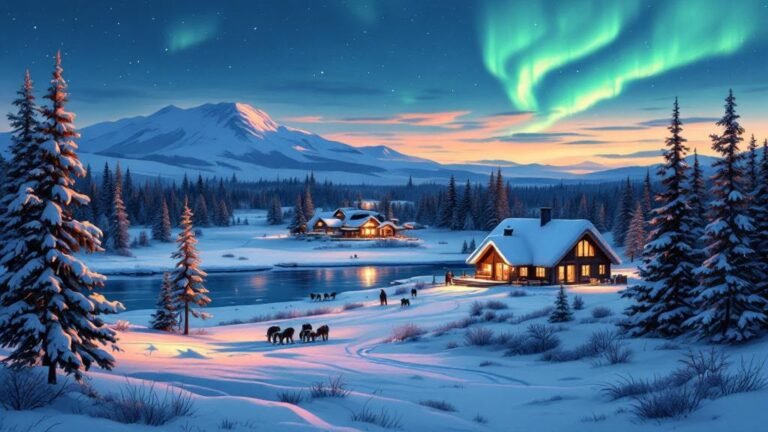
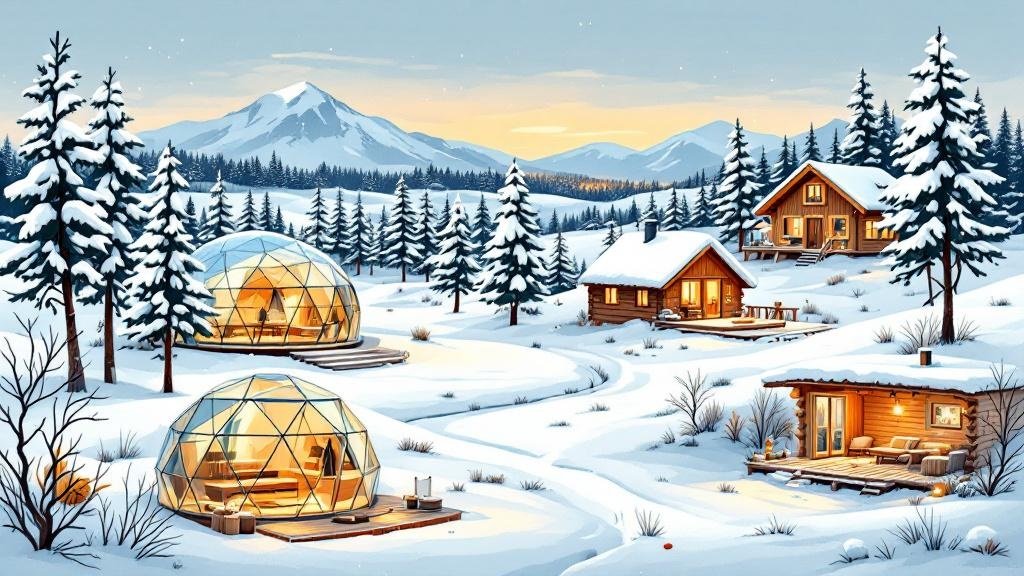
Glass igloos are what most people picture when they think about Lapland accommodation. Sleeping under the northern lights without leaving your bed. It’s a genuinely extraordinary experience – but it comes with caveats you should understand before booking.
A glass igloo typically costs 250-450€ per night in shoulder season (late autumn, March-April) and 400-990€ per night during peak season from December to February. For that price, you get a heated glass-roofed room, usually compact but cleverly designed. Some properties include private saunas, some have aurora alert systems, and some are bare-bones glass pods where you’re basically paying for the view.
The rooms are smaller than you’d expect for the price. Most are designed for two people with not much floor space to spare. If you’re imagining a spacious suite, adjust your expectations. You’re paying for the glass ceiling, not square metres.
And here’s the thing nobody mentions in the brochures: you need clear skies. If it’s overcast – and Lapland winters are often overcast – you’re looking at clouds through an expensive ceiling. December, despite being peak booking season, actually has the highest cloud cover. February and March offer better odds of clear skies and aurora visibility.
Cabins and Cottages: The Finnish Way
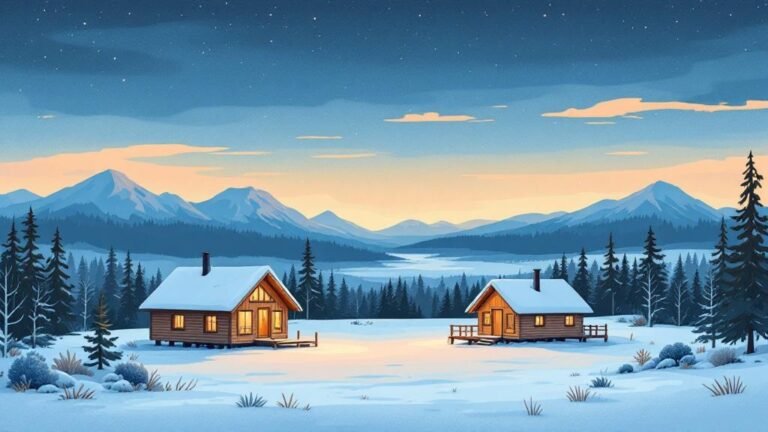
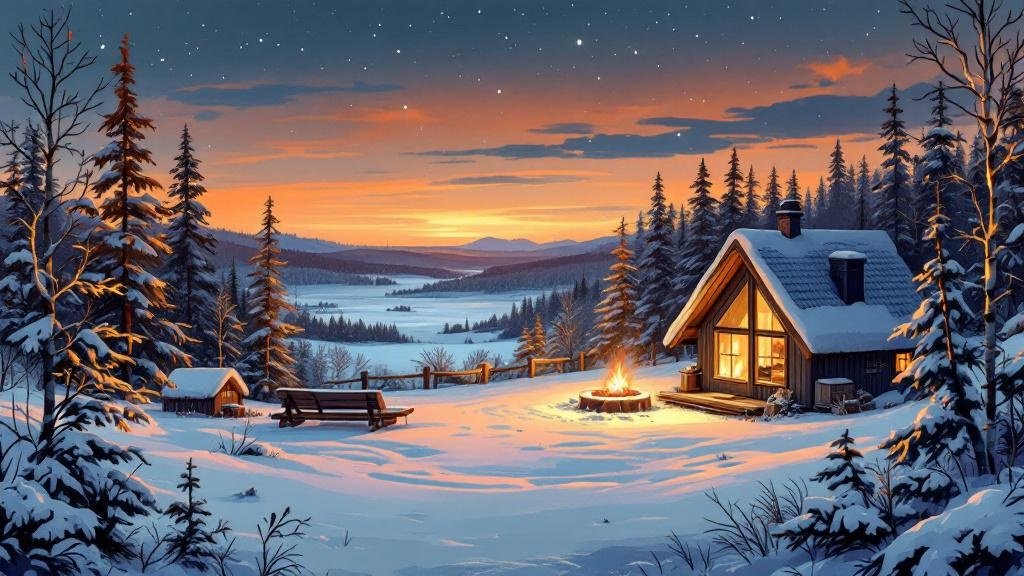
If glass igloos are Lapland’s headline act, cabins are the backbone. This is how Finns actually holiday. The Finnish word is mökki, and the concept is embedded deep in the culture – a simple place in nature where you cook your own food, heat the sauna, and do very little else.
Budget cabins start from 55-120€ per night – often less than a basic hotel room. Mid-range cabins with more space, better furnishings, and scenic locations run 150-310€. Luxury cabins with panoramic windows, hot tubs, and designer interiors go for 300-600€ or more.
Almost every cabin in Lapland includes a sauna. This isn’t a luxury add-on or a selling point – it’s standard. If a Finnish cabin doesn’t have a sauna, something is wrong. Most also come with a full kitchen, which is a significant money-saver. Self-catering from local supermarkets instead of eating out can easily save 30-40€ per person per day. K-Market and S-Market are in all resort towns and are well stocked.
Cabins work particularly well for families and groups. A four-person cabin at 150€ per night splits to under 40€ per person – far cheaper than hotel rooms. Add the kitchen and sauna, and it’s genuinely the best value accommodation type in Lapland.
Where to Find Cabins
The best cabin selection for Lapland is on Finnish-language booking platforms like Lomarengas and Nettimökki, which have far more listings than international platforms. Airbnb in Lapland is mostly cabin owners listing their properties, but quality varies wildly – some are beautifully maintained family cabins, others are neglected summer places with questionable heating. Reading reviews carefully matters more here than in most Airbnb markets.
What to Expect in a Cabin
Finnish cabins are functional, not fancy. Even mid-range cabins prioritise practical comfort over decoration. Expect wood-panelled walls, a drying cupboard for wet outdoor gear, thick blankets, and a well-equipped kitchen. Beds are often firm – Finns sleep on harder mattresses than most Brits and Americans are used to.
Heating is usually electric or wood-fired. Wood-fired cabins require you to actually keep the fire going, which is part of the experience but something to know in advance. The temperature outside might be −25°C (−13°F), so letting the fire die at 3am means a cold wake-up call.
Most cabins are outside town centres, which is the whole point – but it means you’ll need a car or arranged transfers to reach activities. Factor this into your planning.
Hotels by Destination
Hotels in Lapland range from practical chain properties to characterful boutique places. They’re the easiest option for short trips – no self-catering, no fire to tend, restaurant on site, activity desks that book everything for you. The trade-off is cost: you’re paying 80-130€ per night for a basic room, 130-250€ for something comfortable, and 290-500€ or more for luxury properties.
| Destination | Airport | Character | Hotel Range | Best For |
|---|---|---|---|---|
| Rovaniemi | RVN (in town) | City + Arctic Circle tourism | Budget to luxury | Families, first-timers, Santa Village |
| Levi | KTT (15 min) | Ski resort village | Budget to luxury | Skiing, nightlife, active holidays |
| Saariselkä | IVL (25 km) | Compact fell village | Mid to luxury | Hiking, national park, quiet aurora |
| Inari | IVL (40 km) | Sámi cultural centre, lakeside | Mid-range options | Culture, aurora, authenticity |
| Muonio | KTT (70 km) | Small wilderness village | Limited, mostly cabins | Huskies, wilderness, off-grid |
Rovaniemi has the widest selection – from hostels and budget hotels to international-standard properties. It’s the easiest logistics base since the airport is right in town. The downside: activities are spread across a wide area, so you’re transferring to and from everything.
Levi is Lapland’s biggest resort, so hotels cluster around the ski slopes. Good infrastructure, plenty of restaurants, and everything is walkable within the village. Levi’s resort website has a useful accommodation search.
Saariselkä is compact and quiet – a fell village near Urho Kekkonen National Park. Hotels here tend toward the mid-range and above. Visit Inari-Saariselkä covers both areas well.
Inari is smaller and more culturally oriented. The Siida Museum is here, and accommodation leans toward characterful guesthouses and lakeside cabins rather than large hotels.
Muonio is where you go for wilderness. Hotel options are limited – this is cabin and safari lodge territory. Some of Lapland’s best husky farms are in the Muonio area.
Budget Options
Lapland doesn’t have to be expensive to sleep in. Hostels in Rovaniemi offer dorm beds from 29€ and private rooms from 80-95€ per night. That’s less than many budget hotels, and you get a shared kitchen to keep food costs down.
Budget cabins are the other strong option. At 55-120€ per night, a simple cabin with sauna and kitchen can cost less than a mid-range hotel room – and you get far more space and independence. For families or groups of four, the per-person cost drops to something remarkably affordable.
Timing matters enormously for budget travellers. Visiting in October – when prices drop to their lowest – costs a fraction of what the same room costs in December. March also offers strong value: the snow is deep, daylight is generous, and prices are at baseline after the February ski holiday spike.
| Month | Relative Price | Budget Appeal |
|---|---|---|
| October | € (lowest) | ★★★★★ – First snow, aurora, very quiet |
| November | €€ | ★★★★ – Winter begins, pre-Christmas calm |
| March | €€ | ★★★★★ – Best snow, longest days, great value |
| April | €€ | ★★★★ – Spring skiing, warmer, cheap flights |
| January | €€€ | ★★★ – Kaamos ending, cold but atmospheric |
| February | €€€ | ★★ – Ski holiday week inflates everything |
| December | €€€€€ | ★ – Christmas premium on all accommodation |
Booking Tips and Timing
When you book matters almost as much as what you book. Lapland accommodation follows predictable patterns, and understanding them gives you a real advantage.
Christmas week (20 December – 2 January) is the most competitive booking window in all of Finnish tourism. Prices run about 2.5 times the normal rate – sometimes more – and popular properties sell out a year in advance. If Christmas in Lapland is your goal, book as early as you possibly can.
February sees a sharp spike during Finnish ski holiday week (viikko 8, usually late February). Finnish families flood Levi, Ylläs, and Saariselkä. Hotel prices jump, cabin availability vanishes, and car rentals get scarce. If you’re flexible, the weeks either side offer much better value.
March is the month smart travellers target. Prices return to baseline, snow depth peaks, daylight hours surge past 10 hours, and aurora is still visible. It’s when Finns take their own Lapland holidays – and there’s a reason for that.
Booking Lead Times
- Glass igloos, Dec-Feb: 6-12 months ahead. Not exaggerating.
- Luxury cabins, Dec-Feb: 6+ months ahead.
- Hotels, Dec-Feb: 3-6 months ahead for good options.
- Anything in March-April: 2-3 months is usually fine.
- Anything in Oct-Nov: Often available last-minute.
Platform Tips
Major booking platforms are the most practical route for international visitors – they offer free cancellation policies, English-language customer support, and easy comparison across properties. This matters when you’re booking from abroad and can’t easily verify what a property looks like in person.
For cabins specifically, also check Finnish platforms like Lomarengas and Nettimökki, which have a much deeper Lapland selection than international sites. The interfaces are available in English.
What to Expect in Each Type
Expectations calibrated correctly make the difference between a great trip and a disappointing one. Here’s what you’re actually getting.
Hotels
Lapland hotels are clean, functional, and warm. Don’t expect boutique design – most are built for harsh conditions first and aesthetics second. Rooms tend to be compact. Breakfast buffets are excellent and filling (Finns take breakfast seriously). Many hotels have saunas available to guests, sometimes included, sometimes for a small fee. Activity desks in the lobby are genuinely useful – staff know local operators and conditions.
Cabins
Your own space. A kitchen where you can make coffee at midnight. A sauna you heat yourself. Silence outside. Cabins are the most authentically Finnish accommodation experience. The trade-off is self-sufficiency – you clean up after yourself, you manage the heating, and you need transport to get anywhere. Bring groceries on your way in; the nearest shop might be a drive away.
Glass Igloos
Compact, climate-controlled, and focused on one thing: the view up. Bathrooms are small. Storage is minimal. The glass can frost on cold nights (most properties have heated glass, but condensation still happens). You’ll sleep with the lights off and the curtains open. On a clear night with aurora overhead, it’s extraordinary. On an overcast night, you’re in a small glass room. Set expectations accordingly.
Hostels
Limited to Rovaniemi mainly. Standard hostel experience – shared dorms, communal kitchen, social atmosphere. Quality is decent. These work well as a one- or two-night base at the start or end of a trip, but most travellers will want to move on to a cabin or hotel in a smaller destination for the core Lapland experience.
Frequently Asked Questions
How far in advance should I book Lapland accommodation?
For December and February, book 6-12 months ahead for glass igloos and luxury properties, 3-6 months for hotels. March and April bookings are much more relaxed – 2-3 months is typically fine. October and November can often be booked just weeks in advance at good rates.
Do Lapland cabins really all have saunas?
Almost without exception, yes. A Finnish cabin without a sauna is like a kitchen without an oven – technically possible but practically unheard of. Even budget cabins at 55-120€ per night include a private sauna. It’s heated electrically in most cases, and instructions are usually posted on the wall in English.
Are glass igloos worth the price?
On a clear night with active aurora, absolutely. On an overcast night, you’ve paid 400-990€ to look at clouds through a glass ceiling. The experience is weather-dependent in a way that’s hard to control. Booking in February or March improves your odds of clear skies compared to December, and shoulder-season prices of 250-450€ feel more proportionate to what you get.
Is it cheaper to stay in a cabin or hotel?
Cabins are almost always cheaper for groups of two or more, especially when you factor in self-catering savings of 30-40€ per person per day. A budget cabin at 80€ per night with home-cooked meals can cost less per person than a budget hotel room at 100€ plus restaurant meals. Solo travellers may find hotels or hostels more economical.
Can I see the northern lights from my accommodation?
Glass igloos are designed for exactly this. Some cabins in rural locations also offer good aurora views – look for properties away from town centres with north-facing windows or outdoor hot tubs. Hotels in resort centres generally have too much light pollution. Even with a glass igloo, you need clear skies and geomagnetic activity – check the FMI aurora forecast during your stay.
Lapland accommodation rewards the people who plan ahead and think honestly about what they actually want. A 70€-per-night cabin with a sauna, a kitchen, and a view of the forest can be more memorable than a glass igloo booked in a rush. Choose the type that fits your trip, not the one that looks best on social media.
Best Booking Resources for Lapland
After years of travelling to and around Lapland, these are the booking tools I keep coming back to. They consistently offer the best prices, the most relevant options for northern Finland, and actually work well for Lapland-specific searches — which not all platforms do.
- Skyscanner – The best flight search engine for Lapland routes. It catches the budget airlines and seasonal charters that other search tools miss, and the price alerts are genuinely useful for spotting deals on Helsinki-Rovaniemi or direct UK routes.
- VR Finnish Railways – The only way to book Finland’s overnight trains. The Santa Claus Express from Helsinki to Rovaniemi is an experience in itself — book early for the cabin berths, they sell out weeks ahead in peak season.
- DiscoverCars – Compares all the major rental companies at Lapland airports in one search. Crucially, they show which rentals include studded winter tyres — mandatory in Lapland and a detail other comparison sites bury in the fine print.
- Booking.com – Has the widest selection of Lapland accommodation by far, including cabins, glass igloos, and small family-run guesthouses that don’t list elsewhere. Free cancellation on most properties makes it low-risk for planning ahead.
- GetYourGuide – The largest marketplace for Lapland activities: husky safaris, snowmobile tours, aurora trips, reindeer visits. You can compare operators and prices side by side, and most bookings are cancellable up to 24 hours before.
- SafetyWing – Travel insurance designed for adventurous trips. Covers winter sports, extreme cold activities, and medical evacuation — all relevant when you’re snowmobiling at -25°C. Affordable and the claims process is straightforward.
- Holafly – eSIM that works in Finland from the moment you land. No hunting for local SIM cards at the airport, no roaming surprises. Set it up on your phone before departure and you’re connected in Lapland immediately.
Some of the links above are affiliate links — if you book through them, I earn a small commission at no extra cost to you. I only recommend services I genuinely use and trust for Lapland travel.