What to Eat in Lapland: Local Food Guide
Updated 10 September 2026.
Some links on this page are affiliate links. If you book through them, I earn a small commission at no extra cost to you. I only recommend services I genuinely trust for Lapland travel.
Lapland food is honest. There’s no fuss, no foam, no microgreens arranged with tweezers. The cuisine comes from what the land provides – reindeer that graze on lichen, fish pulled from Arctic rivers, berries picked from bogs in late summer, and dark rye bread that’s been baked the same way for centuries. You won’t find a long menu in most Lapland restaurants. You’ll find a short one where nearly everything is good.
If you eat one thing in Lapland, make it poronkäristys – sautéed reindeer with mashed potatoes and lingonberries. If you eat two things, add lohikeitto, the salmon soup that every restaurant does well. Beyond that, let cloudberries, rye bread, and a campfire coffee take care of the rest.
The Dishes You Need to Try
Lapland’s food scene revolves around a handful of core ingredients. Here’s what to look for and what to order.
| Dish | What it is | Where to find it | Typical price |
|---|---|---|---|
| Poronkäristys | Sautéed reindeer, mashed potatoes, lingonberries | Every restaurant in Lapland | 28-40€ |
| Lohikeitto | Creamy salmon soup with potatoes and dill | Every restaurant, lunch cafés | 18-25€ |
| Kuivaliha | Dried or smoked reindeer meat | Markets, supermarkets, souvenir shops | Varies |
| Muikku (vendace) | Tiny fried lake fish, eaten whole | Markets, some restaurants | 18-25€ |
| Arctic char | Delicate pink-fleshed fish, grilled or smoked | Restaurants near Inari and Enontekiö | 28-40€ |
| Lakkahillon kanssa | Cloudberry dessert (with cream or on leipäjuusto) | Restaurant dessert menus | Part of meal or tasting menu |
| Leipäjuusto | Squeaky cheese, served warm with cloudberry jam | Restaurants, supermarkets | Varies |
Reindeer: The Main Event
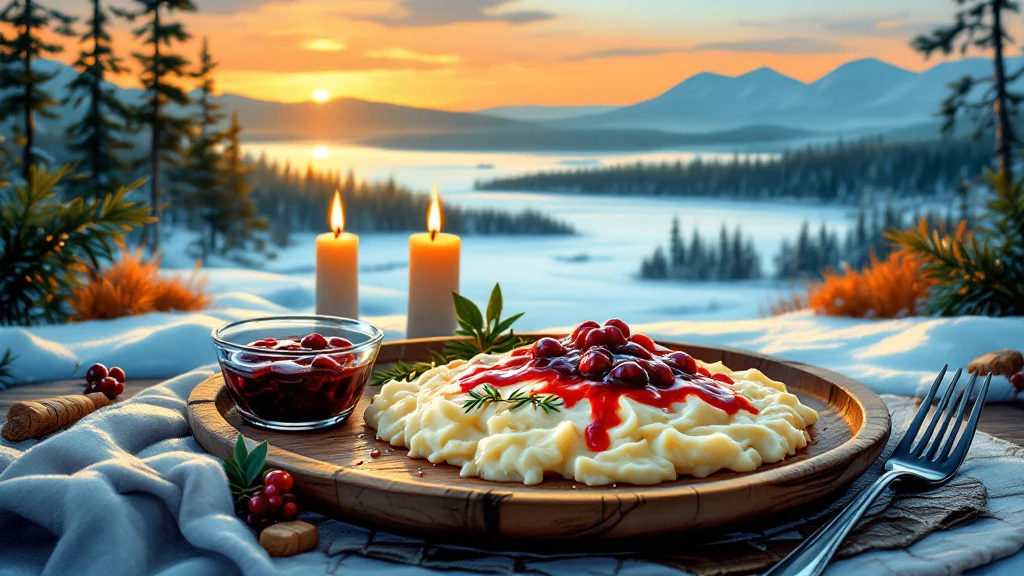
Reindeer meat is to Lapland what lamb is to New Zealand – it’s everywhere, it’s the default, and it’s genuinely good. Poronkäristys (sautéed reindeer) is THE Lapland dish. Thin-sliced reindeer is cooked slowly with butter and water until it’s tender and slightly sweet, served on a mound of mashed potatoes with lingonberry jam on the side. The combination works perfectly – the tart lingonberries cut through the richness of the meat.
Order it at your first meal and then try it again somewhere else. Every restaurant has its own version and the differences are subtle but real. Some use more butter. Some add cream. Some serve it with pickles on the side. None of them are wrong.
Beyond the sauté, look for kuivaliha – dried reindeer meat, usually sold in thin slices. It’s salty, intensely flavoured, and makes excellent trail snack or something to bring home. You’ll find it in supermarkets and souvenir shops. Smoked reindeer (savuporonliha) is milder and works well on rye bread.
Fish: Simple and Superb
Lohikeitto – salmon soup – is the safest bet on any Lapland menu. Creamy, warming, loaded with chunks of salmon and potato, finished with dill. It’s hard to get wrong, and restaurants rarely do. At casual places, you’ll find it for 18-25€, often served with rye bread on the side. On a cold day after a morning activity, there’s nothing better.
If you’re near Inari or any of the larger lakes, look for Arctic char (nieriä). It’s a delicate, pink-fleshed fish that’s milder than salmon and beautiful when grilled or smoked. Vendace (muikku) is the other Lapland fish worth seeking out – tiny freshwater fish, deep-fried whole and eaten like chips. They’re crispy, slightly oily, and dangerously easy to eat by the handful. You’ll find them at markets and some restaurants, sometimes served in a paper cone.
Many safari operators serve fish cooked over an open campfire as part of the excursion. This is often the most memorable meal of the trip – not because of technique, but because eating fresh fish outdoors in the Arctic, sitting on a log by a fire, is its own kind of luxury.

Berries: Lapland’s Secret Gold
Cloudberry (lakka in Finnish) is the berry you need to know about. Golden-orange, soft, with a taste somewhere between mango and citrus – it grows only in Arctic bogs and is notoriously difficult to cultivate. Finns treat good cloudberry jam with the reverence other cultures reserve for truffles. On a dessert menu, anything with lakka is worth ordering: cloudberry jam on leipäjuusto (squeaky cheese), cloudberry cream, cloudberry liqueur.
Lingonberry (puolukka) is the everyday hero. Tart, red, and served alongside almost every meat dish. Finns eat lingonberries the way Americans use ketchup – with everything. The difference is that lingonberry jam is actually good for you and goes with reindeer like nothing else.
Blueberries (mustikka – technically bilberries, smaller and more intense than the cultivated kind) grow wild across Lapland’s forests. They show up in pies, porridge, and smoothies. If you visit in late July through September, you can pick your own – jokamiehenoikeus (everyman’s right) means you can forage freely, even on private land.
Bread: The Unsung Hero
Finnish rye bread (ruisleipä) is dense, dark, slightly sour, and genuinely addictive once you adjust to it. It’s nothing like the soft rye bread you might know – this is proper bread with a crust that crunches and a crumb that’s almost chewy. Finns eat it with butter, with cheese, with smoked reindeer, at breakfast, at lunch, and at dinner. If a restaurant brings bread to the table, it will be rye. Eat it.
Kalakukko is a traditional Eastern Finnish speciality – a rye crust filled with fish (usually vendace or perch) and pork. It’s more common in the Kuopio region than in Lapland, but you’ll occasionally find it at markets or as a speciality item. Think of it as Finland’s answer to a pasty – a complete meal wrapped in bread.
At campfires during safaris, you might get to try tikkupulla – sweet dough wrapped around a stick and baked over flames. It’s simple, slightly smoky, and tastes better than it has any right to, mostly because you’re eating it outdoors in the Arctic.

Where to Eat: Restaurants vs Self-Catering
Eating out in Lapland is not cheap. Casual mains (pasta, pizza, burgers) run 18-25€. Traditional Lappish dishes – the reindeer and fish you came for – sit at 28-40€ per main course. Multi-course tasting menus at the finer restaurants reach 90-120€. Alcohol in restaurants is expensive by any standard. A budget day of eating out costs 60-90€ per person. Prices are from the 2025-26 season; 2026-27 rates are being published through the autumn, so check restaurant websites or booking platforms for current rates.
Self-catering is where you can save real money. K-Market and S-Market supermarkets exist in all resort towns and are well stocked. You can buy reindeer meat, fresh salmon, rye bread, lingonberry jam, and cloudberry products right off the shelf and cook in your cabin. A budget of 30-45€ per day covers supermarket shopping plus one meal out – enough to eat well without breaking the budget.
Most cabins in Lapland come with a full kitchen. This isn’t a compromise – it’s how Finns do it. Cook reindeer stew in your cabin, eat it with a view of the snow, then head to the sauna. That’s a better evening than most restaurants can offer.
Vegetarian and Vegan Options
Let’s be honest: Lapland’s food culture is built on reindeer and fish. Traditional restaurants lean heavily on meat and seafood, and the further north you go, the fewer plant-based options you’ll find on menus. This is improving – Rovaniemi and Levi now have restaurants with decent vegetarian mains, and most places can do at least a salad or pasta dish – but it’s not a destination where vegetarians will feel spoiled for choice.
Your best strategy is self-catering. A cabin with a kitchen gives you full control. Supermarkets carry a reasonable range of vegetarian and vegan products, including plant-based alternatives that have become standard in Finnish grocery stores. You can eat well on mushroom dishes, root vegetables, rye bread, berry desserts, and the various plant-based products Finnish supermarkets now stock.
If you do eat out, lohikeitto works for pescatarians, and many restaurants can adapt dishes if you ask. Just don’t expect a dedicated vegan menu outside of Rovaniemi’s newer spots.
Frequently Asked Questions
What is the must-try food in Lapland?
Poronkäristys – sautéed reindeer with mashed potatoes and lingonberry jam. It’s on every restaurant menu in Lapland, it’s consistently good, and the combination of flavours is unique to the region. Follow it with something cloudberry for dessert and you’ve had the essential Lapland meal.
Is reindeer meat ethical to eat?
Reindeer in Lapland are semi-wild, not factory farmed. They roam freely across vast areas of fell and forest, eating natural vegetation. Herding is a centuries-old practice central to Sámi and Finnish Lapland culture. The meat is lean, free-range, and about as ethical as any meat production gets.
Can vegetarians eat well in Lapland?
It’s manageable but requires planning. Rovaniemi has the widest selection of vegetarian-friendly restaurants. In smaller resort towns, options are limited to pasta dishes, salads, and whatever you can request as a modification. Booking a cabin with a kitchen is the most reliable approach – Finnish supermarkets have solid plant-based ranges.
Where can I buy cloudberry products to take home?
Every supermarket in Lapland sells cloudberry jam. For cloudberry liqueur, visit an Alko shop – you’ll find them in Rovaniemi, Levi, and other resort towns. Airport shops also carry cloudberry products, though at a markup. Jam travels well in checked luggage; liqueur counts toward your duty-free allowance.
Best Booking Resources for Lapland
These are the booking tools I keep coming back to. They consistently offer the best prices, the most relevant options for northern Finland, and actually work well for Lapland-specific searches, which not all platforms do.
- Kiwi.com: The best source for finding flights and airport connections. I have noticed they find flight connections that other search engines miss.
- Booking.com: I almost always use them for booking hotels and apartments (and occasionally flights). They have the best filters and I like the user-friendly interface.
- Hotels.com: The most popular hotel booking platform in many countries, US included.
- Get Your Guide: A massive selection of tours and excursions, including aurora tours, husky rides, reindeer experiences and more!
- EconomyBookings: Want to explore Lapland or chase auroras yourself? They pool together the best offers from car rental operators for your convenience.
- yesim: Need a local SIM for Lapland? A stress-free holiday nowadays (unfortunately) might start from a good connection, so get an eSIM with unlimited or prepaid data.
- Ekta Traveling: Not interested in checking out the Finnish public health care system on your holiday? Didn’t think so 🙂 Good insurance gets that stress out of the way.
As an Amazon Associate I earn from qualifying purchases. Booking through these links costs you nothing extra and helps keep these guides free and up to date. Thank you!

Planning a Lapland trip?
Ask a Finn. The Lapland Trip Planning: Finland group is where readers compare dates, resorts and real prices for the coming winter.
Join the planning groupFollow on FacebookFollow on Pinterest