Planning Your Lapland Trip: The Complete Guide
Updated 17 September 2026.
Some links on this page are affiliate links. If you book through them, I earn a small commission at no extra cost to you. I only recommend services I genuinely trust for Lapland travel.
Lapland is not a city. It’s not even a small region you can see in a weekend. Finnish Lapland covers 100,000 square kilometres – roughly the size of Portugal – and most of it is wilderness.
The planning decisions you make before you go will shape your entire experience more than anything you decide once you’re there. Get the timing, location, and transport right, and you’ll have the kind of trip that rewires your brain. Get them wrong, and you’ll spend a lot of money standing in a queue at Santa Claus Village wondering what all the fuss was about.
The good news: planning a Lapland trip isn’t complicated. There are really only five decisions to make, and they cascade logically from one to the next. This guide walks through all of them, in order, so you can build your trip like a Finn would – not like a package tour brochure wants you to.
The five decisions, in order
Every Lapland trip comes down to the same sequence. Answer these in order and the rest fills itself in:
| Step | Decision | Why it matters |
|---|---|---|
| 1 | When to go | Determines what you’ll see and do. Aurora vs midnight sun. Snow activities vs hiking. Prices swing wildly by month. |
| 2 | Where to base yourself | Each area has a different character, price level, and set of available activities. This isn’t like choosing a hotel – it’s like choosing a different destination. |
| 3 | How to get there | Flights, overnight trains, or driving. Each option opens or limits which areas are practical to reach. |
| 4 | Where to stay | Glass igloos, log cabins, hotels, hostels. The range is enormous and availability in peak season disappears months ahead. |
| 5 | What to do | Activities are how most of your budget gets spent. Booking through a package instead of independently can mean paying two to three times as much. |
The mistake most first-timers make is starting at step 4 or 5 – they see a glass igloo on Instagram and try to build a trip around it. Start at step 1. Everything else follows.
When to go: a quick orientation
Lapland has two peak seasons and several shoulder periods that most tourists don’t know about. Your timing affects price, weather, daylight, activities – everything.
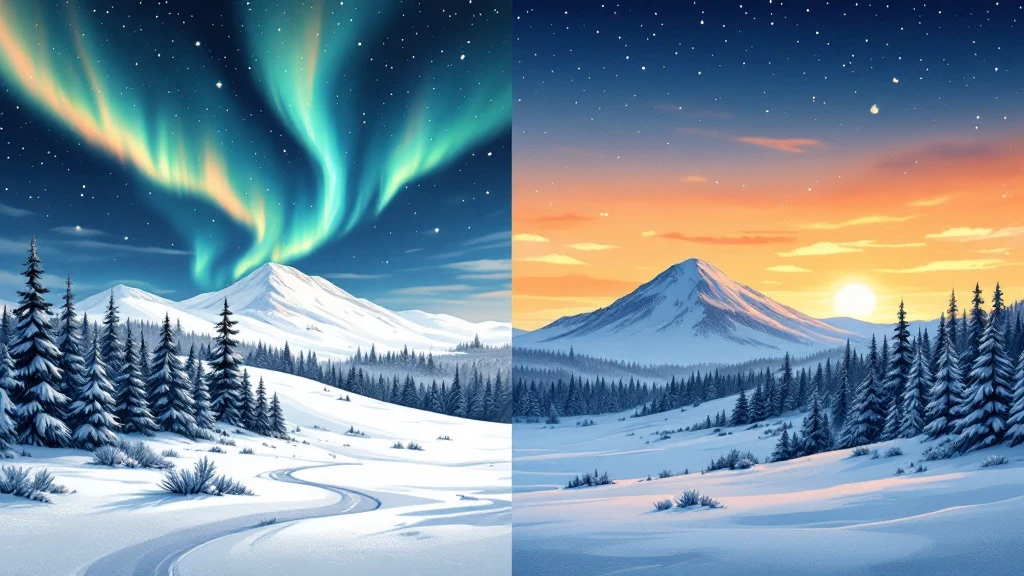
December to February is classic winter. Deep snow, extreme cold (down to −30°C / −22°F on the coldest days, though −15°C to −20°C is more typical), and very short days. December above the Arctic Circle gets kaamos – polar night – when the sun doesn’t rise at all. This is peak aurora season and peak tourist season. Prices are at their highest, especially the weeks around Christmas and New Year.
March to April is the season Finns choose for themselves. Long sunny days, still plenty of snow, temperatures climbing to a more manageable range. Prices drop significantly from the December peak. If you want winter Lapland without the crowds or the deepest cold, this is the window.
June to August is midnight sun season. No darkness at all. Hiking, fishing, berry picking, river rafting. A completely different destination from the winter version – and considerably cheaper.
September to October brings ruska – the autumn colour explosion – followed by the return of dark skies and aurora. May and November are transition months that most visitors skip, and honestly, for good reason.
Where to base yourself
This is where planning a Lapland trip diverges sharply from planning a trip to, say, Barcelona. There is no single “Lapland” to visit. The distances between areas are enormous – Rovaniemi to Inari is 330 km of Arctic highway – and each base offers a fundamentally different experience.
Here’s a quick orientation:
| Area | Best for | Character | Nearest airport |
|---|---|---|---|
| Rovaniemi | Families, Santa Claus Village, easy logistics | The “gateway” – a small city, not a wilderness outpost. Most touristy area by far. | Rovaniemi (RVN) |
| Levi | Skiing, nightlife, resort amenities | Lapland’s biggest ski resort. Good infrastructure. More lively than other areas. | Kittilä (KTT) |
| Saariselkä | Northern lights, national park hiking, glass igloos | Small resort village bordering Urho Kekkonen National Park. Quiet and scenic. | Ivalo (IVL) |
| Inari | Sámi culture, aurora, wilderness | The cultural heart of Sámi Finland. Remote, authentic, very few tour buses. | Ivalo (IVL) |
| Muonio | Husky safaris, wilderness, families | Small village with excellent safari operators. Very little tourist infrastructure – that’s the point. | Kittilä (KTT) |
| Luosto / Pyhä | Low-key skiing, families, amethyst mine | Two tiny fell villages connected by a national park. Genuinely quiet. | Rovaniemi (RVN) |
If this is your first trip and you want the easiest logistics, Rovaniemi or Levi are the obvious choices. If you want the Lapland that Finns actually care about – big skies, deep silence, real wilderness – look further north. Inari and Muonio will give you something Rovaniemi simply cannot.
Getting to Lapland
You have three realistic options: fly, take the overnight train, or drive. Each has trade-offs.
Flying
From Helsinki, flights to Rovaniemi, Kittilä (for Levi), or Ivalo (for Saariselkä and Inari) take about 1.5 hours and cost 80-200€ return with Finnair, depending on season and how far ahead you book. From the UK, return flights to Rovaniemi typically run 150-400€ – direct charters operate December through February from several UK airports, while the rest of the year you’ll connect through Helsinki. From the US, you’ll fly into Helsinki first (direct flights from several East Coast cities), then connect north.
Kittilä airport receives 1-2 flights daily from Helsinki, plus seasonal direct flights from London, Paris, Frankfurt, and Zurich in winter. Ivalo gets one daily Helsinki flight. Rovaniemi has multiple daily connections.
Overnight train
The Santa Claus Express runs from Helsinki to Rovaniemi in about 12 hours, departing around 18:00-19:00 and arriving 06:00-08:00. It’s a brilliant way to travel – you sleep through Finland and wake up in the Arctic. Prices as of 2025-26 season: from €23 for a seat (typically €50–90), from €69 per cabin for a private 2-person sleeping cabin, and from €94 per cabin for a cabin with its own shower. The shower cabin is worth the premium on a long overnight journey. There’s also an overnight train to Kolari (about 13 hours), which is the gateway for Levi and Ylläs – Kolari is 80 km from Levi with a bus connection from the station.
Trains are operated by VR (Finnish Railways) – book through their English-language site. Cabins book out weeks ahead in peak season, so don’t wait.
Driving
Helsinki to Rovaniemi is a long day of driving – or a comfortable two-day road trip with a stop somewhere in central Finland. Winter driving requires studded tyres (all rentals come with them) and confidence on icy roads. It’s not for everyone, but having a car in Lapland gives you freedom that’s hard to replicate with public transport. Reindeer will stand in the road. You will stop. They will not hurry.
What does a Lapland trip actually cost?
This depends heavily on when you go, where you stay, and how you book. But here’s the framework to get you oriented. Prices below are from the 2025-26 season; 2026-27 rates are being published through the autumn, so check operator websites or booking platforms for current rates.
Lapland has three cost tiers, and which one you land in comes down almost entirely to one factor: whether you book independently or through a package.
| Expense | Budget approach | Mid-range | Splurge |
|---|---|---|---|
| Transport (return from Helsinki) | Train Seat: from €23 (typically €50–90) | Train sleeping cabin: from €69 per cabin or flights: 80-200€ | Flights 80-200€ + rental car |
| Transport (return from UK) | Via Helsinki, off-peak: from 150€ | Return flights: 200-300€ | Direct charter + car hire: 300-400€+ |
| Accommodation (per night) | Hostel / budget cabin | Hotel / standard cabin | Glass igloo / luxury lodge |
| Activities | Free outdoor pursuits, 1-2 safaris | 3-4 guided activities | Daily safaris + private tours |
| Food | Self-catering in cabin | Mix of cooking and restaurants | Restaurants daily |
Transport is the one cost you can pin down early. A budget traveller flying from Helsinki in off-peak can manage the return journey for well under 100€. From the UK, 150-250€ return is realistic if you book ahead and avoid the Christmas premium. The overnight train with a private cabin runs 100-200€ each way depending on the cabin type – expensive for a train, but you’re saving a night’s accommodation.
Accommodation and activities are where the range explodes. A hostel bed and a glass igloo suite can differ by a factor of ten for the same night. Activities are the biggest variable of all – a single husky or snowmobile safari typically costs more than a night’s accommodation. Our detailed cost breakdown covers real pricing for every category.
Self-catering in a cabin with a kitchen cuts food costs dramatically – every supermarket in Lapland is well-stocked, and cooking is what Finns do on holiday anyway.
What makes Lapland different
You could go to the Swiss Alps for snow. Norway for northern lights. Iceland for dramatic landscapes. So why Lapland specifically?
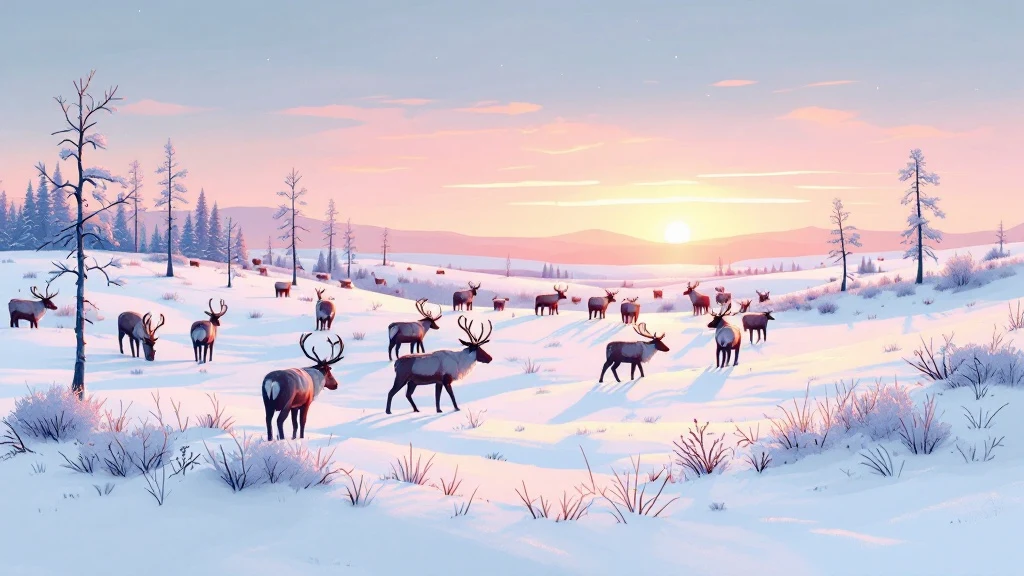
Space, and lots of it. Lapland has a population density of about 2 people per square kilometre. You can drive for an hour without passing another car. You can ski into a national park and not see another person all day. This kind of emptiness barely exists in Western Europe anymore.
Wilderness that actually works. Unlike genuinely remote destinations, Finland’s infrastructure is exceptional. Roads are ploughed within hours of snowfall. Every tiny village has reliable wifi. Cabins are heated and comfortable.
You get real wilderness without roughing it – unless you want to, in which case the backcountry is right there. Visit Finland has good overviews of each region if you want to explore what’s possible beyond the main resort areas.
Living culture. Finnish Lapland is home to the Sámi people, Europe’s only indigenous Arctic population. The culture here isn’t a performance for tourists – it’s living and ongoing. Visiting Inari and the Sámi cultural centres offers something you genuinely cannot find elsewhere in Europe. Approach it with respect and curiosity, not as a photo opportunity.
Sauna, everywhere. Every cabin, every hotel, most hostels – they all have a sauna. This isn’t a spa amenity. It’s a daily ritual. Rolling from a 90°C sauna into fresh snow at −20°C is something you’ll either never forget or never forgive yourself for. Probably both.
Jokamiehenoikeus. Everyman’s right – Finland’s legal right to roam. You can walk, ski, cycle, and camp almost anywhere in Lapland regardless of who owns the land. Pick berries, mushrooms, fish with a simple rod. This freedom is baked into Finnish culture and it means the entire landscape is yours to explore, not just the marked trails.
Common mistakes to avoid
Trying to see everything in three days. Lapland rewards slow travel. Pick one base and explore it deeply rather than trying to hit Rovaniemi, Levi, and Inari in a long weekend. The driving alone would eat your trip.
Booking only through packages. If someone is offering you a “complete Lapland experience” for several thousand pounds, price the same flights, accommodation, and activities separately before committing. The markup on packages aimed at international tourists is significant.
Going only in December. December has the least daylight, the highest prices, and the biggest crowds. It’s the worst time for photography, the worst for skiing (not enough daylight), and the weather is often overcast. It’s great if you specifically want the Christmas atmosphere. For everything else, other months are better.
Underpacking for the cold. Layering is not optional at −25°C. Activity operators provide thermal oversuits for safaris, but for walking around town, your own gear matters. This is fixable – but not if you only realise it at the airport.
Not booking activities in advance. Popular safaris in peak season sell out weeks ahead. You can’t just show up in Levi in February and expect to walk onto a husky safari the next morning.
Putting it all together
The decision table at the top of this guide is your roadmap. Work through it in order – when, where, transport, accommodation, activities – and each step narrows the next. Most people who feel overwhelmed by Lapland planning are trying to decide everything at once. Don’t. Pick your month first. The rest follows.
If you’re booking for December-February peak season, start 4-6 months ahead – glass igloos and train cabins sell out even earlier. For March-April or summer, 6-8 weeks is plenty of lead time. Book transport first (flights and train cabins are the bottleneck), then accommodation, then activities. Leave gaps in your schedule. Some of the best Lapland moments happen when you’re not on a tour – a quiet walk through snow-covered forest, a cup of coffee on the cabin porch watching the sky change colour.
Every step has its own detailed guide. Start with the one that matters most right now.
Frequently Asked Questions
How far in advance should I plan a Lapland trip?
For December-February peak season, book flights and accommodation 4-6 months ahead – glass igloos and train cabins sell out even earlier. For March-April or summer, 6-8 weeks is usually fine. Activity bookings can often be made 2-4 weeks ahead except during Christmas week.
Is Lapland too expensive for a budget traveller?
Not if you travel independently. A return train seat from Helsinki costs as little as €23 (typically €50–90), and self-catering in a cabin keeps food costs low. The expensive Lapland you see quoted online is usually package-tour Lapland with everything marked up for convenience. Our detailed cost guide breaks down real prices for every category.
Do I need to speak Finnish?
No. English is widely spoken throughout Finnish Lapland – tourism staff, shop workers, bus drivers, and safari guides all communicate comfortably in English. Learning a few Finnish phrases (kiitos for thank you, moi for hello) is appreciated but genuinely not necessary. Menus and signage are often bilingual.
Can I see the northern lights from Rovaniemi?
Yes, but your odds improve significantly the further north you go. Rovaniemi sits right on the Arctic Circle, which is the southern edge of the prime aurora zone. Inari, Saariselkä, or Muonio – all further north – give you much better chances and far less light pollution. Check the FMI aurora forecast before heading out, wherever you are.
Is Lapland safe?
Extremely. Finland consistently ranks among the safest countries in the world, and there’s virtually no crime affecting tourists in Lapland. The main safety considerations are weather-related: dressing properly for extreme cold, driving carefully on icy roads, and not wandering into the backcountry unprepared. Visit Finland has practical safety information for every season.
Best Booking Resources for Lapland
These are the booking tools I keep coming back to. They consistently offer the best prices, the most relevant options for northern Finland, and actually work well for Lapland-specific searches, which not all platforms do.
- Kiwi.com: The best source for finding flights and airport connections. I have noticed they find flight connections that other search engines miss.
- Booking.com: I almost always use them for booking hotels and apartments (and occasionally flights). They have the best filters and I like the user-friendly interface.
- Hotels.com: The most popular hotel booking platform in many countries, US included.
- Get Your Guide: A massive selection of tours and excursions, including aurora tours, husky rides, reindeer experiences and more!
- EconomyBookings: Want to explore Lapland or chase auroras yourself? They pool together the best offers from car rental operators for your convenience.
- yesim: Need a local SIM for Lapland? A stress-free holiday nowadays (unfortunately) might start from a good connection, so get an eSIM with unlimited or prepaid data.
- Ekta Traveling: Not interested in checking out the Finnish public health care system on your holiday? Didn’t think so 🙂 Good insurance gets that stress out of the way.
As an Amazon Associate I earn from qualifying purchases. Booking through these links costs you nothing extra and helps keep these guides free and up to date. Thank you!
Planning a Lapland trip?
Ask a Finn. The Lapland Trip Planning: Finland group is where readers compare dates, resorts and real prices for the coming winter.
Join the planning groupFollow on FacebookFollow on Pinterest