Northern Lights in Lapland: When, Where and How to See Them
Updated 25 September 2026.
Some links on this page are affiliate links. If you book through them, I earn a small commission at no extra cost to you. I only recommend services I genuinely trust for Lapland travel.
Three things have to line up: a dark sky, no cloud, and some solar activity. The third one is the easy part in Lapland. The auroral oval sits more or less overhead here, so a KP of 2 or 3 is enough to put a green arc across the north. The KP 5 storm-chasing advice you read online was written for Scotland and Germany, where the lights only reach on big nights. It does not apply at this latitude.
Cloud is what actually decides your trip. FMI’s long-term observations at the Sodankylä latitude belt show auroras on roughly every other clear dark night, which sounds excellent until you remember that only about 45 to 50 percent of winter nights are clear in the first place. Three or four nights in northern Lapland give you a fair chance and nothing stronger than that. Anyone promising you the lights is selling something. If you want the single best answer: come in late September or in March, sleep somewhere genuinely dark, and stay at least four nights.
When to come: the season and the odds
The season runs from late August to mid-April. Between mid-May and late July there is no aurora viewing at all in the north, because there is no darkness. This is not a matter of odds. The sun does not set.
Inside the season, months differ in two ways that pull against each other: how many dark hours you get, and how likely those hours are to be cloudy. December has 22 hours of darkness and the worst cloud of the winter. September has ten dark hours and some of the clearest skies of the year, plus the equinox effect on geomagnetic activity.
| Month | Dark hours | Clear-night odds | Best viewing window |
|---|---|---|---|
| Late August | 3 | 5% | 01:00-03:00 |
| September | 10 | 45% | 21:00-04:00 |
| October | 14 | 45% | 19:00-05:00 |
| November | 18 | 40% | 17:00-07:00 |
| December | 22 | 35% | 15:00-09:00 |
| January | 20 | 50% | 16:00-08:00 |
| February | 14 | 50% | 18:00-05:00 |
| March | 9 | 40% | 21:00-01:00 |
| April | 4 | 15% | 23:00-01:00 |
The two equinox months, September and March, are the sweet spots. Geomagnetic activity runs higher around the equinoxes, and both months avoid the worst of the winter cloud. September gives you aurora over ruska, the autumn colours on the fells, with no snow and no mosquitoes. March gives you deep snow reflecting the light back at you and enough daylight to actually do things during the day. February is close behind, with the best clear-sky odds of the winter and long evenings.
April is the season closing down. Only the first week or so is properly viable, and only for a couple of hours around midnight. By mid-April the nights are too bright.
Where to base yourself
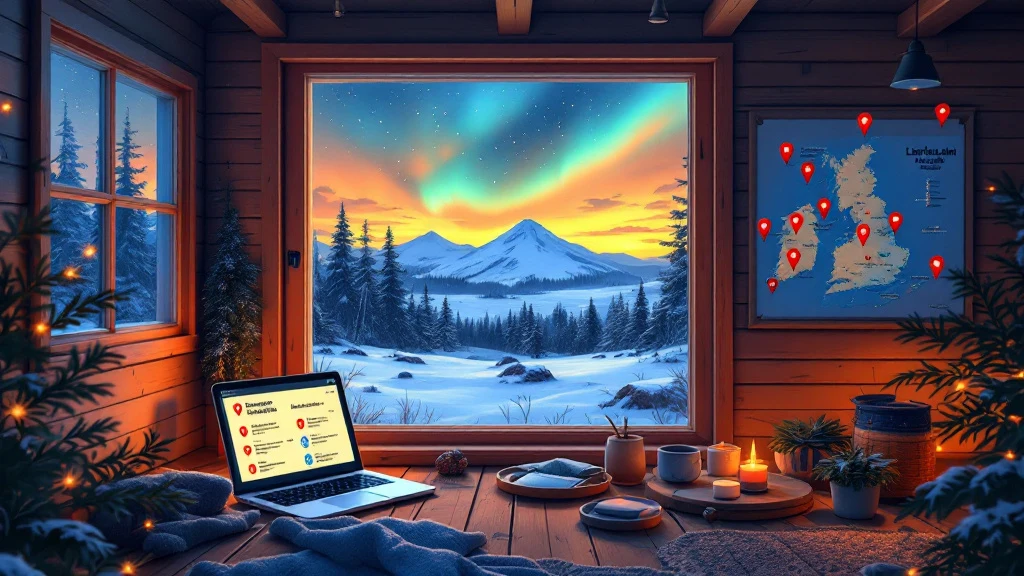
Darkness ranks the bases, and the ranking is not the same as the ranking of places to have a holiday.
Rovaniemi is a city of some 60,000 people and it glows. That is why every aurora tour from Rovaniemi starts by driving out of town. You can absolutely see the lights from Rovaniemi, but you have to leave the centre first – 20 minutes in almost any direction does it. If Rovaniemi is your base, budget for either a tour or a car.
Saariselkä is a small village with modest lighting, sitting on the edge of an enormous dark national park. Walk to the edge of the village and you have a proper night sky. Inari, 35 km further north, is darker still, and the big lake gives you the open northern horizon that matters more than most people realise – the aurora usually stands to the north, and a forest clearing hides exactly the part of the sky you need. Kilpisjärvi, in the far north-west arm, is dark and has the driest skies in the region, though it is five hours’ drive from Rovaniemi and has very little else going on.
Where you sleep matters more than where you visit. The dark-sky stays page ranks the hotels, cabins and glass-roofed rooms with wake-up alerts and current prices, and the glass igloo comparison covers whether paying for a roof over your head is worth it.
Tour, self-drive or stay put
Three methods, three prices, three different kinds of trip. Prices are from the 2025-26 season; 2026-27 rates are being published through the autumn, so check operator websites for current rates.
| Method | Cost | What you get | Best for |
|---|---|---|---|
| Small-group tour | 145-210€ per person, 4-6 hours | A driver who chases cloud gaps, camp fire, warm gear, photos taken for you | First-timers on a short Rovaniemi trip |
| Private tour | 250€ and up | Same, with the route built around you | Photographers, small groups, families |
| Hire car | 60-125€ per day, studded tyres included | Total freedom over timing and distance | Confident winter drivers, longer stays |
| Stay put | Free | Your own doorstep, repeated every night | Anyone sleeping north of Rovaniemi |
Be clear about what a tour sells you. It is not the lights. It is a guide with a cloud radar and a vehicle, who can drive 100 km to a gap in the overcast while you sit in the back. Operators quote success rates in the nineties, and some offer a refund or a repeat if nothing shows. Read what the guarantee actually covers before you assume it covers you. On a cloudy week, no operator can produce anything.
A hire car does the same job for less if you can drive on snow in the dark. Studded tyres come as standard on winter rentals in Lapland; the skill required is mostly patience and lower speeds. The reindeer do not care about your car. They will stand in the road. You will wait.
Staying put is the underrated one. Sleep somewhere dark with a view north, set an alert, and step outside when it fires. Three nights in one dark place beat one night in each of three towns, because the whole game is repeated attempts against the cloud.
Reading the forecasts like a local
Finland has its own aurora and space-weather service run by the Finnish Meteorological Institute, and its aurora and space weather pages are better tuned to this latitude than the generic global apps. Use them alongside FMI’s ordinary weather forecasts, which is where the cloud radar lives.
KP is a global index of geomagnetic activity, not a prediction for your patch of sky. At Lapland’s latitude, KP 2 is usually enough from September through March; in the marginal months of late August and April you want 3. Higher numbers mean bigger, brighter, further-south displays, but waiting for KP 5 in Inari means missing most of your week.
Cloud overrules everything. An aurora above a cloud deck does not exist for you. This is why locals open the cloud radar first and the aurora forecast second, and why the correct answer to “should we go out tonight?” is usually a weather question rather than a space question.
A workable evening routine: check the cloud forecast at dusk and decide roughly where the gaps are. Install a free alert app or ask your accommodation whether it runs a wake-up service. Then look north on every clear hour between about 21:00 and 01:00 – five minutes outside, several times, rather than four hours of standing in the cold hoping. Displays come and go over minutes.
Solar cycle status for 2026-27
NASA and NOAA placed the maximum of solar cycle 25 in October 2024. That means 2026-27 sits in the declining phase: activity is below the peak but still comfortably above the long-term average. Worth knowing is that historically some of a cycle’s largest storms arrive one to two years after the sunspot maximum, not at it – the declining phase is not a dead zone.
So: still a strong window, not the peak. Anyone marketing 2026-27 as “the best aurora years in a decade” is recycling copy written for 2024. And anyone telling you to wait for a better year is also wrong, because at this latitude ordinary activity is enough.
What you will actually see
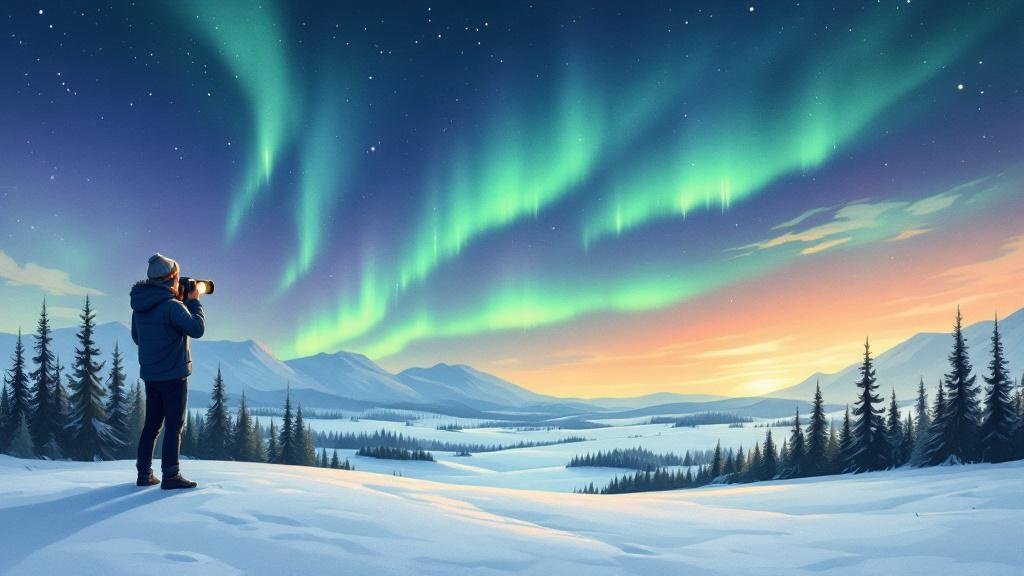
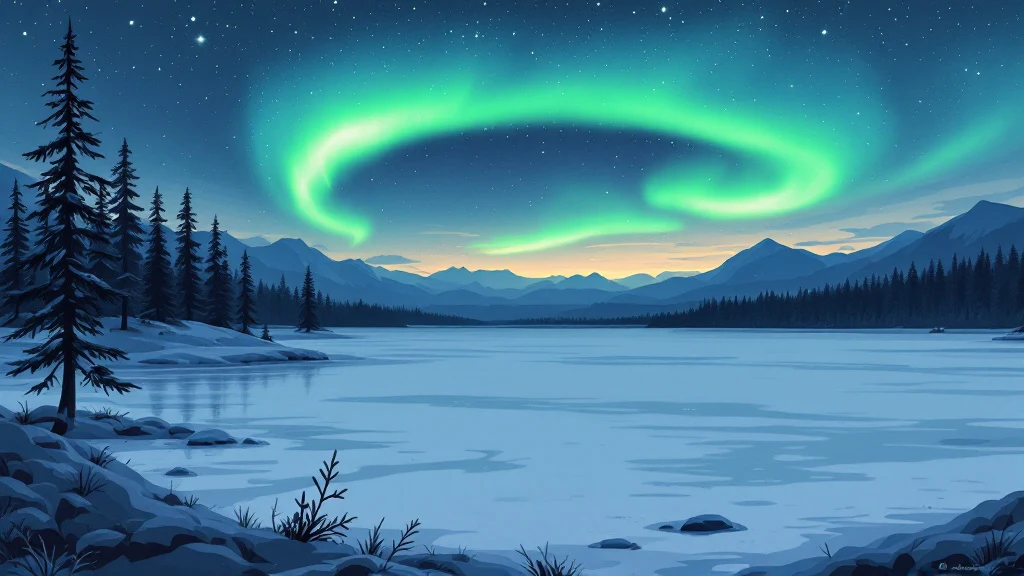
This is where most guides quietly mislead. A great many real displays are a pale grey-green arc, low in the north, that could be mistaken for a thin cloud lit from below. Your eyes see very little colour in the dark. Your phone, on night mode, renders that same arc as a vivid green ribbon. Both images are true; the camera is just more sensitive than the human eye.
Strong displays are different and you will not be in any doubt about them: bands overhead, visible movement, pink and violet edges, the whole sky reorganising itself over a few minutes. Those happen. They are not what most visitors get on most nights. Go out expecting the faint arc, and treat the big show as the bonus it is.
The practical upshot is to learn to recognise the weak version. Look north, at the horizon, for a stationary pale band that does not drift like cloud. Point your phone at it for a three-second exposure. If it comes out green, you are looking at aurora and it may well strengthen over the next hour.
Gear, in brief
Dressing to stand still at −20°C (−4°F) is a completely different problem from dressing to move at −20°C. Husky sledding keeps you warm through activity; aurora watching involves standing motionless in a field for an hour. You need more insulation than you think, and warm boots matter more than a warm coat, because your feet go first.
For photography, recent iPhones and Samsungs take genuinely usable aurora shots on night mode – you do not need a DSLR to come home with something. A small tripod or any flat surface helps more than an expensive lens. The detailed camera settings, and the full clothing list, live on their own pages.
Check the dark-sky stays
- Kakslauttanen Arctic Resort: the original glass igloos
- Northern Lights Village Saariselka: glass-roofed aurora cabins in Saariselka
- Arctic SnowHotel & Glass Igloos: snow rooms and glass igloos in the dark outside Rovaniemi
How I researched this
Aurora frequency and forecasting behaviour come from FMI’s aurora and space-weather pages, checked September 2026. Solar-cycle status comes from NASA and NOAA announcements as reported in September 2026. Clear-sky odds and dark-hour figures by month come from my own climate research for Lapland, and tour and car-hire prices from my 2025-26 activity-price research, labelled as such throughout. Nobody from Lapland Trip Planner sells or guarantees aurora sightings, and no operator listed here has been paid for a mention; the recommendations are a researched comparison, not a review.
Let a guide find the clear sky
Northern lights hunt from Rovaniemi: small groups chasing clear skies, free cancellation
Common questions
What KP index do I need to see the northern lights in Lapland?
KP 2 is usually enough from September through March, because the auroral oval sits overhead at Lapland’s latitude rather than far to the north. In the marginal months of late August and early April, aim for KP 3. Advice to wait for KP 5 is written for locations much further south and will cost you most of your chances here.
What is the best month for northern lights in Finnish Lapland?
September and March. Both sit near an equinox, when geomagnetic activity runs higher, and both avoid the heaviest winter cloud – around 45 percent of September nights are clear and 40 percent in March. February is a strong third with the best clear-sky odds of the winter at about 50 percent.
Can I see the aurora from Rovaniemi itself?
Yes, but the city’s own light pollution works against you, which is why every tour drives out of town before stopping. Twenty minutes in almost any direction gets you to a properly dark spot. If you are staying in Rovaniemi centre without a car, budget for a tour on at least one night.
Are aurora tours worth the money?
They are worth it if you have only two or three nights, no car, and no confidence driving on snow in the dark. What you pay 145 to 210€ for is a guide who can drive to a hole in the cloud, plus warm gear and photos. If you are staying four or more nights somewhere dark, the same money is better spent on an extra night in the north.
How many nights should I stay to have a realistic chance?
Four or more. With clear-sky odds of roughly 40 to 50 percent depending on the month, and auroras on about every other clear dark night, three nights gives you a fair chance and no guarantee. Each extra night in the north improves the odds more than any amount of gear or tour spending.
Best Booking Resources for Lapland
These are the booking tools I keep coming back to. They consistently offer the best prices, the most relevant options for northern Finland, and actually work well for Lapland-specific searches, which not all platforms do.
- Kiwi.com: The best source for finding flights and airport connections. I have noticed they find flight connections that other search engines miss.
- Booking.com: I almost always use them for booking hotels and apartments (and occasionally flights). They have the best filters and I like the user-friendly interface.
- Hotels.com: The most popular hotel booking platform in many countries, US included.
- Get Your Guide: A massive selection of tours and excursions, including aurora tours, husky rides, reindeer experiences and more!
- EconomyBookings: Want to explore Lapland or chase auroras yourself? They pool together the best offers from car rental operators for your convenience.
- yesim: Need a local SIM for Lapland? A stress-free holiday nowadays (unfortunately) might start from a good connection, so get an eSIM with unlimited or prepaid data.
- Ekta Traveling: Not interested in checking out the Finnish public health care system on your holiday? Didn’t think so 🙂 Good insurance gets that stress out of the way.
As an Amazon Associate I earn from qualifying purchases. Booking through these links costs you nothing extra and helps keep these guides free and up to date. Thank you!

Planning a Lapland trip?
Ask a Finn. The Lapland Trip Planning: Finland group is where readers compare dates, resorts and real prices for the coming winter.
Join the planning groupFollow on FacebookFollow on Pinterest