Snowmobile Safari in Lapland: The Adrenaline Option
Updated 25 September 2026.
Some links on this page are affiliate links. If you book through them, I earn a small commission at no extra cost to you. I only recommend services I genuinely trust for Lapland travel.
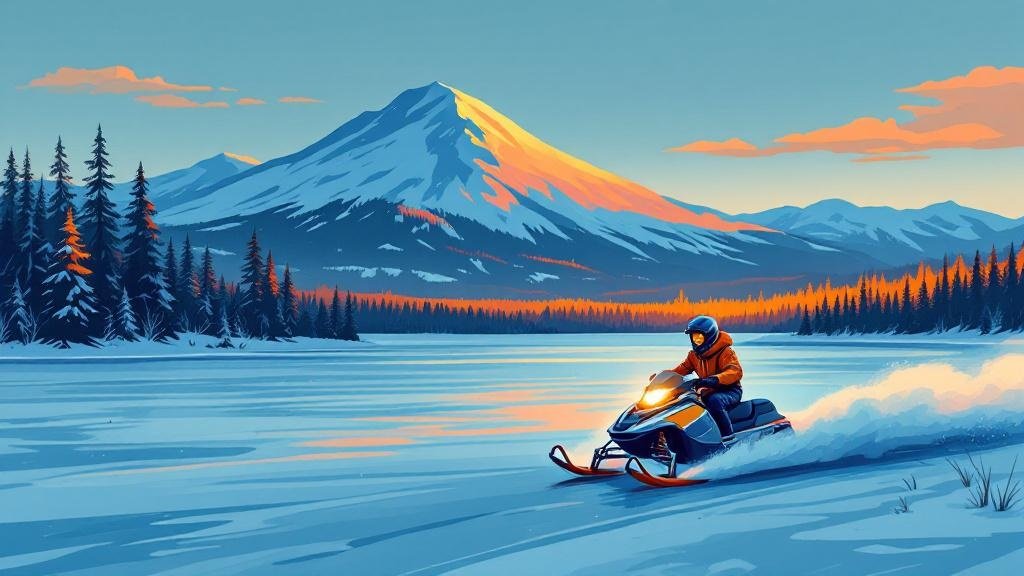
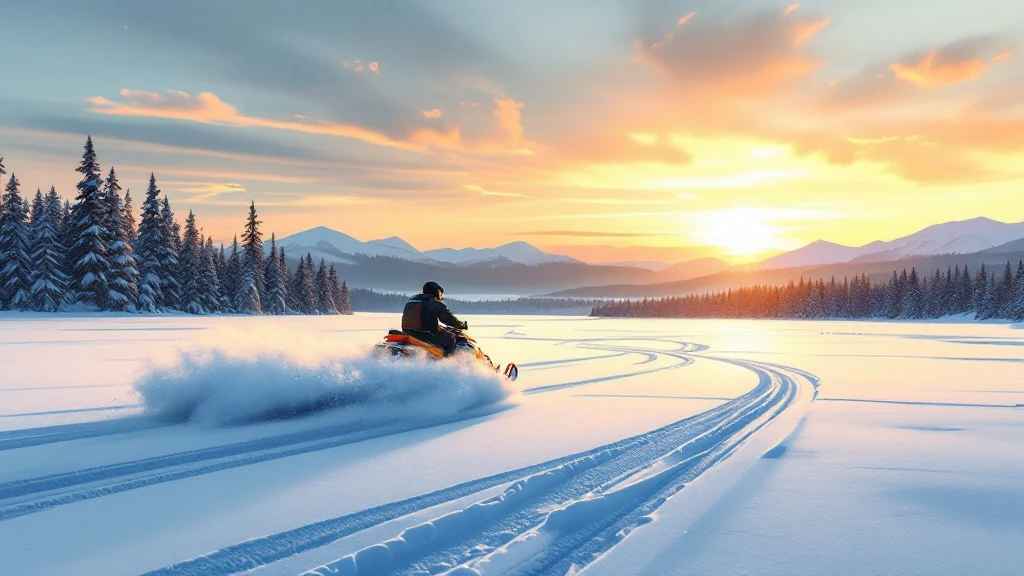
Snowmobiling in Lapland is not a nature experience. It’s a motorsport experience that happens to take place in nature. The machines are loud, fast, and powerful – think jet ski on snow, not gentle reindeer sleigh. If that sounds like exactly what you want, you’re in the right place. A snowmobile safari is the most adrenaline-heavy activity on the Lapland menu, and it’s the fastest way to cover serious distance across frozen lakes and through snow-heavy forests.
One thing catches most visitors off guard: you need a valid car driving licence to drive the snowmobile yourself. No licence, you ride as a passenger behind the driver. That’s the rule across Finland, no exceptions, and operators check before you get near a machine.
Want to drive one yourself?
Snowmobile safari in Rovaniemi: guided routes, gear included, free cancellation
What a Snowmobile Safari Actually Involves
You arrive at the operator’s base, get fitted with a thermal oversuit, helmet, and gloves (all provided), sit through a safety briefing, and then head out on marked trails in a convoy. A guide leads the group, you follow in single file, and speeds vary from gentle cruising to genuinely fast depending on the terrain and tour type.
Most safaris run two people per snowmobile – one drives, one sits behind. If both of you have valid licences, you can swap halfway. If you want a machine to yourself, that’s possible but costs more: expect a solo supplement of about 60€ on top of the base price.
The routes cross frozen lakes, wind through boreal forest, climb into fell country, and sometimes stop at a wilderness cabin for hot drinks and a fire. What you see depends entirely on how long your safari is and where you’re based.
Driving Licence Requirements
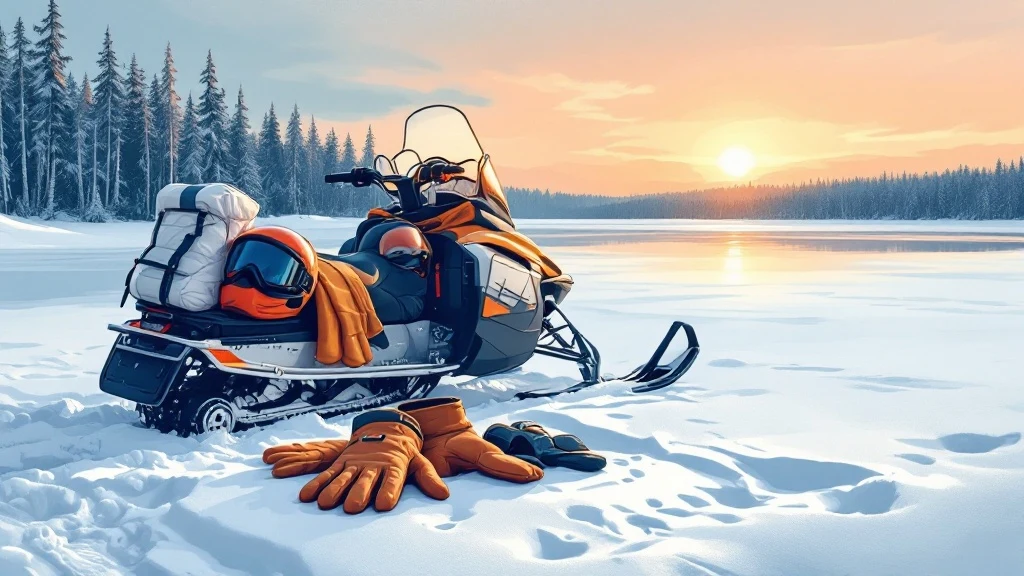
Finland treats snowmobiles as motor vehicles. To drive one, you need:
- A valid EU category B driving licence (a standard car licence)
- The physical card – not a photo on your phone, not an expired licence, the actual card
- You must be 18 or older
UK and US driving licences work fine as long as they’re valid and you have the physical card with you. If your licence is digital-only or you’ve left the card at the hotel, you’re riding as a passenger. Operators won’t bend on this – it’s a legal requirement, not their policy.
No licence at all? You can still go on a safari as a passenger. You sit behind the driver and enjoy the ride without the responsibility. Honestly, being a passenger isn’t a bad deal – you can look around more, take photos, and you don’t have to concentrate on following the trail.
Duration Options and What You Get
Safari lengths typically fall into three categories:
| Duration | What to expect | Best for |
|---|---|---|
| 2 hours | Nearby trails, lake loops, basic introduction | First-timers, families, tight schedules |
| Half day (3-4 hours) | Deeper into wilderness, cabin stop with hot drinks, more varied terrain | Most visitors – the sweet spot |
| Full day (6-8 hours) | Serious distance, remote areas, lunch at wilderness cabin, sometimes fishing or other stops | Adventure seekers, experienced riders |
The 2-hour option is the most commonly booked because it’s the cheapest and fits neatly into a packed itinerary. But if snowmobiling is something you’re genuinely excited about, the half-day is worth the extra cost. You get beyond the beaten track, the guide relaxes into a more natural pace, and you actually feel like you’re exploring rather than following a circuit.
Prices for the 2026-27 Season
These are 2026-27 rates from the operators’ own sites, checked in September 2026. Snowmobiling rose far less than huskies did this season: the two-hour safari is up about 20%, where a self-driven husky safari went up by half. Operators still add rates through the autumn, so check before you book.
| Safari type | Price per person | Notes |
|---|---|---|
| 1-hour safari | From 100€ | Trails close to town, the cheapest way to try it |
| 2-hour safari (shared sled) | From 156€ | Two adults per snowmobile, taking turns to drive |
| 3-hour safari | From 215€ | Properly beyond the resort area |
| Half day with transfers | Around 165€ | 4 hours door to door, pick-up included |
| Aurora snowmobile tour | From 139€ | 139€ from Rovaniemi, from 159€ in Levi |
| Solo supplement | +60€ | Your own machine instead of sharing |
| Self-liability reduction | About 25€ | Cuts a roughly 1000€ personal liability to a few hundred |
Fuel is typically included in the price. Thermal suits, helmets, and gloves are included too. What’s often not included is comprehensive damage coverage – and this is where people get caught out.
What to Wear
Operators provide the outer layer – a thick thermal oversuit, boots, helmet, and gloves or mittens. Underneath, you need to dress sensibly because you’ll be sitting still in wind chill that can push temperatures well below what the thermometer says. At −20°C (−4°F), with the windchill of riding at speed, exposed skin gets cold fast.
Wear thermal base layers (merino wool is ideal), a mid-layer fleece, thick socks, and a buff or balaclava under the helmet. The operator’s gear handles the worst of it, but your face between the helmet and the collar is the vulnerable spot. Bring hand warmers as backup – operator gloves vary in quality.
If you wear glasses, they’ll fog up inside the helmet visor. Contact lenses are easier. If contacts aren’t an option, crack the visor slightly or ask the guide for anti-fog spray – most operators have it.
Safety
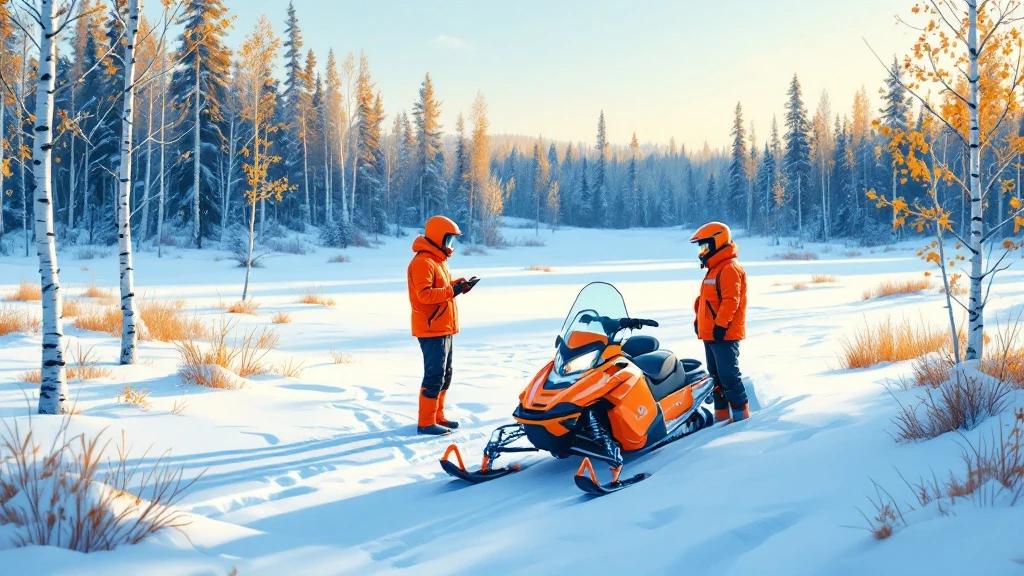
Snowmobiles are heavy, fast, and don’t have seatbelts. The safety briefing exists for a reason – listen to it even if it feels basic.
Key safety rules:
- Follow the guide’s tracks exactly. Straying off the trail risks hitting hidden rocks, stumps, or thin ice.
- Keep a safe distance from the snowmobile in front. Stopping distances on snow are longer than you think.
- Brake gently. Hard braking on ice does exactly what you’d expect.
- Lean into turns, not away from them. The instinct is wrong – trust the physics.
- Absolutely no alcohol before or during the safari. Finnish law treats snowmobile drink driving the same as car drink driving.
Most accidents happen because someone goes too fast on a turn or panics and grabs the brake on ice. The guides set the pace for a reason. If you’re itching to go faster, ask about longer or more advanced tours rather than freelancing on a group safari.
Best Locations for Snowmobile Safaris
Every resort town in Lapland has snowmobile operators, but the landscape and experience differ by location.
| Location | Operators | Terrain |
|---|---|---|
| Rovaniemi | Lapland Safaris, Arctic Circle Snowmobile Park | Forest trails, river routes. Busiest area with the most tour groups. |
| Levi | Safartica, Levi Safari | Fell country and lake crossings. Good variety of terrain. |
| Saariselkä | Saariselkä Sport Resort | Open fells, wide landscapes. Less crowded trails. |
| Muonio | Aurora eMotion | Remote wilderness. Home to the world’s first electric snowmobile safaris. |
Rovaniemi has the most operators and the easiest logistics – many tours depart from near Santa Claus Village. The trade-off is volume: you’ll share trails with other groups, especially in December and February. Further north, the crowds thin out and the wilderness gets wilder.
For something different, Aurora eMotion in Muonio runs electric snowmobile safaris – the first operator in the world to do so. Electric machines are significantly quieter, which makes them better for spotting wildlife and for anyone who finds the noise of conventional snowmobiles overwhelming.
Aurora Snowmobile Tours
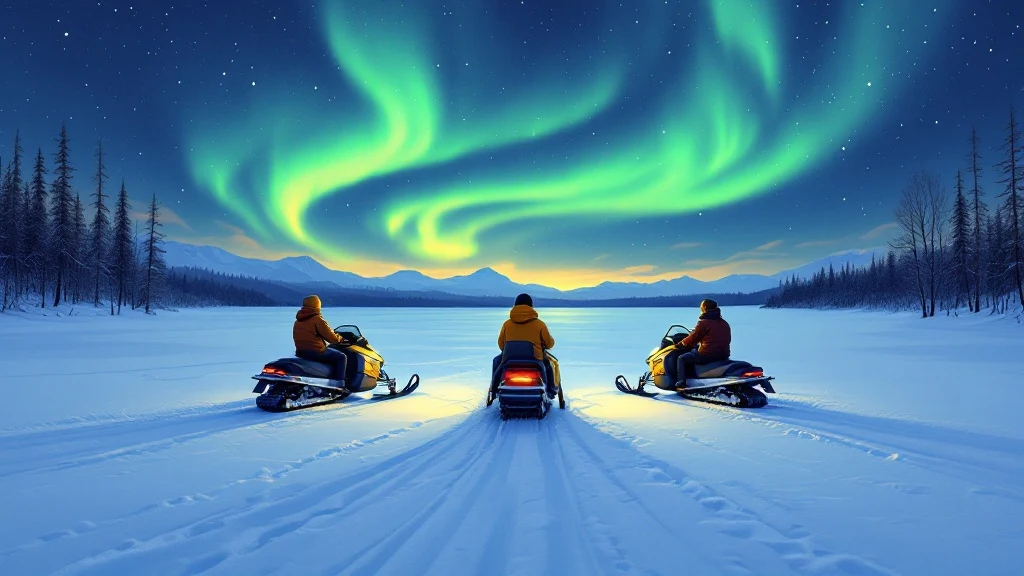
Several operators run evening snowmobile safaris specifically for aurora hunting. You ride out to a dark spot away from light pollution, the guide cuts the engines, and you wait. If the aurora appears, you’re watching it from the middle of a frozen lake or a fell top with nobody else around.
It’s a gamble – the northern lights don’t perform on demand. But the ride itself is worth it regardless. Snowmobiling through dark forest with just your headlamp cutting through the darkness is an experience on its own. Check the FMI aurora forecast before booking an aurora-specific tour so you can pick a night with decent probability.
Environmental Considerations
There’s no getting around it: snowmobiles burn fuel, make noise, and leave exhaust fumes hanging in the cold air. They disturb wildlife, and on busy routes near resort towns the trails can feel more like motorways than wilderness paths.
If environmental impact matters to you (and it should), a few things help:
- Choose longer safaris that go deeper into wilderness on less-trafficked routes, rather than short loops near town
- Consider the electric snowmobile option at Aurora eMotion in Muonio – dramatically quieter and zero direct emissions
- Stick to marked trails. Off-trail riding damages fragile subarctic vegetation that takes years to recover
- Offset if that’s part of your practice – snowmobiling is the most carbon-intensive activity in Lapland
Finland is slowly pushing the industry toward electric machines, but adoption is still early. For now, the honest answer is that snowmobiling is a high-impact activity. Most visitors accept that trade-off for a once-in-a-lifetime experience, but it’s worth going in with eyes open.
When to Go
The snowmobile season runs from late November through April, depending on snow conditions. Each month offers something different:
| Month | Conditions | Daylight |
|---|---|---|
| November-December | Early season, trails opening up. Short days mean more evening/aurora tours. | Very limited (kaamos in the north) |
| January-February | Peak winter. Deep snow, coldest temperatures. Best aurora darkness. | Increasing from very short to moderate |
| March-April | Longest days, warmest temperatures, excellent snow. Best visibility for scenery. | 10+ hours, bright and sunny |
March is arguably the best month for snowmobiling. You get long daylight hours, milder temperatures, and the snow is still deep and reliable. Prices also tend to drop compared to the peak December-February season.
Booking Tips
If this is your first Lapland trip, booking through a platform gives you free cancellation and English-language customer support – worth the small premium when you’re organising from abroad. If you’ve been before and know which operator you want, booking direct can save you a bit.
Book early for December and February – those months fill up fast, especially for half-day and full-day options. March has more availability. Whenever you book, confirm these things: whether the price is per person or per snowmobile, whether fuel is included, and what the damage deductible is with and without the extra insurance.
Frequently Asked Questions
Do I need a special licence to drive a snowmobile in Finland?
No special licence – a standard car driving licence (EU category B or equivalent) is all you need. You must bring the physical card; a photo or digital licence won’t be accepted. US and UK licences are valid. If you don’t have any driving licence, you can still join a safari as a passenger.
How loud are snowmobiles?
Very. Conventional snowmobiles produce significant engine noise – conversation is impossible while riding, and the experience is more motorsport than nature retreat. If noise is a concern, look into the electric snowmobile safaris offered by Aurora eMotion in Muonio, which are dramatically quieter.
Is snowmobile damage insurance worth buying?
Yes. The extra self-liability cover costs around 25€ and reduces your financial exposure if you damage the machine. Without it, you may face a deductible of several hundred euros. On icy or unfamiliar terrain, even experienced drivers can have mishaps – it’s inexpensive protection for an expensive risk.
Can children go on snowmobile safaris?
Children can ride as passengers, typically sitting between the adults on the machine. Minimum age varies by operator – some accept children from around 4-5 years old as passengers. Children cannot drive. Check with the specific operator for their age policy and whether they provide child-sized thermal gear.
What happens if there’s no snow in early December?
Late November and early December are the riskiest months for snow coverage, particularly in southern Lapland around Rovaniemi. Operators may shorten routes or cancel tours if conditions are unsafe. Booking with free cancellation protects you – and if snow is your priority, mid-January onward is a safer bet.
Snowmobiling is the one Lapland activity where you actively do something rather than sit and watch. It’s not for everyone – it’s loud, it’s cold, and it requires concentration. But if you want to cover ground, feel some speed, and see parts of the landscape that no walking trail reaches, nothing else compares.
Best Booking Resources for Lapland
These are the booking tools I keep coming back to. They consistently offer the best prices, the most relevant options for northern Finland, and actually work well for Lapland-specific searches, which not all platforms do.
- Kiwi.com: The best source for finding flights and airport connections. I have noticed they find flight connections that other search engines miss.
- Booking.com: I almost always use them for booking hotels and apartments (and occasionally flights). They have the best filters and I like the user-friendly interface.
- Hotels.com: The most popular hotel booking platform in many countries, US included.
- Get Your Guide: A massive selection of tours and excursions, including aurora tours, husky rides, reindeer experiences and more!
- EconomyBookings: Want to explore Lapland or chase auroras yourself? They pool together the best offers from car rental operators for your convenience.
- yesim: Need a local SIM for Lapland? A stress-free holiday nowadays (unfortunately) might start from a good connection, so get an eSIM with unlimited or prepaid data.
- Ekta Traveling: Not interested in checking out the Finnish public health care system on your holiday? Didn’t think so 🙂 Good insurance gets that stress out of the way.
As an Amazon Associate I earn from qualifying purchases. Booking through these links costs you nothing extra and helps keep these guides free and up to date. Thank you!
Planning a Lapland trip?
Ask a Finn. The Lapland Trip Planning: Finland group is where readers compare dates, resorts and real prices for the coming winter.
Join the planning groupFollow on FacebookFollow on Pinterest