
Lapland Practical Guide: Everything Else You Need to Know
Updated 10 September 2026.
Some links on this page are affiliate links. If you book through them, I earn a small commission at no extra cost to you. I only recommend services I genuinely trust for Lapland travel.
Finland is one of the safest countries on Earth. The tap water is cleaner than what most people buy in bottles. Your phone will have 4G signal in places where the nearest human is a reindeer. The practical side of a Lapland trip is, honestly, – but a few things catch visitors off guard, and those are worth knowing before you go.
This is the everything-else guide: what to pack, how to handle the cold, staying connected, cultural dos and don’ts, health and safety basics, and the small logistical details that make the difference between a smooth trip and an annoying one. Consider it your pre-departure checklist.
Packing: The Short Version
Packing is the number one question first-time visitors ask, so we’ve written dedicated guides for winter and summer. But here’s the principle that matters most: layers, not bulk. Three thin layers beat one thick jacket every time because you can adjust as you move between heated indoors and Arctic outdoors – and you’ll be doing that constantly.
In winter, the system is: moisture-wicking base layer (merino wool is ideal), insulating mid-layer (fleece or down), and a windproof outer shell. Your extremities lose heat fastest – invest in proper mittens (not gloves), warm socks, and a hat that covers your ears. Most activity operators provide thermal oversuits, boots, and gloves for safaris, so you don’t need to buy expedition gear for a one-week holiday.
In summer, pack for changeability. A day can swing from warm sunshine to cold rain and back again. Waterproof jacket, hiking layers, and mosquito repellent are the essentials from mid-June through July. Don’t underestimate the mosquitoes – a head net sounds extreme until you’ve tried walking through a bog without one.
Surviving the Cold (It’s Easier Than You Think)
The number everyone fixates on is the temperature. January averages around −17°C (1°F) at night in Rovaniemi, with cold snaps reaching −35°C. That sounds terrifying. In practice, Lapland’s dry, still air feels significantly less harsh than a windy 0°C day in London or New York. The cold bites exposed skin, but it doesn’t cut through clothing the way humid cold does.
The real cold-weather skills are simple:
- Keep moving or go inside. Standing still is when cold catches up with you. Safari operators know this – activities are designed around movement with warm-up breaks.
- Eat and drink. Your body burns more calories in the cold. Carry a thermos of hot drink and snacks. Every Finn has a thermos in winter. This is non-negotiable.
- Protect your face. Below −20°C, a balaclava or buff over your nose and cheeks prevents frostnip. Your eyelashes will frost up. This is normal and actually quite funny.
- Watch for wind. Temperature plus wind is the real equation. A −15°C day with no wind is pleasant. A −10°C day with strong wind is miserable. Check the FMI weather forecast for wind chill, not just temperature.
Your Phone in Cold Weather
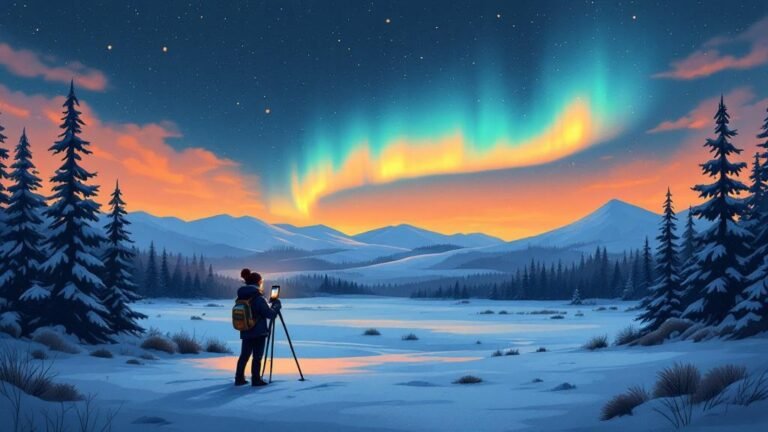
Cold kills phone batteries. At −20°C, a fully charged smartphone can die in minutes if left exposed. This is the single most annoying practical problem visitors face, especially when you’re trying to photograph the northern lights and your phone shuts down mid-shot.
The fix is physical, not technical: keep your phone inside your jacket, against your body heat, and only take it out when you’re actively using it. An inside chest pocket works well. Bring a power bank – also kept warm inside your jacket. Hand warmers tucked next to your phone in a pocket buy you extra time outdoors.
Touchscreen gloves are terrible in real cold. Most people end up pulling off one glove for a quick photo and stuffing it back on. Fingerless glove liners under mittens give you dexterity when you need it.
Health and Safety
Finland is absurdly safe. Violent crime is rare everywhere and essentially non-existent in Lapland. There are no dangerous wild animals you’re likely to encounter (bears exist but actively avoid humans, and wolf sightings are extremely rare). The hospitals are excellent, emergency services are well-equipped for Arctic conditions, and the emergency number is 112 – the same as the rest of Europe.
The biggest actual danger? Slipping on ice. Seriously. Icy pavements and car parks cause more tourist injuries than anything else in Lapland. Consider bringing or buying ice grips (liukuesteet) that strap onto your boots. They cost very little and Finnish hardware shops and even supermarkets sell them in winter.
| Risk | Likelihood | Prevention |
|---|---|---|
| Slipping on ice | High | Ice grips for boots, walk like a penguin (short steps, flat-footed) |
| Frostbite / frostnip | Moderate (extreme cold days) | Cover exposed skin below −20°C, watch for white patches on cheeks or nose |
| Car trouble on remote roads | Low | Keep fuel above half tank, carry blankets, phone charged |
| Getting lost hiking | Low | Stay on marked trails, download offline maps, tell someone your route |
| Wildlife encounter | Very low | Make noise on trails, store food properly at wilderness huts |
Travel Insurance
Get it. Even though Finland has excellent healthcare, treatment for non-EU visitors isn’t free. UK visitors with a valid GHIC (Global Health Insurance Card – the post-Brexit replacement for EHIC) can access state healthcare at the same cost as Finnish residents, but that doesn’t cover evacuation, trip cancellation, or repatriation. US visitors have no reciprocal healthcare agreement with Finland at all – a hospital stay without insurance could be expensive.
Make sure your policy covers winter sports if you plan to snowmobile, ski, or do any motorised activities. Some standard travel policies exclude these. Activity operators often offer self-liability insurance for snowmobiles (around 20€ extra) – this is worth taking regardless of your travel insurance, as it reduces your personal liability if you damage the machine.
Water and Food Safety
Tap water in Lapland is some of the cleanest in the world. Drink it everywhere – hotels, cabins, restaurants, airport bathrooms. There is zero reason to buy bottled water. In fact, many Finns find it baffling that tourists do. The water comes straight from pristine groundwater sources, and in much of northern Lapland you can drink directly from streams and springs in the backcountry (though for safety, avoid water downstream from any settlement).
Food safety standards are high. There are no unusual food-borne illness risks. Restaurant hygiene inspections are strict and results are publicly available.
Communication: Language, WiFi, and SIM Cards
Language
English works everywhere in Finnish Lapland. Hotel staff, activity guides, restaurant servers, bus drivers, shop assistants – everyone speaks English, often very well. You do not need Finnish to travel here. That said, learning a few basic phrases earns genuine warmth from locals. “Kiitos” (thank you) and “Moi” (hi) go a long way.
Finnish is wildly different from English, Swedish, or any other language you might know (it’s a Finno-Ugric language, related to Estonian and distantly to Hungarian). Don’t worry about pronunciation perfection – Finns appreciate the effort regardless.
In the Sámi regions (Inari, Enontekiö, parts of Sodankylä), you’ll see signage in Sámi languages alongside Finnish. The Sámi languages are entirely separate from Finnish. More on Sámi culture below.
WiFi and Mobile Connectivity
Finland has some of the best mobile infrastructure in the world, and that extends to Lapland. 4G coverage is reliable even in surprisingly remote areas – along highways, in small villages, and at fell-top resorts. You’ll lose signal in deep wilderness (national park backcountry, remote lakes), but anywhere with a road or settlement will have coverage.
WiFi is available at essentially all hotels, cabins, and restaurants. Speeds are generally excellent by European standards.
For UK visitors: Finland is in the EU, so roaming depends on your mobile plan. Since Brexit, some UK carriers have reintroduced roaming charges for EU travel while others include it free – check your specific plan before travelling. US visitors should check international roaming rates with their carrier or pick up a local SIM.
Finland is part of the Schengen Area, which means if you’re arriving from another Schengen country, there are no border checks. US and UK citizens can enter Finland visa-free for up to 90 days within any 180-day period.
Cultural Tips
Finnish Culture Basics
Finns are reserved, not unfriendly. The culture prizes personal space, quiet, and directness. Small talk with strangers isn’t a Finnish habit – if a bus driver doesn’t chat with you, that’s normal, not rude. When Finns do talk, they mean what they say. “The food is fine” means the food is genuinely fine. There’s no hidden subtext.
A few things that surprise visitors:
- Shoes off indoors. Always. At hotels this isn’t expected, but in any private home or cabin, remove your shoes at the door. No exceptions.
- Sauna is serious. It’s not a spa luxury – it’s a basic part of daily life. Every cabin has a sauna. If yours doesn’t, something is wrong. Sauna is traditionally enjoyed nude (mixed-gender saunas are usually swimsuit-on for tourists, but single-gender sessions are nude). Don’t bring your phone into the sauna.
- Silence is comfortable. Finns don’t fill silence with conversation. On a long car ride, an ice fishing trip, or in a sauna, silence is the default. It’s companionable, not awkward.
- Queues are sacred. Finns queue for everything, patiently and without pushing. Cutting a queue is a serious social offence.
- Tipping is not expected. Service charge is included in all prices. You can round up at a restaurant if the service was good, but nobody expects a tip. Guides and activity operators are the same – a tip is nice but not anticipated.
Sámi Culture and Respectful Tourism
The Sámi are the indigenous people of northern Scandinavia and Finland. Lapland is their homeland – they’ve lived here for thousands of years, long before national borders existed. Today, the Sámi Homeland (Sápmi) in Finland covers the municipalities of Enontekiö, Inari, Utsjoki, and parts of Sodankylä.
Respectful tourism means understanding that Sámi culture is living, not a museum exhibit. Reindeer herding isn’t a tourist attraction – it’s how families make their livelihood. The colourful Sámi dress (gákti) is traditional clothing with deep personal and regional significance, not a costume for photos.
Practical guidelines:
- Ask before photographing people. Especially anyone in traditional Sámi dress, and especially at cultural events or markets.
- Buy authentic. Look for the Sámi Duodji trademark on handicrafts – it guarantees the item was made by a Sámi artisan using traditional methods. Mass-produced “Sámi-style” souvenirs in tourist shops don’t benefit Sámi communities.
- Visit Sámi-run businesses. The Siida Museum in Inari is an essential stop – it tells the Sámi story through Sámi voices. Sámi-run reindeer farms and cultural experiences offer authentic encounters on Sámi terms.
- Don’t wear or buy fake gákti. Tourist versions of Sámi traditional dress are inappropriate. Each gákti pattern indicates specific family and regional identity.
Practical Logistics
Money and Payments
Finland uses the euro. Card payments are accepted everywhere – and Finns genuinely mean everywhere. Tiny village cafés, reindeer farm souvenir shops, market stalls, public toilets. Contactless payments work at essentially every terminal. You can go an entire trip without touching cash.
If you do want some cash, ATMs (Otto branded) are available in all towns, though they can be sparse in the smallest villages. As of the 2025-26 season, casual restaurant mains run 18-25€ (pasta, pizza) and Lappish specialities like reindeer or fresh fish dishes cost 28-40€. Alcohol in restaurants is notably expensive compared to UK or US prices.
Electricity
Finland uses European two-pin plugs (Type C and F), 230V. UK and US visitors need an adaptor. These are cheap and widely available, but don’t assume your accommodation will have one – bring your own.
Time Zone
Finland is in the Eastern European Time zone: UTC+2 in winter, UTC+3 in summer (EET/EEST). That’s two hours ahead of the UK and seven hours ahead of US Eastern Time. This matters more than you’d think for activity bookings – a 10:00 safari departure means 08:00 London time, which can feel early after a late flight arrival.
Pharmacy and Medical Supplies
Pharmacies (apteekki) exist in all Lapland towns but hours can be limited – don’t expect late-night availability outside Rovaniemi. Bring any prescription medications you need for your full trip plus a few days’ buffer. Over-the-counter medications like paracetamol and ibuprofen are sold only at pharmacies, not at supermarkets (this is a Finnish regulation that surprises most visitors).
Alcohol
Beer and cider (up to 5.5% ABV) are sold at supermarkets. Anything stronger – wine, spirits, strong beer – is only available at Alko, the state-run alcohol monopoly. Alko shops have limited opening hours (typically closed Sundays, closing early on Saturdays) and exist only in larger towns. In smaller Lapland villages, there may not be one at all. Plan accordingly if that matters to you.
Daylight: What to Actually Expect
The daylight situation in Lapland is extreme in both directions, and it affects your trip more than most people anticipate. Here’s the reality:
| Month | Daylight (hours) | What it feels like |
|---|---|---|
| December | 0 (polar night) | Blue twilight around midday, otherwise dark. Atmospheric, not depressing. |
| January | 0 → 4.7 | Sun returns mid-month. Golden light on snow. Short but beautiful days. |
| February | 4.9 → 8.8 | Daylight growing fast. Brilliant sunshine on white snow. |
| March | 8.9 → 12.8 | Spring light. Long, sunny days. Best outdoor activity month. |
| June | 21 → 23+ | Midnight sun. No darkness at all. Bring an eye mask for sleeping. |
| September | 14.4 → 10.6 | Normal-ish days. Dark enough for aurora at night. |
In December and early January (kaamos – polar night), the sun doesn’t rise above the horizon in Rovaniemi. This doesn’t mean pitch black 24/7 – there’s a beautiful blue twilight glow around midday that lasts a couple of hours. But it does mean outdoor activities happen in darkness or low light, which is part of the experience. In summer, the opposite: the midnight sun means it’s light at 2am, which can make sleeping genuinely difficult. A good eye mask is as essential as sunscreen.
Frequently Asked Questions
Is Lapland safe for solo travellers?
safe. Finland consistently ranks among the world’s safest countries, and Lapland is quieter and safer still. Solo travellers face no particular risks beyond the same weather precautions everyone should take. The main consideration is logistics – without a car, you’ll rely on bus connections or organised tours, which are less frequent than in southern Finland.
Do I need to speak Finnish in Lapland?
No. English is widely spoken across Lapland – at hotels, restaurants, activity centres, and shops. You won’t encounter a language barrier. That said, learning “kiitos” (thank you), “hei” (hello), and “anteeksi” (excuse me) shows respect and Finns genuinely appreciate the effort.
Can I drink the tap water?
Yes – enthusiastically. Finnish tap water, especially in Lapland, is among the cleanest in the world. It comes from pristine groundwater and is tested rigorously. Save your money and skip the bottled water entirely. Many visitors say Lapland tap water tastes better than the expensive bottled stuff back home.
Will my phone work in remote Lapland?
Along roads and in settlements, yes. Finland’s 4G network is excellent even in the north. You’ll lose signal in deep wilderness – inside national parks, on remote fell tops, on backcountry lakes – but anywhere with a road or village will have coverage. The bigger issue in winter is cold draining your battery, so keep your phone warm inside your jacket.
What should I do if I get frostbite?
True frostbite is rare among tourists because activity operators monitor conditions and provide proper gear. What’s more common is frostnip – white, waxy patches on cheeks, nose, or ears. Warm the area gently with body heat (a warm hand, not rubbing) and get indoors. If skin stays white, blistered, or numb after warming, seek medical help. Prevention is simple: cover all exposed skin when temperatures drop below −20°C.
The practical side of Lapland is genuinely easy. The country is well-organised, safe, and built for winter. Pack properly, download the 112 app, bring an adaptor, and you’re covered. Everything else you can figure out over a cup of coffee in a warm cabin.
Best Booking Resources for Lapland
These are the booking tools I keep coming back to. They consistently offer the best prices, the most relevant options for northern Finland, and actually work well for Lapland-specific searches, which not all platforms do.
- Kiwi.com: The best source for finding flights and airport connections. I have noticed they find flight connections that other search engines miss.
- Booking.com: I almost always use them for booking hotels and apartments (and occasionally flights). They have the best filters and I like the user-friendly interface.
- Hotels.com: The most popular hotel booking platform in many countries, US included.
- Get Your Guide: A massive selection of tours and excursions, including aurora tours, husky rides, reindeer experiences and more!
- EconomyBookings: Want to explore Lapland or chase auroras yourself? They pool together the best offers from car rental operators for your convenience.
- yesim: Need a local SIM for Lapland? A stress-free holiday nowadays (unfortunately) might start from a good connection, so get an eSIM with unlimited or prepaid data.
- Ekta Traveling: Not interested in checking out the Finnish public health care system on your holiday? Didn’t think so 🙂 Good insurance gets that stress out of the way.
As an Amazon Associate I earn from qualifying purchases. Booking through these links costs you nothing extra and helps keep these guides free and up to date. Thank you!
Planning a Lapland trip?
Ask a Finn. The Lapland Trip Planning: Finland group is where readers compare dates, resorts and real prices for the coming winter.
Join the planning groupFollow on FacebookFollow on Pinterest