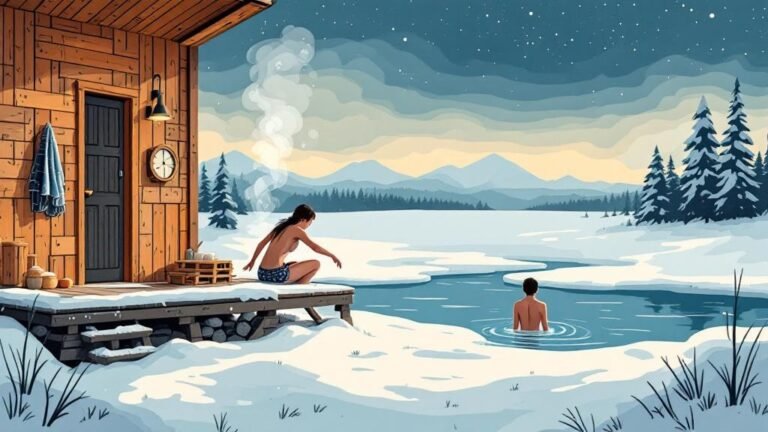

Ice Fishing in Lapland: The Most Finnish Experience
Updated 10 September 2026.
Some links on this page are affiliate links. If you book through them, I earn a small commission at no extra cost to you. I only recommend services I genuinely trust for Lapland travel.
Ice fishing in Lapland is exactly what it sounds like. You sit on a frozen lake, drill a hole through a metre of ice, drop a tiny jig into black water, and wait. Sometimes for hours. The fish are small – often palm-sized perch. Finns do this for fun. Willingly. And once you try it, you might understand why.
This is pilkkiminen – Finnish ice fishing – and it’s one of the most authentically Finnish things you can do in Lapland. No dramatic scenery from a snowmobile. No husky pulling you anywhere. Just silence, a frozen lake, and a thermos of coffee. It’s also completely free under Finnish law, which makes it one of the best budget activities in Lapland.
What ice fishing actually involves
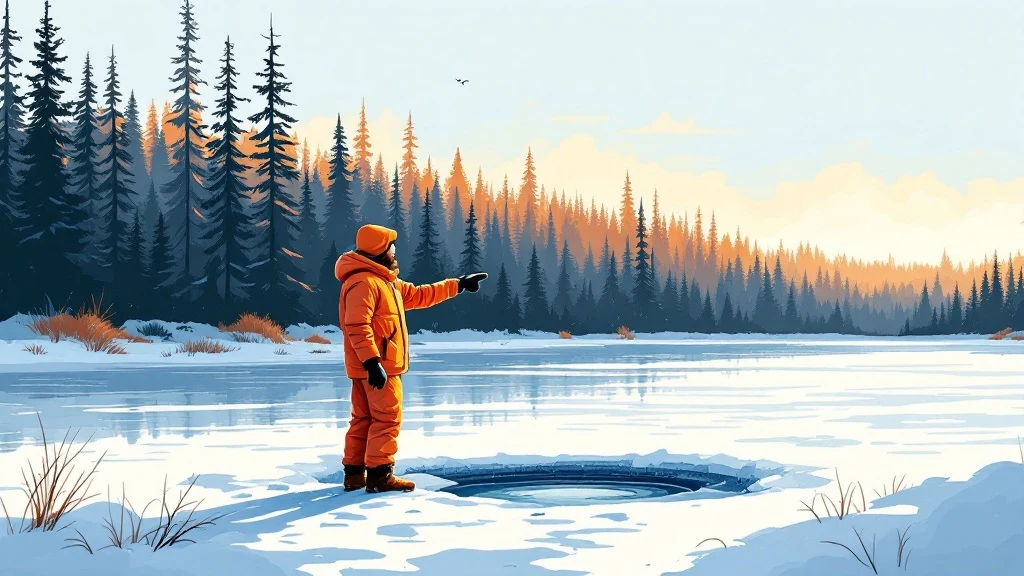
The basic setup is simple. You walk onto a frozen lake, drill a hole using a hand auger (a large corkscrew-like tool), sit on a small stool or upturned bucket, and lower a short rod with a tiny jig – a small weighted lure – into the water below. Then you wait. You jig the rod gently up and down, occasionally, to attract fish. That’s it.
There’s no casting, no reeling in a fight. The rod is about 30 centimetres long. The fish, when they come, give a faint tug. You pull them up through the hole by hand. The whole thing is absurdly low-key, and that’s precisely the appeal.
In winter, ice can be 50-100 cm thick depending on the month and location. You’re standing (or sitting) on a surface as solid as a car park. The silence is almost physical – no wind in the trees, no traffic, just the occasional crack of the ice expanding, which sounds alarming the first time but is completely normal. The lake is settling, not breaking.
Guided vs self-guided: which makes sense
You have two options, and they’re quite different experiences.
Guided ice fishing (60-90€)
A guide picks you up, drives you to a lake, provides all equipment, drills the holes, shows you the technique, and – critically – builds a fire on the ice and serves hot drinks. Some include grilled sausages or fish soup. The whole thing lasts 2-3 hours and is genuinely enjoyable even if you catch nothing. Prices run 60-90€ per person for the 2025-26 season, and most operators offer free hotel pickup.
For a first experience, guided is the way to go. You learn the technique, you stay warm, and someone else handles the logistics. Operators like Wild About Lapland and Apukka Resort run trips near Rovaniemi, Wild Nordic operates around Levi, and Lake Inari has several operators taking advantage of Finland’s third-largest lake.
Self-guided (free)
Here’s where it gets interesting. Basic ice fishing – pilkkiminen with a simple jig – requires no fishing licence in Finland. None. It’s covered by jokamiehenoikeus (everyman’s right), the Finnish legal principle that gives everyone access to nature. You can walk onto any frozen lake and fish for free, any day of the year that ice conditions allow.
The catch: you need your own gear. A basic ice fishing set (short rod, jig, hand auger) is available from outdoor shops in any Lapland town. Some accommodation hosts lend equipment to guests – always worth asking. You also need to know the ice is safe, which brings us to the important part.
Safety: how thick does the ice need to be?
Ice safety is if you follow the rules. A minimum of 5 cm of clear, solid ice supports a person on foot. In practice, by mid-January most Lapland lakes have 40-60 cm, and by March it can exceed a metre. You’re not walking on thin ice – you’re walking on something closer to a concrete slab.
That said, a few rules:
- Stay away from river mouths and inflows – currents thin the ice from below and you can’t see it from above
- Early season (November-December) and late season (April-May) are riskier – ice is forming or melting unevenly
- Follow existing tracks – if snowmobile trails cross the lake, the ice has been tested by something much heavier than you
- If you’re unsure, ask locally – accommodation hosts and tourist offices know current conditions
- Carry ice picks (naskalit) – two spiked handles on a cord around your neck, standard safety gear for self-rescue. Any outdoor shop in Lapland sells them
On a guided trip, the guide handles all of this. They know their lake. If you’re going independently, November and late April are the months to be cautious. Mid-winter? The ice is not the problem. The cold is.
What you might catch
Let’s manage expectations. Ice fishing in Lapland produces small fish. The most common catches are perch (ahven) – often no bigger than your hand – and sometimes small pike or whitefish. On Lake Inari, you might get Arctic char if conditions are right, which is more exciting.
But here’s the Finnish truth about ice fishing: it’s not about the catch. At all. Finns don’t ice fish because they need food. They ice fish because sitting in silence on a frozen lake with nothing happening is, to the Finnish mind, a perfect afternoon. The fish is a bonus. The real point is the stillness.
If you do catch something, a guide will often cook it over the fire right there on the ice. Fresh perch pan-fried over an open flame on a frozen lake – the fish may be small, but that moment is worth the trip.
Best locations for ice fishing
| Location | Lake | Best for | Guided options |
|---|---|---|---|
| Inari | Lake Inari (Finland’s 3rd largest) | Serious fishing, wide open space, Arctic char | Several local operators |
| Rovaniemi | Various smaller lakes nearby | Easy access, good for first-timers | Wild About Lapland, Apukka Resort |
| Levi | Lakes around the resort area | Convenient if you’re already skiing there | Wild Nordic |
| Muonio / Enontekiö | Remote wilderness lakes | Solitude, self-guided adventure | Fewer operators, more DIY |
Lake Inari deserves special mention. It’s enormous – over 1,000 square kilometres – and the ice fishing there feels like being on a frozen ocean. On a clear day, you can see fells in every direction and nothing else. If you want the full experience, this is where to go.
Stay where the ice fishing is
Apukka Resort: aurora cabins with the safaris leaving from the property
When to go ice fishing
| Month | Ice conditions | Notes |
|---|---|---|
| November | Forming – risky | Not recommended for visitors |
| December | ✓ Solid on most lakes | Dark – only a few hours of twilight. Headlamp fishing has its own charm |
| January | ✓ Thick and reliable | Cold (−20 to −30°C), short days, but the silence is extraordinary |
| February | ✓ Excellent | Light returns, still very cold. Popular month for guided trips |
| March | ✓ Peak conditions | Best month. Long sunny days, thick ice, warmer temps. Finns’ favourite |
| April | ✓ Good early, softening late | Spring sun is warm. Ice starts deteriorating toward month’s end |
| May | Melting – risky | Ice breaks up. Season over on most lakes |
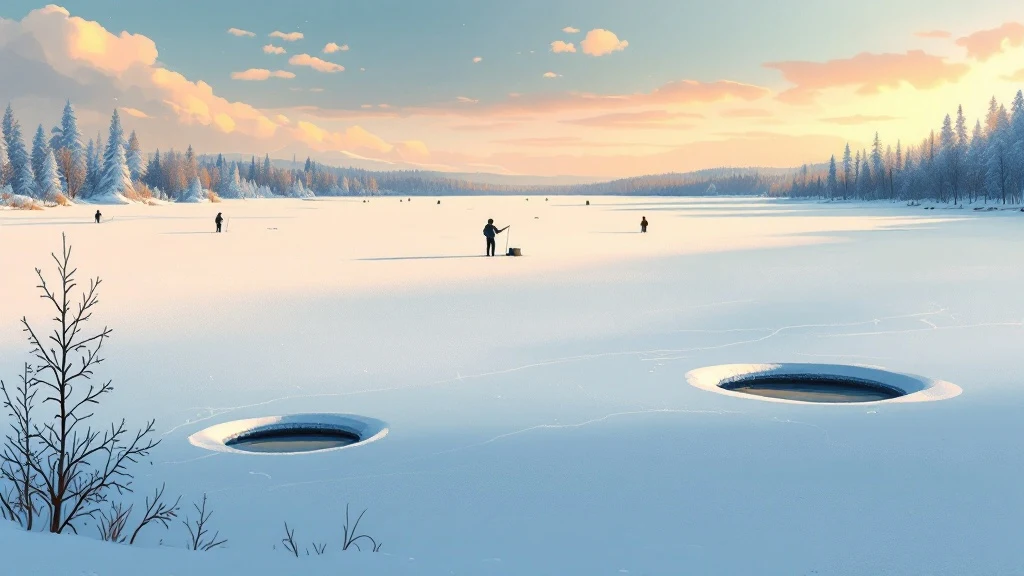
March is the sweet spot. Daylight lasts 12+ hours, the sun is warm enough that you can sit comfortably without six layers, and the ice is at its thickest. This is when Finns go ice fishing in earnest – entire families spread across lakes, each person at their own hole, nobody talking. It looks like a strange art installation.
Equipment you need
Ice fishing gear is refreshingly simple compared to most outdoor activities:
- Ice fishing rod – short (30-40 cm), lightweight, with a small reel
- Jigs – tiny weighted lures, a few different colours
- Hand auger – for drilling through the ice (the heavy part of the kit)
- Stool or seat pad – you’ll be sitting for a while
- Thermos – non-negotiable. Hot coffee, tea, or hot berry juice
- Ice picks (naskalit) – safety gear, worn around the neck
- Warm clothing – you’re sitting still in the cold, not moving. Dress warmer than you think
On a guided trip, all the fishing gear is provided. You just bring warm clothes and the right attitude – meaning patience. If you’re going self-guided, any outdoor shop (Partioaitta, Intersport) in a Lapland town sells complete ice fishing kits. A basic rod and jig set costs very little. The hand auger is the most expensive item but some accommodations lend them.
One thing people underestimate: you’re sitting still. On a snowmobile safari, movement and engine heat keep you warm. Ice fishing is static. Dress for temperatures significantly colder than the forecast, because wind on a frozen lake has nowhere to hide and your body generates almost no heat while sitting.
Book a guided ice-fishing trip
Guided ice fishing in Rovaniemi: auger, campfire and hot juice on a frozen lake, small groups
Frequently Asked Questions
Do I need a fishing licence for ice fishing in Finland?
No – basic ice fishing (pilkkiminen) with a simple jig rod is covered by jokamiehenoikeus (everyman’s right) and is free for everyone, including tourists. This applies year-round on all public waters. Only lure fishing and spin fishing require a licence, which you can buy online from the Visit Finland site or local kiosks.
Is ice fishing safe for beginners?
Very safe on a guided trip – the guide knows the lake and ice conditions. Going solo is also safe mid-season (January-March) on established lakes where you can see other people or snowmobile tracks. Avoid river mouths, carry ice picks, and ask locally about conditions if you’re unsure.
What if I don’t catch anything?
That’s normal and honestly expected. Most Finns consider a fishless day perfectly successful – the point is being outside in silence, not filling a bucket. On guided trips, the guide usually has a backup plan: hot drinks by a fire, maybe some pre-made fish soup. Nobody goes hungry.
Can kids go ice fishing?
Yes, and they often love the hole-drilling part. Guided trips are better for families since kids lose patience faster – the fire, hot chocolate, and sausage grilling give them something to do between fish. Bring extra warm layers and expect a shorter attention span than the Finnish ideal of three silent hours.
Ice fishing is Lapland distilled to its essence: cold air, quiet water, and the patience to let both just exist. It won’t be the most thrilling thing you do on your trip. It might be the one you remember most.
Best Booking Resources for Lapland
These are the booking tools I keep coming back to. They consistently offer the best prices, the most relevant options for northern Finland, and actually work well for Lapland-specific searches, which not all platforms do.
- Kiwi.com: The best source for finding flights and airport connections. I have noticed they find flight connections that other search engines miss.
- Booking.com: I almost always use them for booking hotels and apartments (and occasionally flights). They have the best filters and I like the user-friendly interface.
- Hotels.com: The most popular hotel booking platform in many countries, US included.
- Get Your Guide: A massive selection of tours and excursions, including aurora tours, husky rides, reindeer experiences and more!
- EconomyBookings: Want to explore Lapland or chase auroras yourself? They pool together the best offers from car rental operators for your convenience.
- yesim: Need a local SIM for Lapland? A stress-free holiday nowadays (unfortunately) might start from a good connection, so get an eSIM with unlimited or prepaid data.
- Ekta Traveling: Not interested in checking out the Finnish public health care system on your holiday? Didn’t think so 🙂 Good insurance gets that stress out of the way.
As an Amazon Associate I earn from qualifying purchases. Booking through these links costs you nothing extra and helps keep these guides free and up to date. Thank you!

Planning a Lapland trip?
Ask a Finn. The Lapland Trip Planning: Finland group is where readers compare dates, resorts and real prices for the coming winter.
Join the planning groupFollow on FacebookFollow on Pinterest