Snow in Lapland: When It Arrives, When It Melts, and Where It Is Most Reliable
Updated 1 October 2026.
Some links on this page are affiliate links. If you book through them, I earn a small commission at no extra cost to you. I only recommend services I genuinely trust for Lapland travel.
Snow in Lapland is very reliable by mid-December and almost certain at Christmas. The soft spot is late November and the first days of December, and it sits mainly in Rovaniemi and the south of the region. The further north and the higher you stay, the safer the snow. That is the whole answer, and the Finnish Meteorological Institute (FMI) records behind it are worth a few minutes of your booking time.
Here is the blunt version. On 1 December, the ground at Rovaniemi airport was completely bare in 3 of the 28 winters from 1998 to 2025, and carried less than 10 cm in 10 of them. In the last 15 winters alone it was under 10 cm on 1 December in 7 of 15, so in roughly every other recent year the cover has been thin rather than deep (our count of FMI daily snow records). At Saariselkä, Sodankylä, Kittilä Pokka and Kilpisjärvi the ground was never bare on 1 December in any winter from 1996 to 2025, and only one or two winters in thirty had under 10 cm on that date.
What “snow on the ground” actually means in the statistics
FMI counts a snow-cover day when the morning gauge reads at least 1 cm. “Permanent snow cover” (pysyvä lumipeite, the lasting cover) is the longest unbroken run of those days in a winter, which means it can start out very thin and still count. The first complete cover of the autumn usually melts again: it is not the snow that stays.
So the useful question is not “is there snow” but “how much”. A thin cover is what disappoints people: the forest looks grey-brown between the trees, sleigh trails are rough, and one mild day with rain can glaze the lot into ice.
When the lasting snow arrives, base by base
The first flakes fall on the fell tops in August or September, and the first complete cover typically lands on 9 October at Kittilä Pokka, 10 October at Utsjoki Kevo, 18 October at Sodankylä and 21 October at Rovaniemi Apukka (FMI snow statistics, 1991-2020). The latest first cover on record since 1961 was 19 November 2011 at Apukka and 17 November 2011 at Sodankylä. Rovaniemi’s snow, in other words, often settles in the second half of October and then goes away again; the cover that lasts usually arrives in November and stays thin until late in the month.
| FMI station (base it serves) | Median start of lasting cover | Median depth 30 Nov | Median depth 15 Dec | Ground on 1 Dec, 1996-2025 |
|---|---|---|---|---|
| Rovaniemi airport (Rovaniemi) | 12 November | 19 cm | 28 cm | Bare in 3 of 28 winters; under 10 cm in 10 of 28 |
| Sodankylä (central Lapland) | 30 October | 23 cm | 33 cm | Never bare; under 10 cm in 5 of 30 |
| Kittilä Pokka (Kittilä and Levi area) | 24 October | 32 cm | 40 cm | Never bare; under 10 cm once (2018) |
| Saariselkä resort (Saariselkä, Ivalo) | 28 October | 29 cm | 36 cm | Never bare; under 10 cm once (2000) |
| Kilpisjärvi (far north-west fells) | 24 October | 25 cm | 34 cm | Never bare; under 10 cm once (2011) |
| Kuusamo Kiutaköngäs (Ruka) | 7 November | 19 cm | 28 cm | Bare once (2018); under 10 cm in 7 of 30 |
Start dates and 1 December counts are our count of FMI daily snow records (Rovaniemi airport 1998-2025); depths are FMI 1991-2020 medians, not averages. FMI publishes no snow normals for Levi or Ylläs themselves, so the nearest stations have to stand in.
| Nearest station to the village | 30 Nov | 15 Dec | 31 Dec |
|---|---|---|---|
| Kittilä Alakylä (near Levi) | 26 cm | 36 cm | 45 cm |
| Muonio village (near Ylläs and Muonio) | 25 cm | 35 cm | 45 cm |
| Inari village (Inari and Ivalo) | 22 cm | 28 cm | 33 cm |
| Rovaniemi Apukka (east of Rovaniemi) | 14 cm | 20 cm | 29 cm |
| Salla village | 17 cm | 25 cm | No FMI figure |
Note how far apart two Rovaniemi-area stations can be: the airport and Apukka differ by up to about 10 cm on the same date (FMI normals). Treat any single gauge as a rough guide to the neighbourhood, not a measurement of your hotel’s garden.
Christmas and midwinter are a different question
FMI’s 1991-2020 white-Christmas map puts all of Lapland, Rovaniemi included, in the zone that gets a white Christmas every year. Sodankylä has recorded snow on the ground on every single Christmas Eve since measurements began in 1912, with a 1991-2020 median of 38 cm; the thinnest were 2 cm in 1938, 15 cm in 1953 and 12 cm in both 2000 and 2006. Recent years: 31 cm in 2024, 56 cm in 2025.
Rovaniemi airport was never bare on Christmas Eve in the 28 winters from 1998 to 2025, and the thinnest reading was 5 cm in 2006 (our count of FMI daily snow records). At Christmas the north typically has close to 40 cm and central Finland about 30 cm (FMI). After that it only deepens: the pack peaks in mid-March in most of Finland and often not until early April in Lapland, with Rovaniemi around 75 cm in mid-March.
The bad years, and what they actually looked like
2006 is the worst December in the Rovaniemi record: bare ground on 1 December, bare again on 15 December after a thaw, 5 cm on Christmas Eve, and 15 days with a daily mean above 0°C (32°F) between 15 November and 31 December. FMI calls that Christmas one of the mildest in over a hundred years.
2011 was similar in timing: 0 cm at Rovaniemi airport on 15 and 25 November and on 1 December, then 10 cm by 8 December and 37 cm by Christmas Eve. 2018 is the year British tabloids christened “Crapland”: the ground was still black in late November, snow arrived on 24 November, and the rest of the season was snowy (Yle). Even Saariselkä read 0 cm on 15 November 2018, but 10 cm by 25 November.
2024 is the most instructive. November ran 1 to 2°C above the 1991-2020 normal in most of Finland and more than 3°C above in the far north, and on 8 November every station in northern Lapland broke its November warmth record (FMI). In late November, Rovaniemi town had mostly thin ice underfoot and around 10 cm of wet snow nearby, central Lapland 15 to 25 cm and northern Lapland 30 to 40 cm (Yle, citing FMI). TUI cancelled several trips to Kuusamo on 3 and 4 December 2024 after rain washed away what snow there was, offering a free move to the next winter, a 10% discount or a full refund (Euronews). That same autumn, Kilpisjärvi sat under 77 cm at the end of November and 91 cm on 28 December.
The other direction happens too. In 2019 northern Finland had exceptionally thick November snow, the most in some places for 60 years (Yle). In 2023 the snow stayed at Rovaniemi airport from 11 October. In 2025 a deep low on 12 and 13 November built a solid cover across Lapland, up to 30 cm in two days in the centre, and the rest of the month was colder than normal (FMI).
Why the north and the fells are safer
The trip-spoiler is not a shortage of cold, it is a mild south-westerly spell pushing rain and sleet far north over thin early snow. Between 15 November and 31 December, Rovaniemi airport has had up to 15 days with a daily mean above 0°C (2006) and usually a handful; Saariselkä usually has none to two, with a maximum of 7 in that same 2006 (our count of FMI daily temperature records, using daily mean as a thaw proxy). FMI’s own point is the reassuring one: even in a warming climate, winter precipitation in Lapland will still fall mainly as snow, and the rain-on-snow risk is concentrated in the south and on the coast.
Altitude matters as much as latitude. The Saariselkä resort station holds about 10 cm more than Inari village on both 30 November and 31 December (29 against 22 cm, then 45 against 33 cm), and fell stations keep snow far later into spring. Latitude alone is not a guarantee either: Kuusamo and Ruka sit in the snowy east, yet the valley gauge read 0 cm on 8 December 2024 and again bare on 1 December 2018. What keeps Ruka’s slopes open in a thin year is snowmaking, not the gauge.
For late November and early December the data rank the bases roughly like this: the far north-west fells around Kilpisjärvi and the Inari-Saariselkä area first, then the Kittilä, Levi and Muonio belt, then Sodankylä, then Rovaniemi, Salla and Kuusamo.
Stored snow and snowmaking: what they do and do not fix
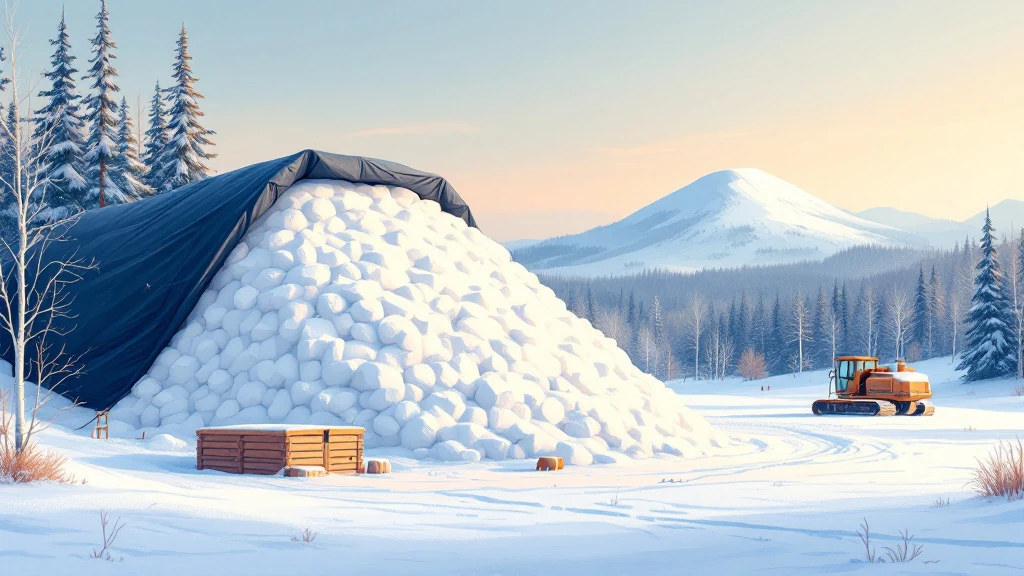
Finnish resorts practise snow farming. Snow made or gathered in winter is piled up in spring, insulated through the summer, then spread on a slope or a trail in early October. Levi’s own site promises snow from October to May; the resort opens on the Front Slope and a stored-snow cross-country loop in early October, and has over 300 automatic snow cannons; it stored nearly 300,000 cubic metres of snow in 2025 and opens on 2 October 2026. Ruka stored about 200,000 cubic metres in spring 2024, has over a hundred cannons with near resort-wide automatic snowmaking, and also opens on 2 October 2026. Both opened on 3 October in 2025 and advertise more than 200 ski days a year. Ylläs Ski’s 2025-26 lift season started on 22 November, so check the current schedule rather than assuming an October start there.
Here is the limit, and it is a big one. Stored snow covers one or two pistes and a ski loop. It does not make a snowy landscape. In a snow-poor November you can ski a white ribbon through a brown forest, which is excellent if you came to ski and disappointing if you came for a sleigh ride and a white Christmas card.
What still runs when snow is short
Quite a lot, in a modified form. Before real snow, Rovaniemi kennels run autumn rides with huskies pulling a wheeled cart, and Apukka Resort runs a November “early winter” husky ride on trails laid with stored snow from the previous winter (Visit Rovaniemi). Some reindeer farms switch to a wheeled sleigh, a short farm loop or a feeding visit when the snow is thin, though this varies by farm, so ask.
Snowmobile safaris are the fragile ones: they need enough snow, can start later in a thin year, and operators do cancel. No operator publishes a minimum depth, so a straight question at booking time is the only way to know their threshold. Santa Claus Village is open all year, and the northern lights need clear dark skies rather than snow. Snowman World at the village, which is built of snow and ice, opens from 6 December 2026.
How to book so a thin year does not ruin the trip
Base choice does most of the work: north of Sodankylä, or on a fell. Dates do the rest: from about 8 December onwards the Rovaniemi record has no bare ground at all, and Christmas week has never been bare in the stations counted here. If you must travel in late November, the north is the insurance.
Then read the cancellation terms. Package operators differ enormously. Santa’s Lapland, which uses Saariselkä, contacts customers 7 days before departure if snow is a concern and again at 72 hours, and if it judges there is not enough snow for the package activities you can move to another date in the same season at no cost or cancel for a full refund (its snow guarantee page, checked September 2026). Canterbury Travel gives no snow guarantee and says only that its resorts generally have reliable snow records and that suppliers will move activities to where the snow is. Book flights and hotels yourself and no one owes you anything for brown ground: the activity operator’s own terms are all you have. Insurance does not cover disappointing weather either, which is worth understanding before you rely on it.
When the snow melts
Later than most visitors expect. On FMI’s 1991-2020 medians, 15 April still shows 64 cm at Rovaniemi airport, 72 cm at Saariselkä and 89 cm at Kilpisjärvi. By 30 April, Rovaniemi is down to about 27 cm while Kilpisjärvi keeps 74 cm. By 15 May, Rovaniemi is snow-free, Kittilä Pokka still has about 21 cm and Kilpisjärvi about 38 cm.
The lasting cover typically goes in early May across most of Lapland and hangs on to the end of May in the northernmost fells. If you want snow plus long daylight, late March and April in the north is the combination almost nobody books and nearly everybody enjoys.
The trend, stated plainly
FMI found that between 1961 and 2014 the end of the snow season moved earlier almost everywhere in Finland, by at least 1.5 to 3 days per decade, while the start was delayed most in eastern Finland and around Oulu (over 4.5 days per decade). Lapland’s maximum snow depth changed little. In FMI’s middle scenario (SSP2-4.5), the snow-cover season in Lapland shortens by a little under a month by the end of the century compared with 1991-2020 and the maximum winter snow amount falls by about 15%, with the shortening split roughly equally between later arrival and earlier melt. Lapland keeps a continuous winter snow cover in all of those scenarios.
Our own short-sample count points the same way without proving much: the median depth at Rovaniemi airport on 1 December was 10 cm across 2011-2025 against 22 cm across 1998-2025, and Sodankylä’s median start of lasting snow moved from 28 October (1996-2010) to 7 November (2011-2025). Fifteen-year samples are short and Lapland’s autumns swing hard, so treat that as a hint, not a forecast. The honest summary: the early-winter shoulder is getting less dependable, midwinter is not.
How I researched this
I used FMI’s snow statistics, its Christmas weather records, the 1991-2020 station normals and the monthly climate bulletins, and counted snow depths on set dates in FMI’s open daily records for eight Lapland and Koillismaa stations across the winters 1996 to 2025. Resort facts come from Levi’s and Ruka’s own sites and ski-industry news, operator policies from their published terms, and the bad years from Yle, Euronews and FMI, all checked in September 2026. Nobody from Lapland Trip Planner has stood in these snow conditions in the years described; this is a researched comparison of the records, not a first-hand report.
Common questions
Is snow guaranteed in Lapland in November?
No, and nobody can guarantee it. In Rovaniemi the ground was bare on 1 December in 3 of the 28 winters from 1998 to 2025 and under 10 cm in 10 of them. At Saariselkä, Sodankylä, Kittilä Pokka and Kilpisjärvi it was never bare on that date in 30 winters, which is as close to reliable as the data get.
When does the snow melt in Lapland?
The lasting cover typically disappears in early May across most of Lapland and lingers to the end of May in the northernmost fells. Mid-April is still deep winter underfoot: FMI’s 1991-2020 medians give 64 cm at Rovaniemi airport and 89 cm at Kilpisjärvi on 15 April.
Has Rovaniemi ever had a snowless Christmas?
Not in the records used here. Rovaniemi airport was never bare on Christmas Eve in the 28 winters from 1998 to 2025, and the thinnest reading was 5 cm in 2006. FMI’s 1991-2020 map places all of Lapland in the zone that gets a white Christmas every year.
How deep is the snow in Lapland in December?
On FMI’s 1991-2020 medians, mid-December runs from about 28 cm at Rovaniemi airport to 33 cm at Sodankylä, 36 cm at Saariselkä and 40 cm at Kittilä Pokka. By 31 December the northern and Kittilä-area stations are typically in the 45 to 51 cm range, Rovaniemi around 38 cm.
What happens to booked activities if there is not enough snow?
Husky rides often switch to a wheeled cart, some reindeer farms move to a wheeled sleigh or a farm visit, and snowmobile safaris can be delayed or cancelled outright. Package operators vary: one may let you move dates or refund in full, another offers no snow guarantee at all, so read the terms before you pay.
Best Booking Resources for Lapland
These are the booking tools I keep coming back to. They consistently offer the best prices, the most relevant options for northern Finland, and actually work well for Lapland-specific searches, which not all platforms do.
- Kiwi.com: The best source for finding flights and airport connections. I have noticed they find flight connections that other search engines miss.
- Booking.com: I almost always use them for booking hotels and apartments (and occasionally flights). They have the best filters and I like the user-friendly interface.
- Hotels.com: The most popular hotel booking platform in many countries, US included.
- Get Your Guide: A massive selection of tours and excursions, including aurora tours, husky rides, reindeer experiences and more!
- EconomyBookings: Want to explore Lapland or chase auroras yourself? They pool together the best offers from car rental operators for your convenience.
- yesim: Need a local SIM for Lapland? A stress-free holiday nowadays (unfortunately) might start from a good connection, so get an eSIM with unlimited or prepaid data.
- Ekta Traveling: Not interested in checking out the Finnish public health care system on your holiday? Didn’t think so 🙂 Good insurance gets that stress out of the way.
As an Amazon Associate I earn from qualifying purchases. Booking through these links costs you nothing extra and helps keep these guides free and up to date. Thank you!

Planning a Lapland trip?
Ask a Finn. The Lapland Trip Planning: Finland group is where readers compare dates, resorts and real prices for the coming winter.
Join the planning groupFollow on FacebookFollow on Pinterest