Eating in Lapland: Restaurant Prices & Self-Catering Tips
Updated 10 September 2026.
Some links on this page are affiliate links. If you book through them, I earn a small commission at no extra cost to you. I only recommend services I genuinely trust for Lapland travel.
Eating in Lapland is one of those things that catches visitors off guard – not because the food is bad (it’s genuinely good), but because the prices can add up faster than you’d expect. A restaurant dinner for two with drinks can easily run past 100€. But here’s what most travel sites won’t tell you: self-catering from a cabin kitchen can cut your food budget by more than half, and the grocery stores in Lapland are surprisingly well-stocked.
Restaurant mains typically run 15-25€, lunch is significantly cheaper than dinner nearly everywhere, and every resort town has at least one proper supermarket. Knowing where to eat, when to eat, and when to cook for yourself is one of the biggest money levers on any Lapland trip.
What Restaurant Meals Actually Cost
Finnish restaurant pricing follows a clear pattern: lunch is the deal, dinner is the splurge. Most restaurants in Lapland’s resort towns offer lunch specials – often a buffet – that cost significantly less than the same food served at dinner. This isn’t a tourist trick. Finns eat their main meal at lunch, so restaurants price accordingly.
| Meal | Price Range | What You Get |
|---|---|---|
| Lunch buffet | 12-16€ | Main course, salad bar, bread, coffee. Often unlimited. |
| Restaurant lunch (à la carte) | 15-20€ | Single main with bread and water |
| Restaurant dinner (main course) | 15-25€+ | Main only – starters, drinks, dessert extra. Upscale places charge more. |
Prices are from the 2025-26 season; 2026-27 rates are being published through the autumn, so check restaurant websites or booking platforms for current rates. The gap between lunch and dinner pricing is real, though. If you eat your big meal at midday and keep dinner light (groceries back at the cabin), you’ll save substantially per person per day without feeling like you’re roughing it. The difference between budget eating (30-40€/day) and mid-range restaurant dining (50-70€/day) adds up fast over a week.
Local Foods Worth Trying
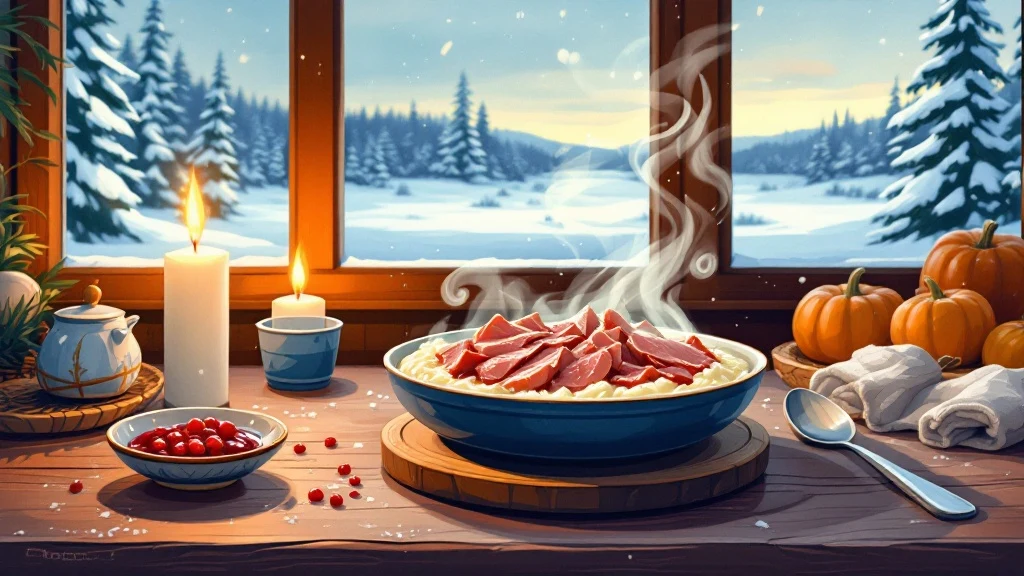
You’re in reindeer country. Poronkäristys (sautéed reindeer) is the dish – thinly sliced reindeer meat cooked with butter, served with mashed potatoes and lingonberry jam. It’s on every menu in Lapland, and you should try it at least once. Expect typical restaurant main course pricing – it’s a staple, not a luxury item up here.
Other dishes to look for:
- Kalakukko – fish baked inside a bread loaf. More traditional Finnish than specifically Lappish, but widely available.
- Lohikeitto – creamy salmon soup. Simple, warming, and often on lunch menus at bargain prices.
- Rieska – thin barley flatbread, served with butter. A northern Finnish staple.
- Leipäjuusto – squeaky cheese (literally). Baked fresh cheese that squeaks when you bite it. Often served with cloudberry jam.
- Cloudberry (lakka) – the gold of Lapland. You’ll find cloudberry jam, cloudberry liqueur, and cloudberry desserts everywhere. Fresh cloudberries in season (late July-August) are a genuine delicacy.
Reindeer meat is more expensive than beef or pork at the grocery store too, but buying it there and cooking it yourself still costs a fraction of restaurant prices. A pack of sautéed reindeer (ready to heat) from the supermarket is one of the easiest cabin meals you can make.
Grocery Stores: Better Than You’d Expect
Every resort town in Lapland has at least one proper supermarket, and the two main chains – S-Market and K-Supermarket (or the smaller K-Market) – stock everything you need for self-catering. Fresh vegetables, meat, fish, bread, dairy, frozen meals, cleaning supplies. These aren’t petrol station convenience stores. They’re real grocery shops with full aisles.
Here’s what you’ll find in the main destinations:
| Town | Main Store(s) | Notes |
|---|---|---|
| Rovaniemi | S-Market, K-Supermarket, Prisma | Best selection. Prisma is a hypermarket – cheapest for bulk buying. |
| Levi (Sirkka) | K-Supermarket | Well-stocked for a resort village. Right in the centre. |
| Saariselkä | K-Market | Smaller but covers essentials well. |
| Inari | K-Market, S-Market | Decent for a small village. Stock up here if heading further north. |
| Muonio | K-Market | Basics covered. Don’t expect huge variety. |
Grocery prices in Lapland are slightly higher than in Helsinki – transport costs matter when everything comes by truck – but the difference is marginal. Budget around 30-40€ per person per day if you’re mixing supermarket meals with one restaurant meal. Go fully self-catering and you can push costs below that range.

Alcohol Prices and the Alko Monopoly
This is the part where visitors from the UK or US quietly gasp. Finland has a state alcohol monopoly called Alko. Any drink above 5.5% ABV – wine, spirits, strong beer – can only be sold at Alko stores. Supermarkets sell beer and cider up to 5.5%, but that’s it. No wine at the grocery store. No spirits.
Restaurant alcohol prices are steep – significantly more than supermarket prices, and enough to make a noticeable dent in your daily budget if you’re having drinks with every meal.
The practical workaround: buy your wine and spirits from Alko before heading to a small village. Rovaniemi has an Alko, and so do the larger towns, but once you’re in smaller places like Muonio or Kilpisjärvi, there may not be one nearby – or it may have limited stock and opening hours. Helsinki Airport has a duty-free option too, though Alko’s prices are sometimes comparable.
Self-Catering: The Smart Way to Eat in Lapland
Most Lapland cabins come with a kitchen. Not a kitchenette with a microwave and a kettle – an actual kitchen with a stove, oven, fridge, pots, pans, plates, and cutlery. This is standard in Finland. A cabin without a proper kitchen is the exception, not the rule.
Self-catering is how Finns do Lapland holidays. They load up the car with groceries, drive north, and cook at the cabin for a week. It’s not about being cheap – it’s comfortable, social, and means you eat on your own schedule rather than hunting for a restaurant that’s open (some close surprisingly early, or don’t open on certain days).
The savings are substantial:
| Eating Style | Daily Cost (per person) | Weekly Cost (per person) |
|---|---|---|
| Restaurants only (mid-range) | 50-70€ | 350-490€ |
| Mix (lunch out, cook dinner) | 30-40€ | 210-280€ |
For a couple staying a week, the difference between mid-range restaurant eating (50-70€/day) and budget self-catering (30-40€/day) works out to 140-210€ per person – or 280-420€ for two. That’s a husky safari. Or two snowmobile tours. Put the savings toward activities instead.
Practical tips for cabin cooking:
- Check what’s provided. Most cabins include basic cooking supplies. Some even provide coffee, tea, sugar, and salt. Read the listing carefully.
- Bring spices and favourites from home. Finnish supermarkets have spices, but the selection might not match what you’re used to.
- Frozen meals are fine. Finnish supermarkets have a solid frozen food section. No shame in a frozen pizza night after a long day of activities.
- Ready-made sautéed reindeer comes in vacuum packs. Heat it up, boil potatoes, open a jar of lingonberry jam. Authentic Lapland dinner in 15 minutes.
Tipping: You Don’t
Finland doesn’t have a tipping culture. Not in restaurants, not in taxis, not for activity guides. Service staff earn a proper wage. Prices include service. The bill is the bill.
You can round up to the nearest euro if you want – nobody will be offended – but nobody expects it either. Leaving a 15-20% tip like you would in the US would cause genuine confusion. The server might chase you down thinking you made a mistake.
If you’ve had exceptional service on a multi-hour activity (a husky safari guide who went above and beyond, for example), a small tip of 5-10€ is a nice gesture but absolutely not required. This is one of those areas where Finland is refreshingly : the price you see is the price you pay.
Daily Food Budget: What to Actually Expect
Here’s the honest breakdown based on how most visitors eat in Lapland:
| Budget Level | Daily Spend (per person) | Strategy |
|---|---|---|
| Budget | 30-40€ | Supermarket breakfast/dinner, one lunch out |
| Mid-range | 50-70€ | Restaurants for lunch and dinner, reasonable choices |
| Luxury | 80-120€ | Fine dining, wine with meals, no constraints |
Most visitors land somewhere in the 40-60€ range – a mix of eating out and cooking at the cabin. That’s sensible. Lapland has good food and it’s worth enjoying a few restaurant meals, especially for local specialties you can’t easily make yourself. But eating every meal out for a week is a budget decision, not a necessity.
Frequently Asked Questions
Are there vegetarian and vegan options in Lapland restaurants?
Yes, though the selection is narrower than in Helsinki or major European cities. Most restaurants have at least one vegetarian main, and Rovaniemi has the widest range. Supermarkets stock plant-based alternatives well – Valio and Oatly products are widely available. If you’re vegan and heading to a remote village, self-catering gives you the most control.
Can I buy groceries on Sunday in Lapland?
Larger supermarkets like S-Market and K-Supermarket are open on Sundays, typically with reduced hours (usually noon to around 18:00 or 21:00). Smaller K-Market shops in villages vary – some close on Sundays entirely, especially outside peak tourist season. Check hours before relying on a Sunday shop.
Is tap water safe to drink in Lapland?
Finnish tap water is excellent – some of the cleanest in the world. You don’t need to buy bottled water at all. Fill a reusable bottle from any tap. In restaurants, asking for tap water (hanavesi) is completely normal and free.
Do I need cash for restaurants and shops in Lapland?
Finland is essentially cashless. Cards are accepted everywhere – restaurants, supermarkets, market stalls, even small village kiosks. Contactless payment works widely. Carrying a small amount of cash (20-50€) is fine as a backup, but you could realistically go an entire trip without using any.
How expensive is reindeer meat at a restaurant?
Poronkäristys (sautéed reindeer) falls within the standard restaurant main course range of 15-25€, depending on the location and whether it’s a lunch or dinner service. At a supermarket, a ready-to-heat vacuum pack of the same dish costs a fraction of that – it’s one of the best-value authentic meals you can make in a cabin kitchen.
Food in Lapland isn’t cheap, but it doesn’t have to drain your budget either. The combination of lunch buffets, good supermarkets, and a cabin kitchen gives you real control over what you spend. Put the savings toward the things you actually came here for.
Best Booking Resources for Lapland
These are the booking tools I keep coming back to. They consistently offer the best prices, the most relevant options for northern Finland, and actually work well for Lapland-specific searches, which not all platforms do.
- Kiwi.com: The best source for finding flights and airport connections. I have noticed they find flight connections that other search engines miss.
- Booking.com: I almost always use them for booking hotels and apartments (and occasionally flights). They have the best filters and I like the user-friendly interface.
- Hotels.com: The most popular hotel booking platform in many countries, US included.
- Get Your Guide: A massive selection of tours and excursions, including aurora tours, husky rides, reindeer experiences and more!
- EconomyBookings: Want to explore Lapland or chase auroras yourself? They pool together the best offers from car rental operators for your convenience.
- yesim: Need a local SIM for Lapland? A stress-free holiday nowadays (unfortunately) might start from a good connection, so get an eSIM with unlimited or prepaid data.
- Ekta Traveling: Not interested in checking out the Finnish public health care system on your holiday? Didn’t think so 🙂 Good insurance gets that stress out of the way.
As an Amazon Associate I earn from qualifying purchases. Booking through these links costs you nothing extra and helps keep these guides free and up to date. Thank you!

Planning a Lapland trip?
Ask a Finn. The Lapland Trip Planning: Finland group is where readers compare dates, resorts and real prices for the coming winter.
Join the planning groupFollow on FacebookFollow on Pinterest