
First Time in Lapland: What to Expect
Updated 10 September 2026.
Some links on this page are affiliate links. If you book through them, I earn a small commission at no extra cost to you. I only recommend services I genuinely trust for Lapland travel.
Lapland is not a city. This is the first thing that surprises people, and it changes how you plan everything. Finnish Lapland is a region – the entire top third of Finland – covering an area roughly the size of Portugal. There are no crowds, no metro systems, no main street to stroll down. There are small towns separated by vast stretches of forest, frozen rivers, and silence you can actually hear. If you’re visiting Lapland for the first time, the single most useful thing I can tell you is this: slow down, pick one or two bases, and let the place work on you. Trying to “see Lapland” the way you’d see Paris or Barcelona is a recipe for spending most of your holiday in a car.
The second thing? It’s far easier than you think. Finland is one of the most functional countries on Earth. Everything works. Buses leave on time. Card payments are accepted everywhere, including remote wilderness cafés. Everyone speaks English. You don’t need a tour operator to hold your hand – though packages have their place, especially for short December trips with kids. For most visitors, independent travel is simpler, more flexible, and significantly cheaper.
Lapland Is a Region, Not a Destination
When someone says “I’m going to Lapland,” the right question is: where in Lapland? The region stretches from Rovaniemi in the south – technically just scraping the Arctic Circle – to the Norwegian border some 400 kilometres north. Different towns offer completely different experiences. Rovaniemi is the most accessible, with Santa Claus Village and urban amenities. Levi is Finland’s largest ski resort. Saariselkä is a small fell village popular with families. Inari, further north, is the cultural heart of the Sámi people and sits on a vast lake.
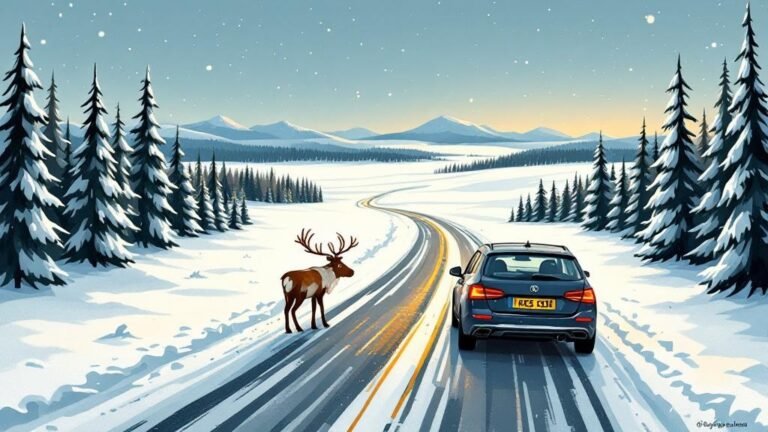
The distances between these places are real. Rovaniemi to Inari is about 330 kilometres – roughly a four-hour drive in good conditions, longer in winter when the roads are icy and reindeer wander onto the highway. (They do this constantly. They don’t care about your schedule.) Trying to visit Rovaniemi, Levi, and Inari in a four-day trip means spending most of it driving.
The Cold Isn’t as Bad as You Fear
This is the thing I explain most often. People hear −25°C (−13°F) and imagine suffering. In practice, Lapland’s cold feels nothing like what you’re imagining if your reference point is a British or Dutch winter. The air is dry. There’s almost no wind. The cold is still and clean, and your body adjusts faster than you’d expect.
A wet, windy −5°C day in London or Amsterdam genuinely feels worse than −20°C in Lapland. The dampness cuts through your clothes. In Lapland, the cold sits on the surface. Dress in proper layers and you’ll be warm. Activity operators provide thermal oversuits, boots, and gloves on top of whatever you’re wearing – you’ll be almost too warm on a husky safari.
That said, there’s a difference between tolerating cold and enjoying it. The key is layering: a moisture-wicking base layer, an insulating mid-layer (fleece or down), and a windproof outer shell. Good winter boots matter more than any other single item. Cotton is the enemy – it absorbs moisture and makes you colder. Merino wool is your friend.
Everything Works (Seriously)
If you’ve travelled in Southern Europe or Southeast Asia, you might be used to a certain amount of improvisation – delayed buses, cash-only businesses, language barriers, things being closed for unclear reasons. Finland is the opposite of all that.
Buses and trains run on schedule. Connections are designed to work together. Card payments are accepted everywhere – many places don’t even handle cash anymore. Public buildings are heated, clean, and well-maintained. Wi-Fi is free and fast in nearly every hotel, restaurant, and café. The tap water is some of the cleanest in the world.
English is spoken fluently by almost everyone you’ll interact with. Hotel staff, tour guides, restaurant servers, bus drivers, shop assistants – you won’t have a single communication problem. Finns learn English from a young age, and in Lapland’s tourism towns, it’s essentially a working language. You don’t need to learn Finnish, though saying “kiitos” (thank you) earns you a small nod of approval.
For UK visitors: Finland is in the Schengen Area, so you’ll pass through passport control on arrival in Helsinki (or your entry point) and move freely within Finland after that. Post-Brexit, UK citizens can stay up to 90 days within any 180-day period without a visa. Your UK phone plan likely includes EU roaming at no extra charge – check with your provider, but most still honour this. US visitors also enter visa-free for up to 90 days.
How to Get There
Most visitors fly via Helsinki. The capital’s airport is well-connected internationally, and domestic flights to Lapland take about 1.5 hours. Finnair operates multiple daily flights to Rovaniemi, one or two to Kittilä (for Levi), and one daily to Ivalo (for Saariselkä and Inari). Prices are typically 150-250€ return from Helsinki if you book in advance – deals from 100€ return appear if you’re flexible with dates.
From the UK, easyJet runs scheduled services from London Gatwick direct to Rovaniemi. Return fares range from around 110-250 GBP depending on the season – January is cheapest, December is peak. This cuts out the Helsinki connection entirely, which saves half a day.
From the US, you’ll fly to Helsinki first (direct flights from New York, Chicago, Miami, Dallas, Los Angeles, and San Francisco on Finnair, or one-stop via London, Paris, or Amsterdam on European carriers), then connect to Lapland.
The overnight train is the scenic alternative. VR Finnish Railways runs sleeper trains from Helsinki, departing around 18:00-19:00 and arriving in Rovaniemi at 06:00-08:00 – about 12 hours. Prices start from 23€ for a seat, from 69€ for a 2-person sleeping cabin, and from 94€ for a cabin with shower/WC and toilet. Cabin prices are per cabin, not per person, which makes them surprisingly good value for couples. During peak winter season, expect to pay 150-220€ per cabin, and book well ahead – they sell out weeks in advance. A separate overnight train runs to Kolari for those heading to Levi or Ylläs.
It’s Very Safe
Finland consistently ranks as one of the safest countries in the world. Violent crime in Lapland is essentially nonexistent for tourists. Petty theft is rare – people leave bags unattended in cafés, and skis propped outside lodges stay exactly where you left them. There’s no need to take the kind of precautions you might in a major European city.
The real safety considerations are environmental, not human. Winter driving on icy roads requires experience and proper tyres (winter tyres are mandatory and all rental cars have them). Temperatures below −20°C demand appropriate clothing. Snowmobile safaris involve real machines moving at real speed – listen to the safety briefing. And if you’re hiking in summer, know that Lapland’s wilderness is genuinely remote. Let someone know where you’re going.
Healthcare is excellent. Finland’s hospitals and health centres are modern, and doctors speak English. EU citizens should carry a European Health Insurance Card (EHIC) or the newer Global Health Insurance Card (GHIC) for UK citizens – it entitles you to state healthcare at the same cost locals pay. US visitors should have travel insurance that covers medical costs, as you would anywhere in Europe.

Common First-Timer Mistakes
After years of watching visitors arrive with misconceptions, here are the mistakes that come up again and again:
Trying to see too much. Already mentioned, but it bears repeating because it’s the number one mistake. One base, three to five days, a few activities plus plenty of unstructured time. That’s the formula for a great first trip.
Booking everything through a package operator when you don’t need to. Package holidays make sense for short December trips, especially with children – logistics are handled, you get Santa visits, and the convenience premium is worth it when you’re wrangling kids in the dark and cold. But for everyone else, independent travel is and considerably cheaper. You can book flights, accommodation, and activities separately, often with free cancellation through booking platforms. If you’ve visited any European country independently, you can do Lapland.
Not layering properly. People either underdress (cotton jeans, thin gloves) or bring one enormous parka and nothing else. The layering system – base, mid, outer – exists for a reason. It lets you adjust. You’ll be warm on a snowmobile, then walk into a heated restaurant. Without layers, you’re either freezing or sweating.
Expecting Lapland to look like a Christmas movie year-round. The deep snow and blue twilight are a winter thing, roughly November to April. If you visit in September, you’ll get stunning autumn colours (ruska, the Finns call it) but no snow. In June, it’s 24-hour daylight, mosquitoes, and hiking weather. All great – just different from the brochure imagery.
Ignoring the shoulder season. March is arguably the best month to visit Lapland. Tons of daylight, deep snow, warmer temperatures, and prices noticeably lower than the December peak. Most international visitors don’t consider it because nobody markets it to them. Finns know – it’s when they take their own holidays up north.
What It Actually Costs
Lapland is not cheap, but it’s not as expensive as the package holiday market makes it look. The premium-priced four-day December packages that dominate Google results are the most expensive way to experience the region. Independent travel in January, February, or March costs significantly less.
Flights from Helsinki run 150-250€ return. The overnight train starts from 23€ per person in a seat. Accommodation ranges enormously – from budget hostels to glass igloos that cost several hundred euros per night. Activities like husky safaris, snowmobile tours, and reindeer visits are the main expense, and prices vary by operator, duration, and season. Restaurant meals add up quickly, as they do throughout the Nordics, but many visitors stay in self-catering cabins and cook some meals themselves.
Prices listed here are from the 2025-26 season; 2026-27 rates are being published through the autumn, so check operator websites or booking platforms for current rates.
The Quick Reference
| Question | Short Answer |
|---|---|
| Do I need to speak Finnish? | No. English is spoken everywhere. |
| Is it safe? | Extremely. One of the safest places in Europe. |
| Can I use credit cards? | Yes. Card-only is the norm – many places don’t take cash. |
| Is it really that cold? | The numbers look scary. The dry, windless air makes it feel manageable. Proper layers are all you need. |
| Do I need a tour package? | Not usually. Independent travel is easy and cheaper. Packages make sense for short December family trips. |
| How long should I go for? | 3-5 days for a first visit is ideal. Enough for activities and downtime without rushing. |
| When is the best time? | December for Christmas atmosphere, Jan-Mar for aurora and snow, Jun-Jul for midnight sun. There’s no wrong answer. |
| Will I see the northern lights? | In winter, you have a good chance – but it depends on cloud cover and solar activity. Not guaranteed. |
Frequently Asked Questions
Is Lapland suitable for first-time visitors to Finland?
Absolutely. Lapland is arguably easier for first-timers than Helsinki because there’s less to navigate – fewer transport options, simpler layouts, and tourism staff are used to helping visitors who’ve never been to Finland. Many people visit Lapland as their only Finnish destination and have no problems at all.
Do I need a visa to visit Lapland?
UK and US citizens don’t need a visa for stays up to 90 days. Finland is in the Schengen Area, so your passport is checked on arrival at your first Schengen entry point (usually Helsinki) and you move freely within Finland after that. Make sure your passport is valid for at least three months beyond your planned departure date.
Can I visit Lapland independently, without a tour?
Yes, and most experienced travellers recommend it. Flights, trains, accommodation, and individual activities can all be booked separately, often with free cancellation. Independent travel gives you flexibility and typically costs 30-50% less than comparable package holidays. The only scenario where packages genuinely simplify things is short December trips with young children.
How cold does it actually get in Lapland?
Winter temperatures regularly drop to −20°C to −30°C, occasionally colder in inland areas during January and February. But the dry, still air means it feels far less harsh than milder wet-and-windy climates. Activity operators provide thermal oversuits, and most people are surprised by how comfortable they feel once properly layered.
How many days do I need in Lapland?
Three to five days is the sweet spot for a first visit. That gives you time for two or three activities, some self-guided exploration, and the unstructured downtime that makes Lapland special. Anything less and you’ll feel rushed from the moment you land. A full week is ideal if you want to add a second base or include a day of complete rest.
Lapland isn’t complicated. It just asks you to adjust your expectations. Come with fewer plans, warmer socks, and a willingness to stand still in the snow for a while. That’s when it gets you.
Best Booking Resources for Lapland
These are the booking tools I keep coming back to. They consistently offer the best prices, the most relevant options for northern Finland, and actually work well for Lapland-specific searches, which not all platforms do.
- Kiwi.com: The best source for finding flights and airport connections. I have noticed they find flight connections that other search engines miss.
- Booking.com: I almost always use them for booking hotels and apartments (and occasionally flights). They have the best filters and I like the user-friendly interface.
- Hotels.com: The most popular hotel booking platform in many countries, US included.
- Get Your Guide: A massive selection of tours and excursions, including aurora tours, husky rides, reindeer experiences and more!
- EconomyBookings: Want to explore Lapland or chase auroras yourself? They pool together the best offers from car rental operators for your convenience.
- yesim: Need a local SIM for Lapland? A stress-free holiday nowadays (unfortunately) might start from a good connection, so get an eSIM with unlimited or prepaid data.
- Ekta Traveling: Not interested in checking out the Finnish public health care system on your holiday? Didn’t think so 🙂 Good insurance gets that stress out of the way.
As an Amazon Associate I earn from qualifying purchases. Booking through these links costs you nothing extra and helps keep these guides free and up to date. Thank you!

Planning a Lapland trip?
Ask a Finn. The Lapland Trip Planning: Finland group is where readers compare dates, resorts and real prices for the coming winter.
Join the planning groupFollow on FacebookFollow on Pinterest